
Part 2 of 3 in Lee Chang-dong and Possible Love
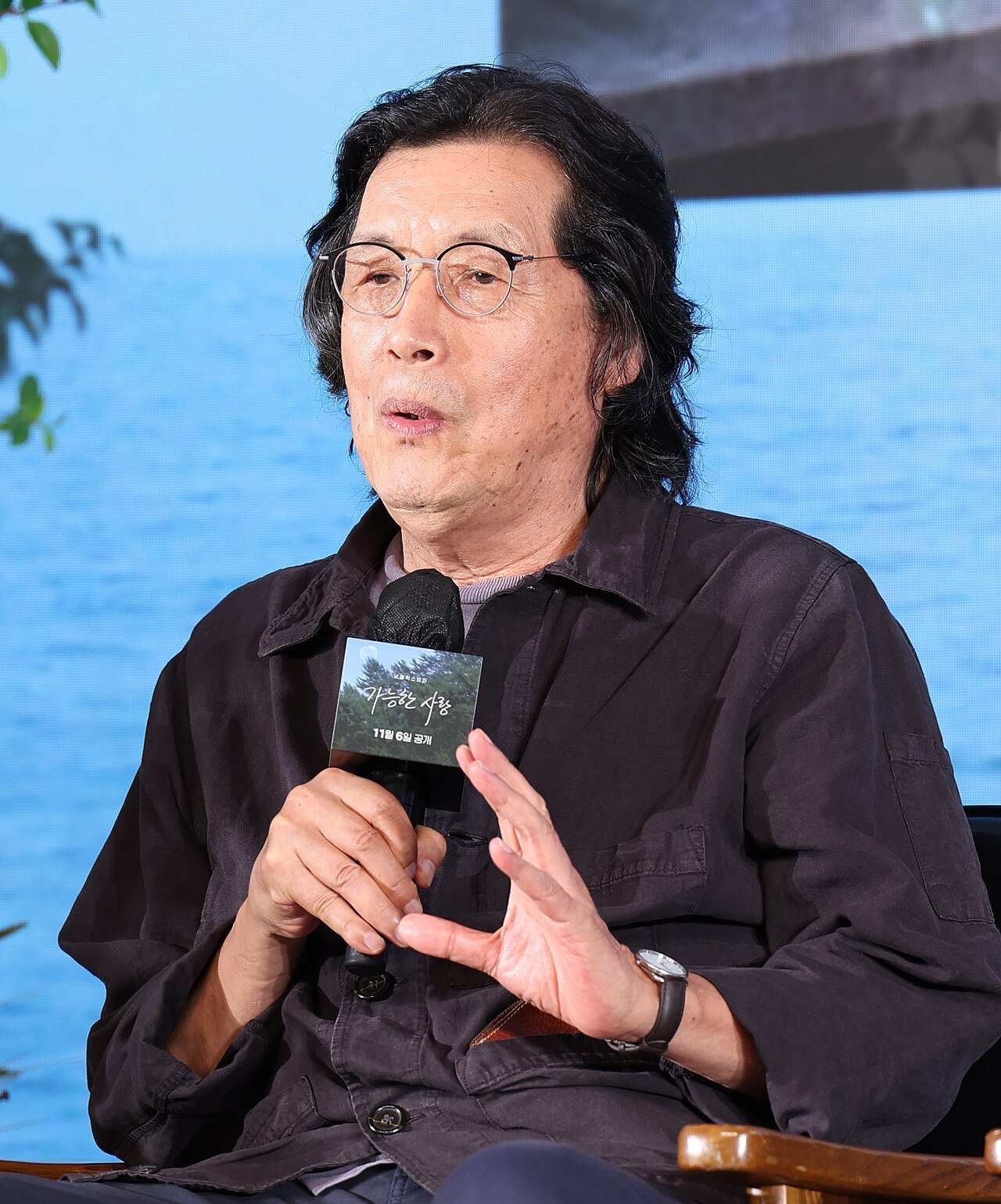
Featured photo: Lee Chang-dong at a Possible Love event, August 2026. Photo: Republic of Korea (Korea.net official Flickr) via Wikimedia Commons, CC BY-SA 2.0.
Lee Chang-dong, the director of Possible Love, did not make his first film until he was past forty. Before that he was an award-winning novelist. After his third film won him Best Director at Venice, he became South Korea’s Minister of Culture and Tourism. Then he gave up the post and went back to making movies. As someone who loves his films, I’m still grateful he chose to come back.
Previously: why 59 critics, without exception, praised Possible Love
In this story
A schoolteacher who wrote novels
Lee was born in Daegu in 1954. He studied Korean language education at Kyungpook National University and was teaching Korean at a high school in 1983 when he made his debut as a novelist with the novella Chonri.[1] In 1992, There’s a Lot of Shit in Nokcheon won him the Korea Times Literary Prize. His fiction is still read: The New Yorker published his short stories “Snowy Day” in 2023 and “The Leper” in 2024, and Penguin Random House released the English collection Snowy Day & Other Stories in 2025.[1]
Screenwriting took him into film. At director Park Kwang-su’s request, he wrote To the Starry Island (1993) and learned the set as assistant director, then wrote A Single Spark (1995), about the labor activist Jeon Tae-il. That film won Best Film at the Blue Dragon Film Awards.[1] Possible Love, about the family of a laid-off worker, stands on the same ground as the script he wrote three decades ago.
Also read: Netflix's Dead-End Job Is Real: In Korea, a "Honey Job" Was Already a Horror Story
1997: Green Fish
His first film, Green Fish (1997), follows Mak-dong (Han Suk-kyu), a young man back from military service, who drifts into a gangster’s world as his hometown disappears under new-town development. It is a gangster film on the surface, but what it holds onto to the end is longing for the years when the family lived together. The debut won Best Film at the Blue Dragon Film Awards and the Dragons and Tigers Award at the Vancouver International Film Festival.[1]
“I want to go back!”: Peppermint Candy
His second film, Peppermint Candy (1999), opened the 1999 Busan International Film Festival.[2] It begins with Yeong-ho (Sul Kyung-gu) standing on a railway track and screaming, “I want to go back!”, then moves backward through twenty years to the innocent young man he was in 1979. Along the way it passes through the Gwangju Uprising, a police torture room under military rule, and the Asian financial crisis. Follow one man’s ruin in reverse, and you get modern Korean history. The railway line is still quoted and parodied in Korea. The film won three awards at Karlovy Vary and Best Film at the Grand Bell Awards.[1]
It made Sul Kyung-gu, then an unknown, a star. Twenty-seven years later, he stood in front of Lee’s camera again as Ho-seok, the laid-off welder in Possible Love.
Oasis, which Venice recognized first
His third film, Oasis (2002), is a love story between Jong-du (Sul Kyung-gu), just out of prison, and Gong-ju (Moon So-ri), a woman with cerebral palsy. While the world sees their love only as a crime, the film cuts in fantasy scenes through Gong-ju’s eyes and shows it as love. The question Possible Love asks, what kind of love is possible, started here 24 years earlier.
Venice gave Oasis the Silver Lion for Best Director and the FIPRESCI Prize, and Moon So-ri won the Marcello Mastroianni Award for best young performer.[1] Twenty-four years later, when the same festival gave Possible Love its Grand Jury Prize, Lee became a two-time Silver Lion winner at Venice.
Sixteen months in the minister’s office
In February 2003, the year after Oasis, President Roh Moo-hyun appointed him Minister of Culture and Tourism. He served until June 2004 and fought to protect the screen quota, the rule requiring Korean cinemas to show Korean films a minimum number of days a year. In 2006, France made him a Chevalier of the Legion of Honour for that work.[1][3]
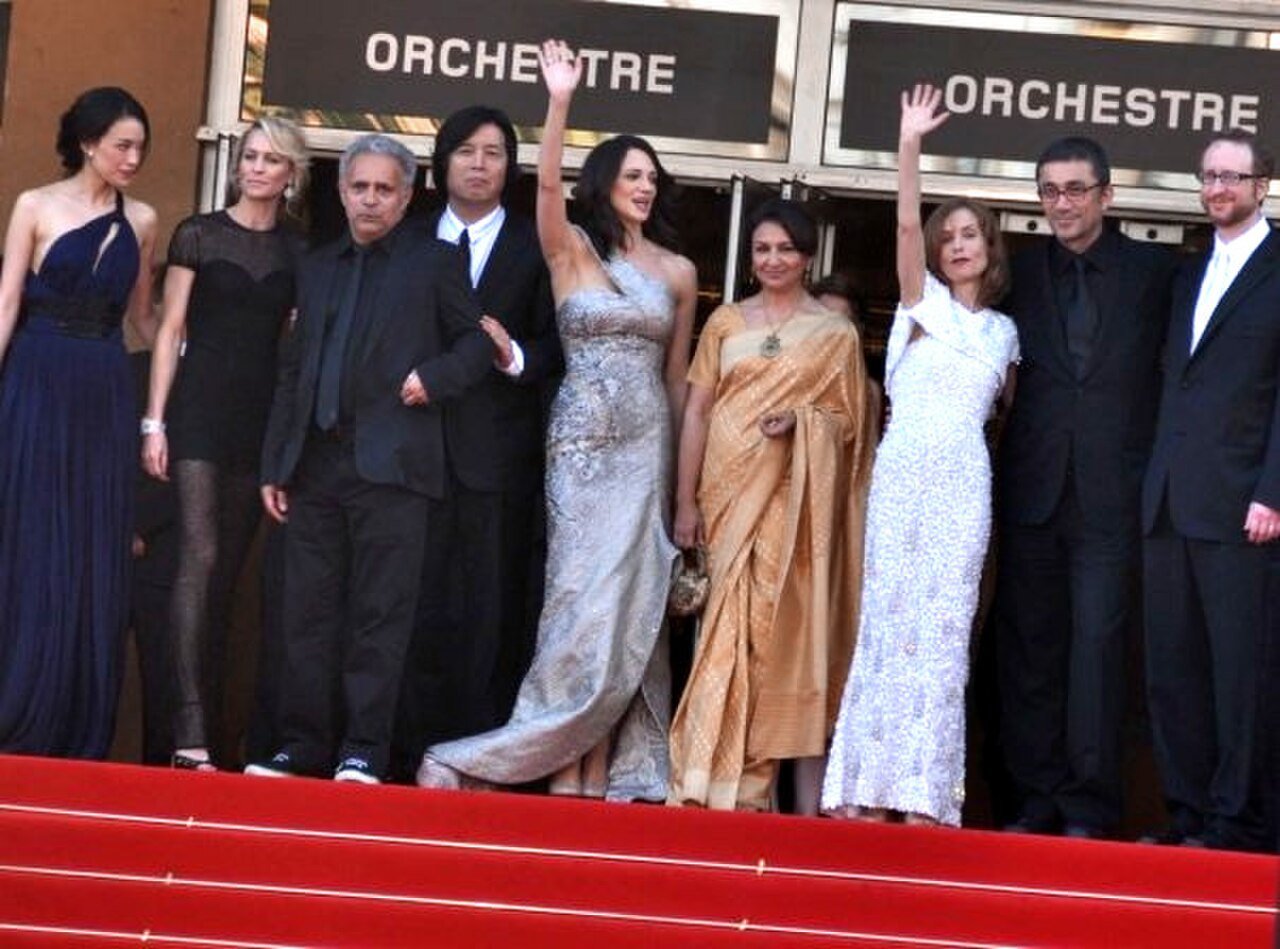
His time in office was short. He left government and returned to film, and in 2009 he sat on the main competition jury at Cannes.[1] A decade before Parasite won the Palme d’Or, a Korean director was at Cannes judging other people’s films.
Where to watch
| Film | US (JustWatch US) | South Korea |
|---|---|---|
| Green Fish (1997) | Film Movement Plus, Kanopy (free with library card), rent on Apple TV / Amazon | Netflix, TVING |
| Peppermint Candy (1999) | Film Movement Plus, Kanopy, Metrograph, rent on Apple TV / Amazon | Netflix, TVING, Wavve |
| Oasis (2002) | Film Movement Plus, Kanopy, Metrograph, rent on Apple TV / Amazon | Netflix, TVING, Wavve |
| Possible Love (2026) | Netflix Watch on Netflix | Netflix |
Netflix has also released Green Fish in the UK, France, Italy, Australia and New Zealand, and Peppermint Candy and Oasis in Italy and Spain.[4] (Checked 2026-10-26; rechecked the day before publishing)
The film he made after leaving office was about a woman who moves to a small city called Miryang. At Cannes in 2007, the name of the actress who played her was called. It was Jeon Do-yeon.
Lee Chang-dong and Possible Love · Part 2 of 3
Next, Part 3: Seven Films, No Misses: The Movies of Lee Chang-dong →
← Part 1: 59 Critics, Not One Against: Lee Chang-dong's Possible Love
Read next
 Possible Love Is Korean Critics' Film of the Year, and Jeon Do-yeon Gave the Line of the Night: "Best Actress Was Always Me"
 Na Hong-jin's Hope Just Won Three Korean Film Critics Awards. Zo In-sung: "I Really Wanted This One"
 Choi Bul-am Never Knew What a Father Was. Korea Called Him Its Father Anyway
Trending on Seol Notes
- Kim You-jung Cracked Japan Despite the 'Anti-Japan Drama' Label
- The Emperor of K-pop Came Back, and Korea Flipped
- Ae-sun Left the Baeksang Empty-Handed. Then She Spoke: IU
- 85,000 Fans in São Paulo Sang 'Arirang,' and BTS Put Down Their Microphones
- K-pop News Today (Nov 4, 2026): RESCENE's 'With' Hits No. 1 on Melon, TWS Sell 630,000 on Day One, AND2BLE's Career-High Week
Sources (checked 2026-10-26) [1] Wikipedia, Lee Chang-dong (career, awards, honors); The New Yorker; Penguin Random House, Snowy Day & Other Stories (2025) [2] Busan International Film Festival, 4th edition (1999), opening film [3] Minister of Culture and Tourism, Feb 2003 – Jun 2004; Chevalier of the Legion of Honour (2006) Photos: Wikimedia Commons (author and license in each caption) [4] Netflix press release, “Lee Chang-dong films coming to Netflix” (2026-09-14); JustWatch US and KR (2026-10-26)
Discover more from Seol Notes
Subscribe to get the latest posts sent to your email.