
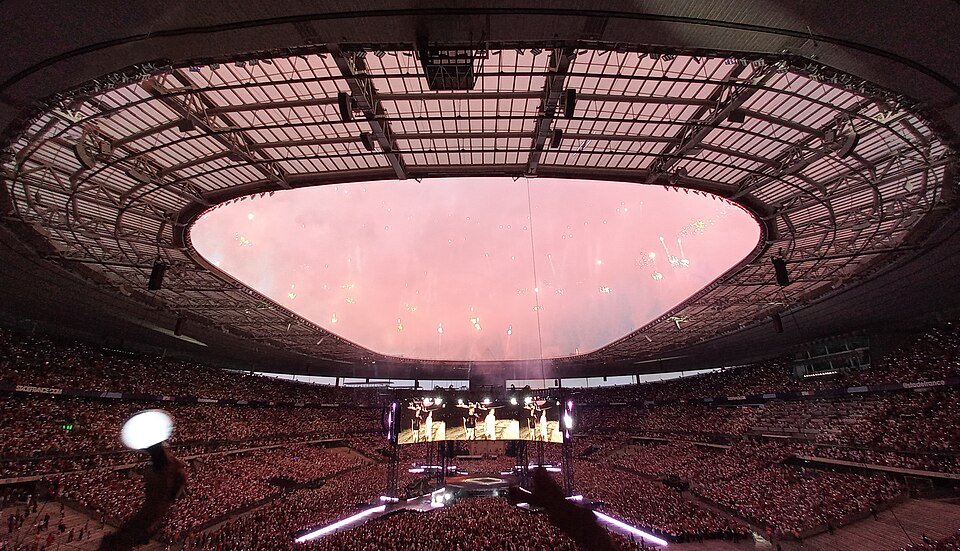
Featured photo: The finale of BTS’s Arirang World Tour in Paris, July 17, 2026. Photo: Chiyako92 / Wikimedia Commons, CC BY-SA 4.0.
On the night of October 28, at Morumbis Stadium in São Paulo, Brazil, more than 85,000 people sang the Korean folk song “Arirang” together, and the seven members of BTS lowered their microphones and simply looked out at the crowd. The city where they first met fans at a 1,500-seat fan meeting 12 years ago has become a city that sings Korea’s song back to BTS (Star News, October 30).
I’ll be honest: as a fan, I read the story of that moment over and over. A singer who came to sing becoming the one who listens is a scene only people who waited seven years can make.
“Arirang” is the folk song nearly every Korean can sing at least a line of, a song with countless regional versions, and in 2012 UNESCO added it to its list of the Intangible Cultural Heritage of Humanity. This year BTS named both their album and their world tour after it. On the other side of the planet, an audience handed that name back to them in their own voices. The moment came during “Body to Body,” as the big screens showed Brazilian fans dressed in hanbok (Star News, October 30).
From 1,500 seats to 252,000 tickets in 12 years
BTS first met Brazilian fans in August 2014, at a 1,500-capacity venue in São Paulo. That day, the group posted on its official X account: “Thank you so, so much to Brazilian ARMY for joining our first fan meeting in São Paulo.” In 2017 they sold out two shows at a 7,000-seat venue, and in 2019 they moved up to a stadium. In 2026, three stadium shows sold 252,000 tickets, 168 times the size of that first fan meeting. The Brazilian daily O Tempo wrote that BTS had “reclaimed its place as the K-pop act that draws the biggest crowds in Brazil” (O Tempo, quoted by Star News, October 30).
The seven years in between were a wait for BTS and for Brazilian fans alike. While the seven members finished their military service one by one, fans in Brazil kept the name alive. That’s why the first greeting from the stage on opening night, in Portuguese, was: “It’s been seven years, São Paulo. Let’s make tonight special” (O Fuxico, quoted by Star News, October 30).
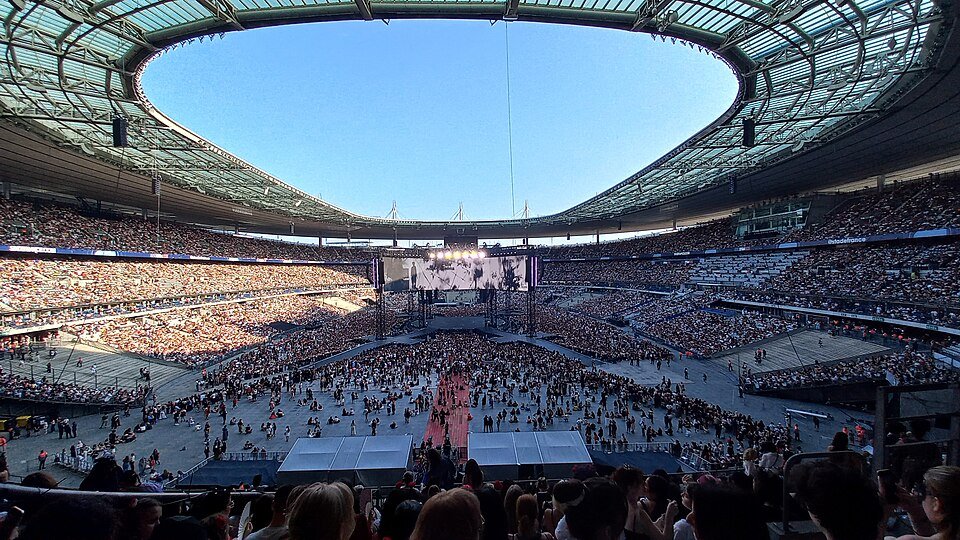
A line long enough to fill 15 stadiums
When tickets went on sale in April, all three shows sold out in under 90 minutes, faster than a soccer match, as local media put it. According to Ticketmaster Brasil, more than 630,000 people went through the ticket queue, and at an average of two tickets each, demand topped 1.2 million tickets: enough to fill Morumbis 15 times over (Diário do Grande ABC, October 22).
São Paulo’s tourism agency, SPTuris, estimated ticket revenue from the three shows alone at about $48.5 million, and the total economic impact, including visitor spending, at more than about $61.5 million (same article).
Brazilian fans started building the stage six months early
Outside the stadium, São Paulo had already been decorated by fans. To welcome Jimin back after seven years, his Brazilian fans ran six buses wrapped in Jimin ads around the city for 30 days, put ads on 38 screens at Tietê, the largest bus terminal in Latin America, and hung a 45-meter banner at the stadium gate (Star News, October 29). J-Hope’s fans saved for nearly half a year to paint a giant mural on the road to the stadium. The project is called “Hope in Motion,” and the mural’s nickname is “the most Brazilian Korean in the world” (Star News, October 29).
The members answered in Brazil’s own language. V shouted, “You filled this giant stadium. Are you ready to go crazy?” and even pulled out the Brazilian slang “Army arrasa, papo reto!” (“ARMY rocks, for real!”) to a roar. During “Butter,” they slipped in the shoulder dance made famous by Brazilian national team midfielder Lucas Paquetá’s goal celebration, and as surprise songs they performed “Black Swan” and the early-career track “Silver Spoon” (“Baepsae”). The rain that had fallen all day stopped when the show began, and the concert ran 2 hours and 20 minutes, 23 songs (Star News, October 30).
Latin America isn’t a far-off market anymore
The fever shows up in the numbers too. According to Spotify, BTS streams in Colombia rose about 300% over the last three years, and in Argentina streams from October 2025 to September 2026 were up about 200% from the previous 12 months (Star Today and Maeil Business, October 29). This Latin American leg began October 2 in Bogotá, Colombia, then went through Lima, Santiago and La Plata before ending in São Paulo (same article). Jimin’s solo song “Who” spent 13 weeks on Brazil’s Hot 100 and set the record for the most-streamed K-pop solo song on Spotify Brazil (Star News, October 29).
The group that once wrote “thank you so, so much” to 1,500 people heard 80,000 voices sing “Arirang” in the same city 12 years later. On October 31, the final night of the Latin American leg, Morumbis fills up again. I’m already waiting to hear what song that stadium gives back this time.
Where to listen: the album ARIRANG streams on Spotify, Apple Music and YouTube Music (checked October 31, 2026).
Read next
 K-pop News Today (Nov 3, 2026): BIGBANG Make History in Sydney, TWS Return With 'TO US', RESCENE's Comeback Day
 K-pop News Today (Nov 2, 2026): A2O LITE Win Inkigayo Again, BTS Wrap Up Brazil, IVE's First-Week Rebound
 Two Weeks, No SM: Lee Soo-man's A2O LITE Just Outranked BTS on Billboard With "NEON"
Trending on Seol Notes
- Kim You-jung Cracked Japan Despite the 'Anti-Japan Drama' Label
- The Emperor of K-pop Came Back, and Korea Flipped
- Ae-sun Left the Baeksang Empty-Handed. Then She Spoke: IU
- K-pop News Today (Oct 27, 2026): IVE's EP Drop, ILLIT 'You're Under Arrest', LISA's 59M
- The No. 1 Korea Doesn't Want to Believe: Why Fans Doubt A2O
Sources
- Star News, October 30, 2026: From a 1,500-person fan meeting to 250,000 fans (citing O Tempo, O Fuxico, Isamí)
- Star News, October 29, 2026: Jimin’s return after seven years, six buses and 38 screens
- Star News, October 29, 2026: J-Hope mural “Hope in Motion”
- Diário do Grande ABC, October 22, 2026: sellout, Ticketmaster demand and SPTuris estimate
- Star Today / Maeil Business, October 29, 2026: Spotify streaming growth in Latin America
- UNESCO: Arirang, lyrical folk song in the Republic of Korea (2012)
- Currency conversion: 5.362 reais per dollar (October 30, 2026)
Discover more from Seol Notes
Subscribe to get the latest posts sent to your email.