
Part 2 of 7 in Lee Soo-man and A2O
Previously: A2O LITE’s “NEON” hit No. 1 on Melon 29 hours after release, and no evidence of bots has surfaced. (Part 1)
The doubt around A2O’s record doesn’t come from the numbers. It comes from somewhere deeper. Underneath Korea’s refusal to believe this No. 1 lies more than a decade of distrust toward China and toward Chinese members of K-pop groups.
Suspicion aimed at nationality, not numbers
When “NEON” reached the top of the chart, bot accusations followed, but no concrete evidence of bots has come out (Sports Kyunghyang, Oct. 20, 2026). In fact, worldwide search volume for the misspelled name “A20” beat the correct “A2O,” 100 to 74. If someone were using bots, they wouldn’t have pumped up searches for the wrong name. In other words, this looks like real popularity (TV Report, citing Tenasia). The doubt didn’t go away anyway. It just changed shape: wasn’t this a group built with Chinese money? A2O MAY is made up entirely of members of Chinese descent, and nine members of A2O SOUL and A2O LITE, the two groups that debuted in Korea, hold Chinese citizenship. Those facts were named as the roots of the rumor (Tenasia, Oct. 20, 2026).
The suspicion is aimed at nationality, not numbers. A group with three Chinese members, in which the two members carrying the main impact are both Chinese, has climbed to the top of the Korean chart looking exactly like classic K-pop. Some people find that hard to accept. That is cognitive dissonance, and it has a cause.
Also read: A Med Student Wrote It the Night Before an Exam. Kim Kwang-seok Made It Last.
Korean fandom’s distrust of Chinese members
Korean fans have watched the same scene play out again and again.
- In December 2009, Super Junior’s Hangeng sued SM to end his exclusive contract and went on to work in China (Sidae Ilbo, Oct. 10, 2014).
- In May 2014, EXO’s Kris filed the same kind of suit, and in October Luhan followed. Luhan’s side claimed discrimination between the group’s Korean and Chinese members (Sidae Ilbo; Hankook Ilbo, Oct. 10, 2014).
- In 2015 Tao left as well. SM sued all three in a Chinese court and won in January 2016 (Tenasia, Sept. 22, 2015; Segye Ilbo, Jan. 5, 2016).
- Two Chinese members of Tasty, a duo under SM C&C’s Woollim Entertainment, took the same road (Xportsnews).
Trained in Korea, made famous in Korea, then back to China after a contract dispute to work solo. The reverse was impossible. The distrust Korean K-pop fandom built up toward Chinese members is an undeniable fact. It didn’t start from hate. It is the product of more than ten years of repeated incidents and a door that only opened one way.
The door that has seemed about to open for ten years: the Hallyu ban
Hanhanryeong, usually translated as the “Hallyu ban” or “Korean wave restriction,” is the name for China’s measures blocking Korean pop culture. It began after South Korea deployed the U.S. THAAD missile defense system in 2016, and the Chinese government has never officially announced it (Asia Business Daily, Feb. 1, 2026). In 2025 there were signs it might lift, but of 12 K-pop events planned for September and October 2026, 10 tied to Shanghai were canceled or postponed (Sports Kyunghyang, Oct. 1, 2026; Tenasia, Oct. 2, 2026).
On June 11, 2023, after a show in Bangkok, BTS’s Suga went live on Weverse. When Chinese fans begged in the comments for a show in China, he answered: “How can I do a China tour when we can’t perform in China? Is there any Korean singer who performs in China? There isn’t” (YTN, June 15, 2023; Nocut News).
Three years later nothing has changed. BTS’s 2026–27 world tour covers more than 30 cities, but not one in mainland China. Its only Chinese-speaking stops are Kaohsiung in Taiwan and Hong Kong (Herald Economy, Jan. 31, 2026). In that same country, Lee Soo-man’s A2O MAY has already stood on stage in Shanghai and held its first fan meeting there, at the 1862 Fashion Art Center in November 2025 (Sports Kyunghyang, Nov. 23, 2025).
What broke through that distrust: 20 seconds from the Chinese members
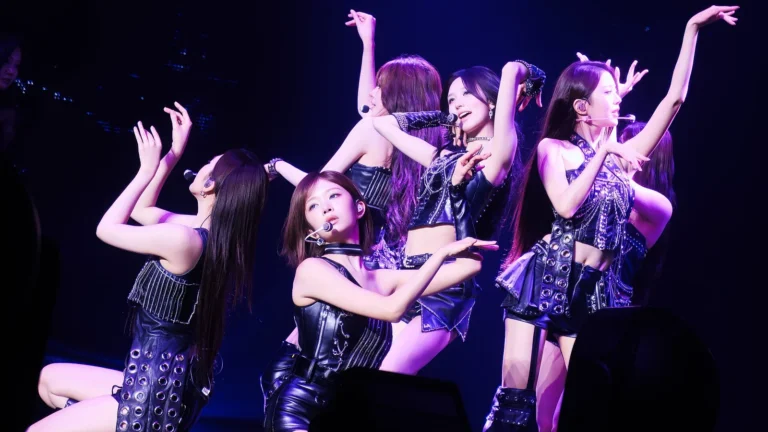
The first 20 seconds of “NEON,” the part that hooked Korea, belong to Siri and Aijing, who face each other and dance a duet. Both are Chinese members (SBS Entertainment News). The song’s killing part was made by girls of the very nationality Korean fans had been most wary of. A rookie with three Chinese members reached No. 1 on Melon faster than any rookie before.

The man who made that No. 1 turns 74 this year. The next part is about his age.
Lee Soo-man and A2O · Part 2 of 7
Part 3 arrives Oct. 27.
Read next


Trending on Seol Notes
- The Emperor of K-pop Came Back, and Korea Flipped
- Korea Out-Earns Germany and Japan Combined. Its Stocks Are the World's Cheapest.
- Rosé Cried Singing His Song. Bang Si-hyuk Won His Contest. Who Was Yoo Jae-ha?
- A Med Student Wrote It the Night Before an Exam. Kim Kwang-seok Made It Last.
- A Firm With Zero Investors Says It Will Buy TWICE's Agency
Sources
- Sports Kyunghyang, Oct. 20, 2026; Oct. 1, 2026
- TV Report (search volume); Sports Kyunghyang, Nov. 23, 2025 (A2O MAY fan meeting)
- Tenasia, Oct. 20, 2026; Oct. 2, 2026; Sept. 22, 2015
- Sidae Ilbo, Oct. 10, 2014 and Oct. 10, 2014; Hankook Ilbo, Oct. 10, 2014
- Segye Ilbo, Jan. 5, 2016; Xportsnews
- Asia Business Daily, Feb. 1, 2026
- YTN, June 15, 2023; Nocut News; HuffPost Korea
- Herald Economy, Jan. 31, 2026
- SBS Entertainment News
Discover more from Seol Notes
Subscribe to get the latest posts sent to your email.