
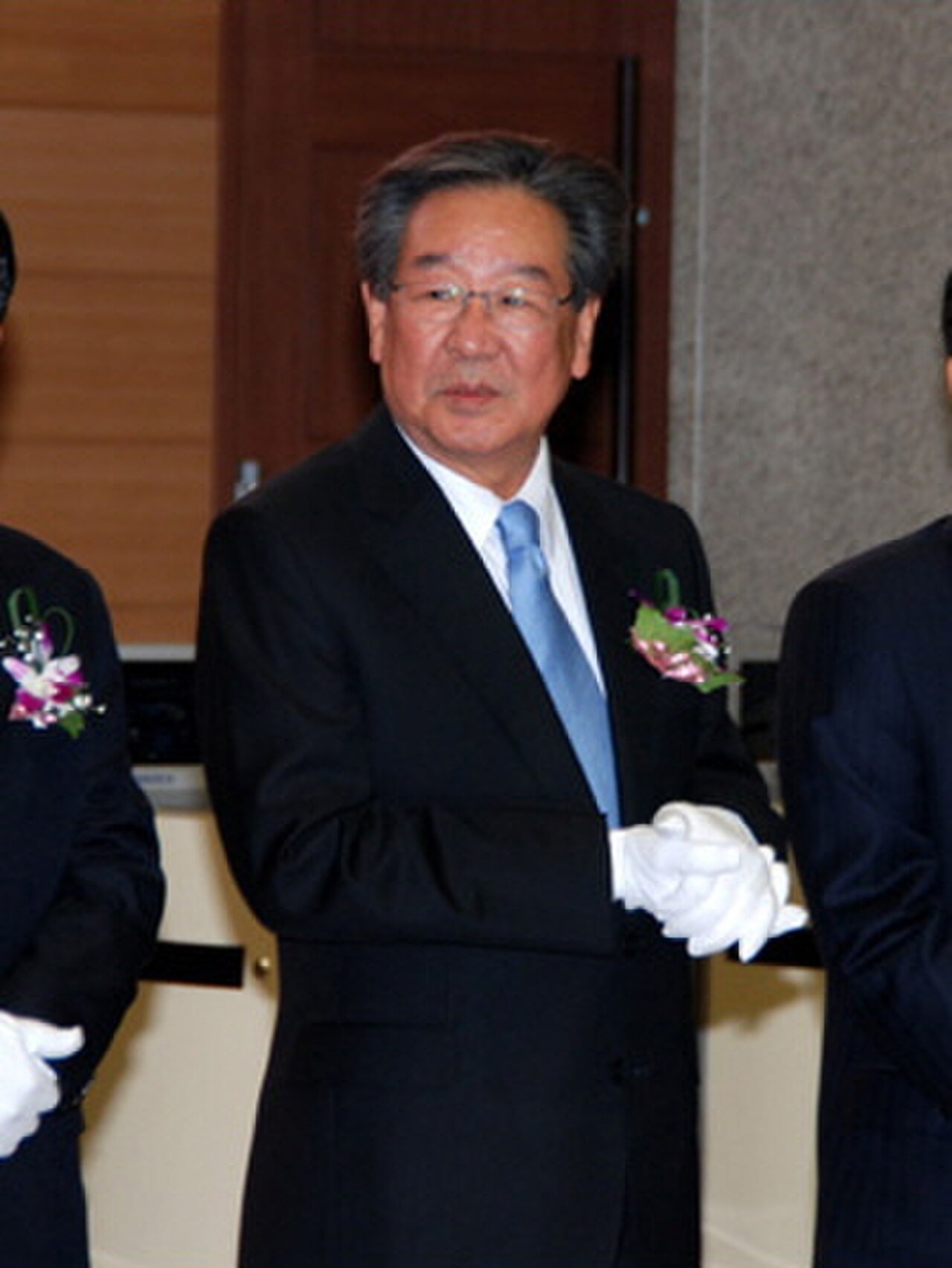
Featured photo: Choi Bul-am. Photo: acrofan.com / Wikimedia Commons, CC BY-SA 3.0.
Koreans had one more father. He was actor Choi Bul-am, who died on the night of October 29 at 87. Yet the man the whole country called its “national father” grew up as a boy who didn’t know what a father was.
To be honest, the moment I saw the obituary, the first thing I heard in my head was that laugh, the “Paha!” he let out with his head thrown back, and my chest went tight for a long while. One comment under an overnight news story said it for me: “Chairman, Chief, Father. Rest in peace” (Naver comment on a YTN story, October 30). In Korea, people a whole country cherishes get nicknamed “the nation’s ___,” and “the nation’s father” belonged, in practice, to him alone.
In this story
A boy who grew up with the father’s seat empty
Choi Bul-am (born Choi Young-han) was born in Incheon in 1939. Right after he was born, his father left for Shanghai to look for a younger brother who worked for the Korean Provisional Government, and didn’t come back until the boy was six. Around second grade, his father collapsed from overwork and died at 35 (Yonhap, citing his 2007 essay). An uncle, hoping the boy wouldn’t leave as early as his father had, gave him a new name, Bul-am, meaning “Buddha rock.”
His mother, left alone, opened a bar called Eunseong in Myeong-dong in 1955, and it became a salon for artists such as poets Kim Soo-young and Cheon Sang-byeong and painter Kim Whanki (Yonhap). The boy grew up among those grown-ups instead of a father. Years later he wrote: “I didn’t really know what a father’s role was, or what a father’s place in a family was.”
Also read: Kim You-jung Cracked Japan Despite the 'Anti-Japan Drama' Label
An actor who was already an old man at 27
He played “elders” from the very start. He joined KBS as a specially recruited actor in 1967, played the 50-something general Kim Jong-seo in his late 20s, a man in his 80s at 30, and former president Syngman Rhee in his 80s while in his early 40s (Yonhap). His face was always a generation or two older than he was. “I was never very disappointed that a glamorous role didn’t come my way,” he said.
Chief for 18 years, until real police gave him a rank
On MBC’s Chief Inspector (1971–1989, 880 episodes), Chief Park Young-han was a detective who carried a trench coat and a white handkerchief rather than a pistol and handcuffs (Newsis, Yonhap). The show looked at the underside of crime created by rapid industrialization and the circumstances of ordinary people, and it was credited with changing the police’s poor image at the time.
The line between drama and reality soon blurred. Citizens came to the broadcaster asking him to investigate their cases, and when ex-convicts came to see him, he bought them a handcart and sent them off saying, “Start a street stall, at least” (Yonhap). The police made him an honorary officer in 1972, kept promoting him, and in 2024 named him the first civilian honorary chief of the National Office of Investigation. A man who loved drinking with friends cut back, saying, “The sheriff who keeps the living room safe can’t keep stumbling around drunk” (1997 interview, cited by Yonhap).
Learning to be a father as Chairman Kim for 22 years
MBC’s Country Diaries (1980–2002) ran 22 years and 2 months, 1,088 episodes, making it Korea’s longest-running drama (Newsis). He was Chairman Kim of the farming village of Yangchon-ri, caring for his elderly mother and heading a household of three sons and their wives. Many viewers believed he and Kim Hye-ja, who played his wife for 22 years, were really married.
The boy who never knew a father learned to be one in this role. “Doing Country Diaries, I realized, ‘Ah, so this is what a father is,’ and I tried to raise my children like Chairman Kim” (2007 essay, cited by Yonhap). In an era of shrinking nuclear families, he said, he wanted to show viewers a father like a zelkova tree with wide shade.
The role changed real life too. After an episode in which Chairman Kim adopts the orphan Geumdong, praise letters poured in, and he felt ashamed to be praised for lines a writer had written. “Why not actually help one child?” The giving he started then led to some 30 years as national sponsorship chairman of ChildFund Korea (Yonhap).
The father the whole country teased
In the early 1990s, a joke genre called the “Choi Bul-am series” swept Korean schools. It turned the stern TV patriarch into the hero of absurd, deadpan gags, much like America’s “Chuck Norris Facts” (Herald Business compared the two in 2008). It was a game of teasing the father, and Yonhap described it as “a phenomenon that broke patriarchal solemnity.”
The teased father didn’t get angry. In 1998 he went on MBC’s Sunday Sunday Night to perform the jokes himself as sketches, and he let a humor-book publisher use them free of charge. His reason: “So that students buried in exam prep could enjoy themselves, even for a moment” (Yonhap).
The last 14 years at Korea’s dinner tables
From 2011, he traveled to country kitchens across Korea for KBS1’s Korean Table. The drama father, now a grandfather, sat down at other families’ tables. After back surgery last year made it hard to get around, he left the show after 14 years (Yonhap). After his death, people kept writing that “Mr. Choi’s narrating voice was such a comfort” (Yonhap).
His last performance was Episode 1 of MBC’s Chief Detective 1958 in 2024. In the prequel, in which Lee Je-hoon played the young Park Young-han, he appeared briefly as the white-haired Chief Park, linking the new show to his own 18 years (Newsis, Yonhap).
Where to watch (checked on JustWatch, October 30, 2026): Chief Detective 1958 streams on Hulu in the US and on Disney+ and Wavve in Korea. Country Diaries and Chief Inspector are on Wavve in Korea and, for released episodes, on MBC’s official classic drama YouTube channel. Korean Table is on KBS’s official YouTube channel.
His funeral is being held under the name of ChildFund Korea (Yonhap). The boy who said he learned what a father was from a TV show leaves on his final journey under the name of the foundation through which he helped children for 30 years. From now on, that “Paha!” lives only in old episodes.
Read next



Trending on Seol Notes
- Kim You-jung Cracked Japan Despite the 'Anti-Japan Drama' Label
- The Emperor of K-pop Came Back, and Korea Flipped
- Ae-sun Left the Baeksang Empty-Handed. Then She Spoke: IU
- K-pop News Today (Oct 27, 2026): IVE's EP Drop, ILLIT 'You're Under Arrest', LISA's 59M
- The No. 1 Korea Doesn't Want to Believe: Why Fans Doubt A2O
Sources
- Yonhap, October 30, 2026: “Eternal Chief Inspector” Choi Bul-am dies
- Yonhap, October 30, 2026: The boy who missed his father’s embrace embraced an era as the “national father”
- Yonhap, October 30, 2026: “Chief Inspector was my foundation, Country Diaries my wings”
- Yonhap, October 30, 2026: Online mourning for Choi Bul-am
- Newsis, October 30, 2026: Choi Bul-am timeline
- YTN story comments on Naver (checked October 30, 2026)
- Herald Business, March 12, 2008 (Chuck Norris comparison)
- JustWatch: Chief Detective 1958
Discover more from Seol Notes
Subscribe to get the latest posts sent to your email.