
Part 11 of 27 in Homo Conspirans: The Humans Who Come After Us
Homo Conspirans · Musk’s dream: “a city on the Moon and AI data centers in space” → a sky full of reactors
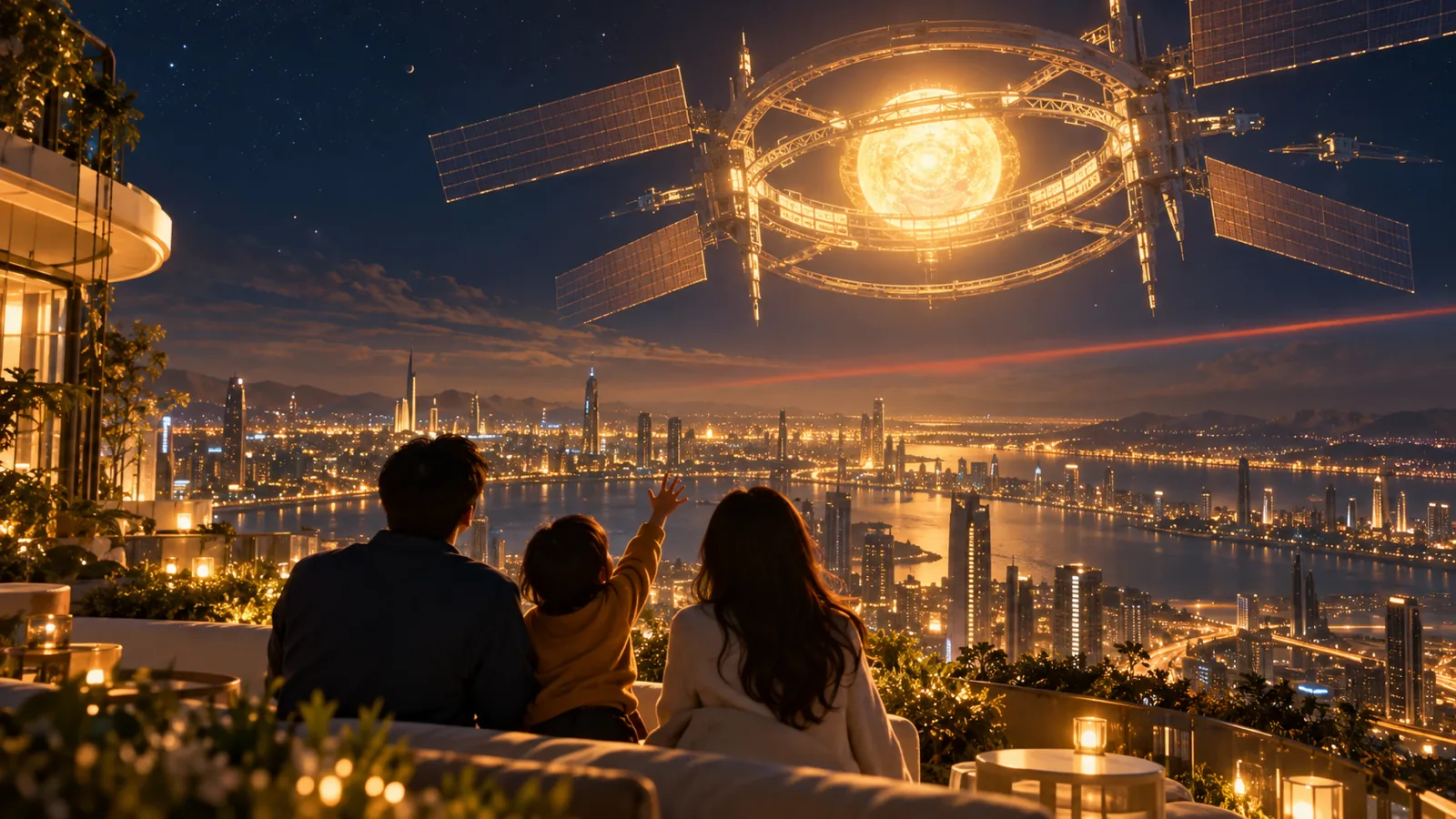
What will power Musk’s Moon city and the AI data centers in space is, in the end, nuclear reactors. The moment reactors multiply in the sky, a human brain that evolved to overread threats meets AI alarms that decide in a second. That meeting takes humanity to the brink of nuclear war.
On the night of July 9, 1962, a 1.4-megaton American nuclear warhead exploded 400 kilometers above Johnston Island in the middle of the Pacific. The operation was called Starfish Prime. Over Honolulu, 1,400 kilometers away, the sky turned blood red and green, phone lines went dead, streetlights went out and burglar alarms went off all at once. The electromagnetic pulse was far bigger than the scientists had expected.[1] The artificial radiation belt the blast created wrapped the Earth for months and crippled several satellites, including Telstar 1, America’s first communications satellite. When a nuclear bomb goes off in space, the machines in the sky are hurt before the people on the ground.
In this story
A reactor fell from the sky
Sixteen years later, on January 24, 1978, it was a reactor that fell. The Soviet ocean-surveillance satellite Kosmos 954 lost its orbit and crashed in Canada’s Northwest Territories. Radioactive debris from its onboard reactor scattered across frozen lakes and forests. Under the 1972 Space Liability Convention, Canada billed the Soviet Union more than 6 million Canadian dollars, and in 1981 the Soviets paid half of that, 3 million.[2] It was the first time a reactor from space had fallen to Earth.
A lunar night lasts 14 days
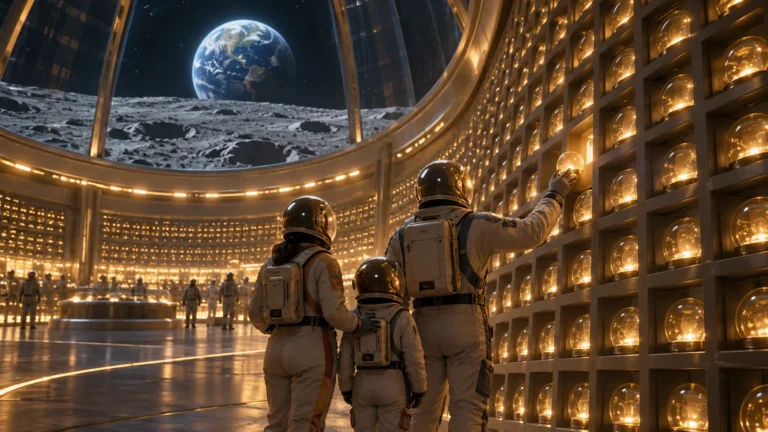
In February 2026, Musk said he would build a city on the Moon before Mars. On the Moon, day and night each last about 14 Earth days. Keeping people and AI servers alive through two weeks without sunlight takes more than solar panels and batteries. So every country’s answer is a nuclear reactor.
On July 31, 2025, acting NASA administrator Sean Duffy directed the agency to put a 100-kilowatt reactor on the Moon by 2030. He wrote down the reason. China and Russia had repeatedly announced plans to build a lunar reactor together by the mid-2030s, and the first country to place one could declare a “keep-out zone” around it.[3] Musk himself is not afraid of nuclear weapons in space. In August 2019 he posted “Nuke Mars!” and sold T-shirts with the slogan, pushing the idea of melting the ice at Mars’s poles to make an atmosphere.[4] And in the next war, the AI data centers will be struck before the armies.
A brain built like a smoke detector
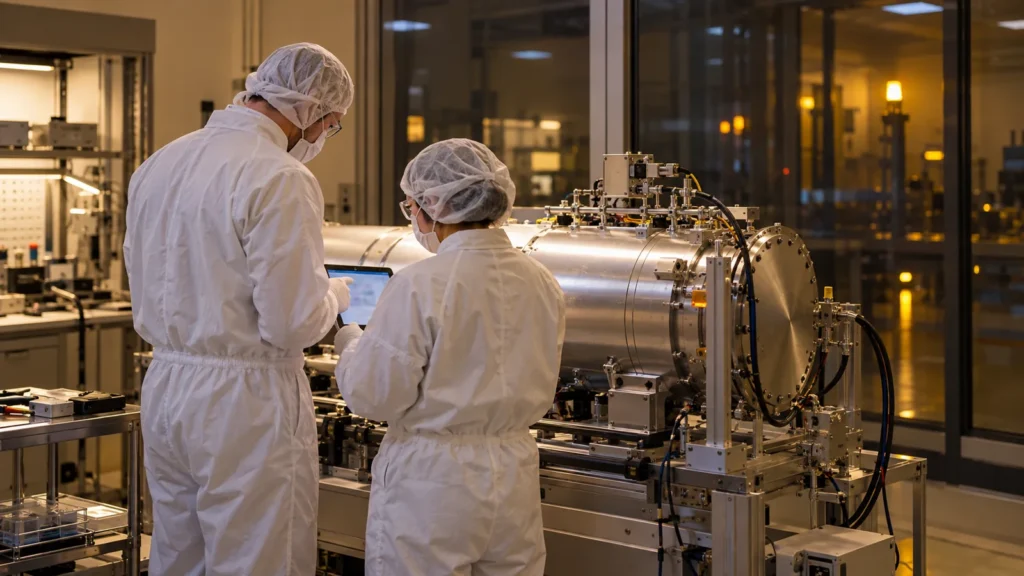
The danger lies less in the reactor than in the human brain watching it. The American evolutionary medicine researcher Randolph Nesse calls it the “smoke detector principle.” A smoke detector goes off when the toast burns, because the cost of missing a real fire is far greater than the annoyance of a false alarm. Human anxiety and fear evolved the same way. The ancestors who took every rustling bush for a predator were the ones who survived.[5]
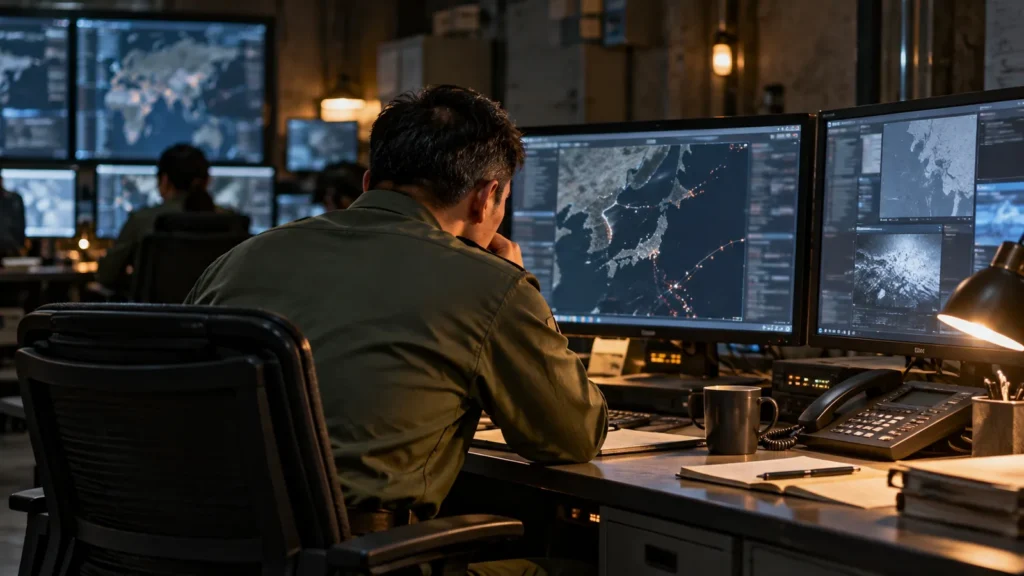
Before dawn on September 26, 1983, that principle was put to the test at an early-warning bunker near Moscow. The satellite warning system reported that five intercontinental ballistic missiles had been launched from the United States. The duty officer, Stanislav Petrov, stared at the screen for several minutes and then reported a malfunction to his superiors. If the Americans struck first, he reasoned, they would launch hundreds of missiles, not five. The system had mistaken sunlight glinting off clouds for missiles.[6] What saved humanity that day was the few minutes Petrov had.
In the AI age those minutes disappear. Once satellites carrying reactors, Moon bases and the AI that watches over them fill the sky, alarms go off in seconds. On top of a brain that evolution built like a smoke detector sits an even more sensitive smoke detector built by machines.
November 2041: a long streak across the sky
November 2041, 9 p.m., a seaside campground in Seogwipo on South Korea’s Jeju Island. Su-hyeon, 43, is sitting by the campfire with family when a long orange streak cuts across the southern sky. A few seconds later every phone blares an emergency alert: “Falling space object detected. Take shelter indoors.” The nine-year-old daughter burrows into her father’s arms.
Twelve minutes later a second alert arrives. A commercial satellite carrying a reactor lost its orbit and broke apart in the atmosphere, and the radioactive material scattered over the sea. During those 12 minutes, the AI early-warning systems of the United States and China each raised the likelihood of an attack by the other to “high,” and the time left for both leaders to decide on a response was displayed as nine minutes. The next morning’s news calls the night “the second Petrov incident.”

The first lunar reactor in 2031, the Petrov clause by 2045
This is the order in which reactors fill the sky and humanity reaches the brink.
- 2031: The U.S. places the first reactor near the Moon’s south pole. The same year, China announces a site 50 kilometers away for its own base.
- 2035: Chinese and Russian lunar reactors come online, and the two camps protest that their “safety zones” overlap.
- 2037: SpaceX’s Moon city runs its AI servers and housing on four small reactors. Some AI data centers in orbit run on reactors as well.
- 2041: A satellite carrying a reactor breaks apart in the atmosphere, and the AI early-warning systems of the U.S. and China both climb to one step below their highest level.
- 2045: Nuclear powers sign a treaty requiring a human review of at least 30 minutes whenever an AI early-warning system recommends a nuclear response. People call it the “Petrov clause.”
Petrov got a reprimand instead of a medal, and in 2017 he died quietly in a small apartment outside Moscow. What he used that day was not calculation but a few minutes of hesitation. In an age that sends reactors into space, the most precious resource humanity has to protect is those few minutes.
Next in the series · AI Will Split Humanity Into Two Civilizations That Can’t Understand Each Other, American and Chinese: The DeepSeek Shock
Seventy years after the division, North Korean defectors understand only about half the words used in the South. People raised asking different AIs will split into two civilizations that use the same words and still cannot understand each other.
Homo Conspirans: The Humans Who Come After Us · Part 11 of 27
Read next

Trending on Seol Notes
- Kim You-jung Cracked Japan Despite the 'Anti-Japan Drama' Label
- The Emperor of K-pop Came Back, and Korea Flipped
- Ae-sun Left the Baeksang Empty-Handed. Then She Spoke: IU
- 85,000 Fans in São Paulo Sang 'Arirang,' and BTS Put Down Their Microphones
- K-pop News Today (Nov 4, 2026): RESCENE's 'With' Hits No. 1 on Melon, TWS Sell 630,000 on Day One, AND2BLE's Career-High Week
Sources
- Smithsonian Magazine, “Going Nuclear Over the Pacific,” 2010. https://www.smithsonianmag.com/history/going-nuclear-over-the-pacific-24428997/
- JAXA Space Law Library, “Settlement of Claim between Canada and the Union of Soviet Socialist Republics for Damage Caused by ‘Cosmos 954’,” April 2, 1981. https://www.jaxa.jp/library/space_law/chapter_3/3-2-2-1_e.html
- UPI, “NASA administrator seeks plan to place nuclear reactor on moon,” August 5, 2025. https://www.upi.com/Science_News/2025/08/05/science-sean-duffy-nuclear-reactor-moon/2301754399672/
- ScienceAlert, “Elon Musk Still Wants to Drop Nuclear Bombs on Mars, So He’s Making T-Shirts,” August 2019. https://www.sciencealert.com/elon-musk-still-wants-to-drop-nuclear-bombs-on-mars-so-he-s-making-t-shirts
- Randolph M. Nesse, “The smoke detector principle: Signal detection and optimal defense regulation,” Evolution, Medicine, and Public Health 2019(1), 1, January 31, 2019. https://doi.org/10.1093/emph/eoy034
- BBC News, “Stanislav Petrov: The man who may have saved the world,” September 26, 2013. https://www.bbc.com/news/world-europe-24280831
Discover more from Seol Notes
Subscribe to get the latest posts sent to your email.