
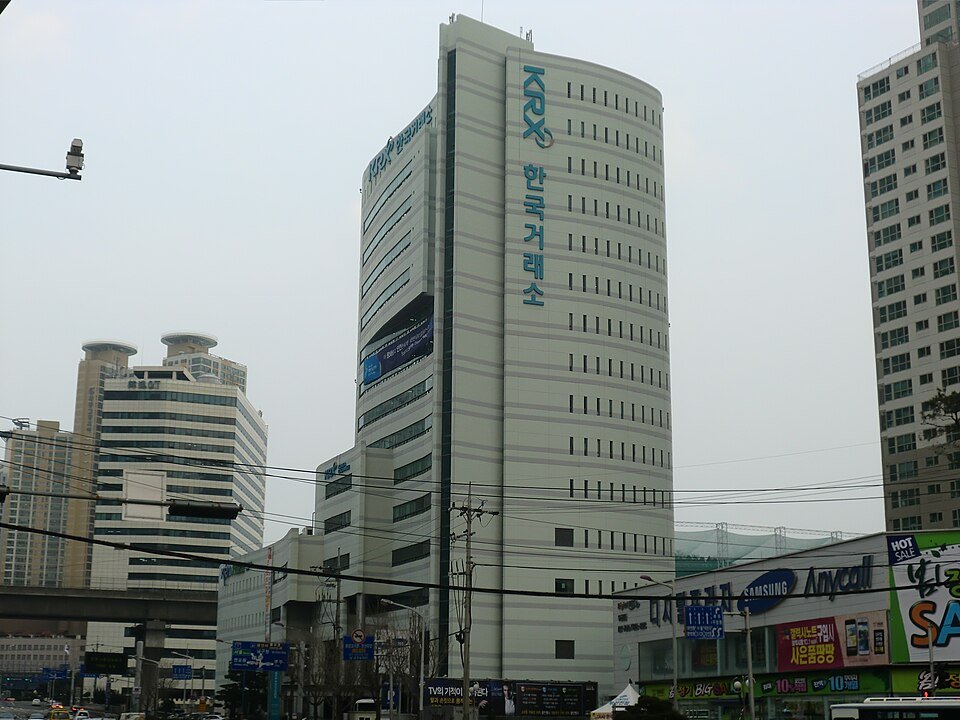
Featured photo: The Korea Exchange building in Yeouido, Seoul. Photo: hyolee2 / Wikimedia Commons, CC BY-SA 3.0.
Four months ago, Seoul’s office workers in their twenties and thirties were talking about “KOSPI 10,000.” Now they’re asking strangers whether it’s okay to buy a cup of coffee. The people who bought Samsung Electronics and SK hynix at the top have gathered in group chats called geojibang, the “beggar room.”
A beggar room is where strangers watch each other’s wallets
A beggar room is an open chat room on KakaoTalk, the messenger nearly every Korean uses, where strangers join anonymously, post what they spent that day, and ask for permission before buying anything. Members say “everyone becomes everyone else’s watchdog, so we overspend less” (Women Economy Shinmun, 2023). The rooms first went viral in the spring of 2023, when prices were jumping (Yonhap News TV, April 18, 2023).
Three years later, beggar rooms are back in the news, and this time they’re filled with different people. If the 2023 beggar room was a place to endure rising prices, the 2026 beggar room is a place to endure a wrecked brokerage account. Use of beggar rooms, and of the “beggar map” (a map of restaurants where a meal costs 10,000 won, about $7.50, or less), has surged, and posts inside say things like “I have to cut my living costs because of my stock losses” (Chosun Biz and Financial News, October 28–29, 2026).
Also read: Korean Developer Hiring Now Starts by Making You Take Off Your Glasses
From 9,114 to 5,469 in four months
One index explains why the beggar rooms filled up again. The KOSPI crossed 9,000 for the first time on June 18 and peaked at a close of 9,114.55 on June 22 (Digital Daily, October 30, 2026). In early July, Korean brokerages raced to raise their year-end targets above 10,000, with the highest at 12,600 (New Daily, October 23, 2026). Then on October 26 the KOSPI fell to 5,469.47. About 40% vanished in four months (Financial News). As of October 23, SK hynix was 60.2% below its peak and Samsung Electronics 45.0% below (New Daily).
Young office workers are hurting most because of debt. The balance of stock bought with brokerage loans (margin loans) by people in their twenties and thirties went from about $1.32 billion at the end of 2024 to about $3.14 billion at the end of June 2026, 2.4 times higher in a year and a half (data from Rep. Kim Hyun-jung’s office, cited by Chosun Biz). Twenty- and thirty-somethings who borrowed were down about 18%, more than double the roughly 7% loss for the same age group investing without debt (financial authorities’ analysis, March 2026, same article). Leveraged products that track two or three times a single stock’s moves alone lost about $1.74 billion through August 14 (Financial Supervisory Service data submitted to the National Assembly, same article).
Office pantry coffee, weekend warehouse shifts, blood-donation vouchers
The losses are cutting the smallest daily spending first. A 26-year-old office worker surnamed Kim, after paper losses equal to two months’ salary, got through a week on 30,000 won, and after pulling that off, lowered the limit to 20,000 won (about $15): packed lunches, and coffee from the office pantry (Chosun Biz). A 31-year-old, also surnamed Kim, piled into Samsung Electronics and SK hynix at the top and sold at a loss this month. With a mortgage to pay, Kim gave up a day off last weekend for a one-day shift at a Coupang warehouse, sorting boxes for Korea’s biggest online retailer (same article).
The tips on the beggar map’s message board get even more specific. One college student wrote about donating platelets every two weeks and using the 13,000-won (about $10) convenience-store voucher that comes with it to buy ramen and two 30-egg trays, eating two eggs every morning and evening. Another user posted that a telecom company’s showroom in Seongsu-dong lets office workers have free coffee four times a month (Edaily, October 30, 2026).
The people doing the saving know best that it won’t cover the losses. Park, 29, who lost much of their principal on leveraged ETFs, said: “Saving a few tens of thousands of won on living costs isn’t going to make up for the stock losses. But right now, cutting spending is the only thing I can do” (Chosun Biz). The comment sections run at the same temperature: “Two months’ salary is fine… mine’s two years’ salary ㅠㅠ” (Financial News comment, 90 likes), and “Lots of people used leverage, got crushed, and now can’t even get card loans, so they don’t have money to buy a meal” (Chosun Biz comment, 29 likes).
A city closing its wallet
Add up one person’s belt-tightening after another and you get a city’s spending. In the second week of October, credit card spending at restaurants was 8% lower than a year earlier, and it has been falling since late July (Statistics Korea Nowcast, cited by Chosun Biz). Third-quarter retail sales fell for a second straight quarter after the second (Statistics Korea’s September industrial activity report, cited by Edaily). The “negative wealth effect,” where households close their wallets when stocks fall, shows up in Seoul as office pantry coffee and weekend warehouse shifts.
On October 30, the KOSPI closed at 5,730.74 (Segye Ilbo). Brokerages have pushed “KOSPI 10,000” back from this year to next (New Daily), and the office workers who filled their accounts believing in that number are asking each other in beggar rooms how to get this week’s budget below 20,000 won.
Read next
Trending on Seol Notes
- Kim You-jung Cracked Japan Despite the 'Anti-Japan Drama' Label
- The Emperor of K-pop Came Back, and Korea Flipped
- Ae-sun Left the Baeksang Empty-Handed. Then She Spoke: IU
- 85,000 Fans in São Paulo Sang 'Arirang,' and BTS Put Down Their Microphones
- K-pop News Today (Nov 4, 2026): RESCENE's 'With' Hits No. 1 on Melon, TWS Sell 630,000 on Day One, AND2BLE's Career-High Week
Sources
- Chosun Biz, October 28, 2026: “Getting by on 20,000 won a week… office workers take on ‘no-spend challenges’ after stock crash”
- Financial News, October 29, 2026: “Bought Samsung and SK hynix, now working weekend Coupang shifts”
- Electronic Times, October 28, 2026
- Edaily, October 30, 2026: “Stocks crash, meals paid with blood donations… beggar room survival tips in a spending freeze”
- New Daily, October 23, 2026: “Farewell, KOSPI 10,000… brokerages push targets to next year”
- Digital Daily, October 30, 2026
- Segye Ilbo, October 30, 2026
- Women Economy Shinmun, 2023, Yonhap News TV, April 18, 2023
- Currency conversion: 1,334.3 won per dollar (Seoul FX market daytime close, October 30, 2026)
Discover more from Seol Notes
Subscribe to get the latest posts sent to your email.