
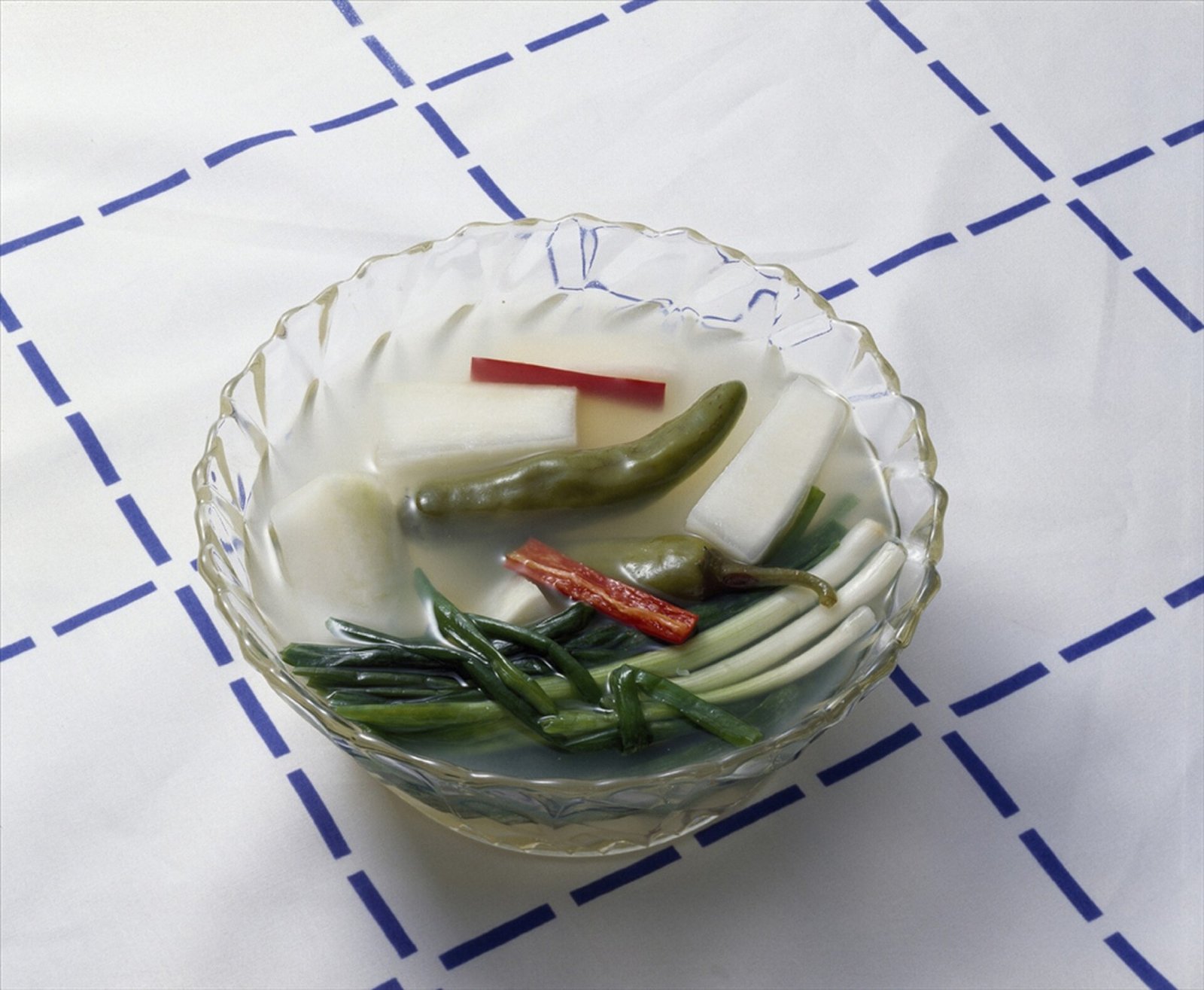
Featured photo: Dongchimi, a mild radish water kimchi served in its cool broth. Photo: Korea.net / Korean Culture and Information Service, via Wikimedia Commons, CC BY-SA 2.0.
In Korea, a free bowl given to a stranger doesn’t come back as money. It comes back as a full table of sales. The water kimchi a duck restaurant owner in Seoul’s Dongdaemun-gu handed to a young man who ran over late at night came back a week later as 25 customers walking in without a reservation.
10:30 p.m., a barefoot grandson
According to the owner’s own post on Threads, it was around 10:30 p.m., after all the staff had gone home and the owner was cleaning up alone at the counter. Well past closing, the restaurant phone rang. Expecting a reservation call, the owner picked up and heard a man’s urgent voice: “I’m running over right now. My grandmother won’t eat anything except a little water kimchi. Can I buy some?” (kbc, Money Today)
The owner said, “I’ll bring it down to the first floor,” and hung up. The young man soon appeared, barefoot in slippers and out of breath, and pulled a 10,000-won bill (about $7.50) from his pocket. The owner wouldn’t take it: “Just hurry back so your grandmother can eat.” He said thank you again and again and went back with the water kimchi (Newsis, Money Today).
The kimchi his grandmother asked for last
Mul kimchi, “water kimchi,” is different from the red napa cabbage kimchi most people abroad know. Radish and cabbage are soaked in salted water and ripen without the heat, and you eat it more for the cool, clear broth than the vegetables. You can sip just the broth, a spoonful at a time.
That’s why Korean readers understood at once why the young man was barefoot. One comment read, “If she can barely swallow water kimchi broth, she’s almost at the end” (Naver comment on the Newsis story). The most-liked comment on the Yonhap News TV story (139 likes) said, “So you gave her the food for her final journey.” That night, the owner had no idea who the customer was, or what that bowl of water kimchi would become.
A week later, 25 people with no reservation
A week later, about 25 customers walked into the restaurant without a reservation. Among the group, calmly ordering, was the young man. He came over to the owner and said, “I’ve just come from my grandmother’s funeral. Thank you so much for last time” (iNews24). Then he pointed out the owner to his family: “This is the owner who gave us the water kimchi” (Money Today).
Korean funerals usually last three days. The restaurant the whole family went to together after the funeral was the one that had given the grandmother the water kimchi she last asked for. “I wondered what on earth was happening,” the owner wrote, and “suddenly my heart was full” (Newsis).
The most-liked comment on the Money Today story (384 likes) was this: “I thought the whole family of 25 showed up to ask for free water kimchi.” The second (258 likes): “The restaurant owner who gave the water kimchi and the man who didn’t forget the kindness and came back are both good-hearted people.” Even Korean readers read that number 25 the wrong way at first.
Korea repays kindness with sales
The Korean internet has a word for this kind of payback: “donjjul.” It blends “don” (money) and “honjjul” (a good scolding), and it means deliberately buying a lot from a kind business to “scold it with money.”
The word spread nationwide in March 2021. A chicken shop owner in Seoul’s Mapo-gu gave free fried chicken to two brothers who had only 5,000 won (about $3.70) in their pocket, and when the older brother’s handwritten letter to the franchise headquarters made the story public, orders flooded in from across the country until the shop had to close for a while (Maeil Business, Korea Economic Daily, March 2, 2021). This water kimchi story, too, drew the inevitable comment: “Okay, let’s go give them some donjjul” (Naver comment on the iNews24 story).
But this time it wasn’t strangers who came. It was the customer’s own family. The 10,000 won the owner refused came back a week later as dinner for 25.
Read next


Trending on Seol Notes
- Ae-sun Left the Baeksang Empty-Handed. Then She Spoke: IU
- 85,000 Fans in São Paulo Sang 'Arirang,' and BTS Put Down Their Microphones
- K-pop News Today (Nov 4, 2026): RESCENE's 'With' Hits No. 1 on Melon, TWS Sell 630,000 on Day One, AND2BLE's Career-High Week
- AI Will Reverse Human Aging, Even If Musk Says We Need Death: Reverse Aging
- Teachers Get Reported for It. Korean Folk Village Ghosts Get Cheered.
Sources
- kbc, November 3, 2026: “Grandma only eats water kimchi”: a young man who ran barefoot at 10:30 p.m.
- Newsis, November 4, 2026
- Money Today, November 4, 2026
- iNews24, November 4, 2026
- Yonhap News TV, November 3, 2026 (Naver)
- Naver News comments (sorted by likes, checked early November 5, 2026): Money Today, Yonhap News TV, Newsis, iNews24
- Donjjul: Maeil Business, March 2, 2021, Korea Economic Daily, March 2, 2021
- Currency conversion: 1,334.3 won per dollar (Seoul FX market close, October 30, 2026).
Discover more from Seol Notes
Subscribe to get the latest posts sent to your email.