Part 5 of 27 in Homo Conspirans: The Humans Who Come After Us
Homo Conspirans · Musk’s dream: “keep the candle of consciousness lit” → a species that lives to 150
AI will reverse human aging. That the man most hesitant about it is Elon Musk does not change the outcome. Within this century humanity becomes a species that lives 150 years, and the price is that society sheds its old ideas more slowly.
In December 2021, at the Wall Street Journal CEO Council, Musk said something unexpected about life-extension research. If people lived forever, he said, we might become “a very ossified society where new ideas cannot succeed,” and so it is important that people die.[1]
Four years later, on January 22, 2026, on his first stage at Davos, he said something different. Since the 35 trillion cells in our bodies age at nearly the same rate, there must be a clock synchronizing them all, he said, and once we find the cause, it will turn out to be “incredibly obvious.” He called aging “a very solvable problem” and said the odds of finding a way to extend lifespan and reverse aging are “very high.” Then he added: “There is some benefit to death.”[2]
In this story
Evolution abandoned the aging body
People age because evolution does not care about old bodies. In 1952 the British immunologist Peter Medawar laid it out. In the wild, most animals die of accidents, predators and disease before they ever grow old, so genes that do harm only late in life never get weeded out. In 1957 George Williams went a step further. A gene that helps an animal reproduce when young will be happily selected by nature even if it wrecks the body later.[3] Aging is not design. It is neglect.
Some species neglect less. In a 2016 study in Science, Danish researchers used radiocarbon in the eye lenses of Greenland sharks to show that a five-meter female was at least 272 years old. This shark cannot bear young until it is around 150.[4] A fellow vertebrate, and it lives more than three times as long as we do. Lifespan is not a fixed number. It is a setting, chosen by environment and genes.
Also read: Two Weeks, No SM: Lee Soo-man's A2O LITE Just Outranked BTS on Billboard With "NEON"
AI is rewinding the cell’s clock
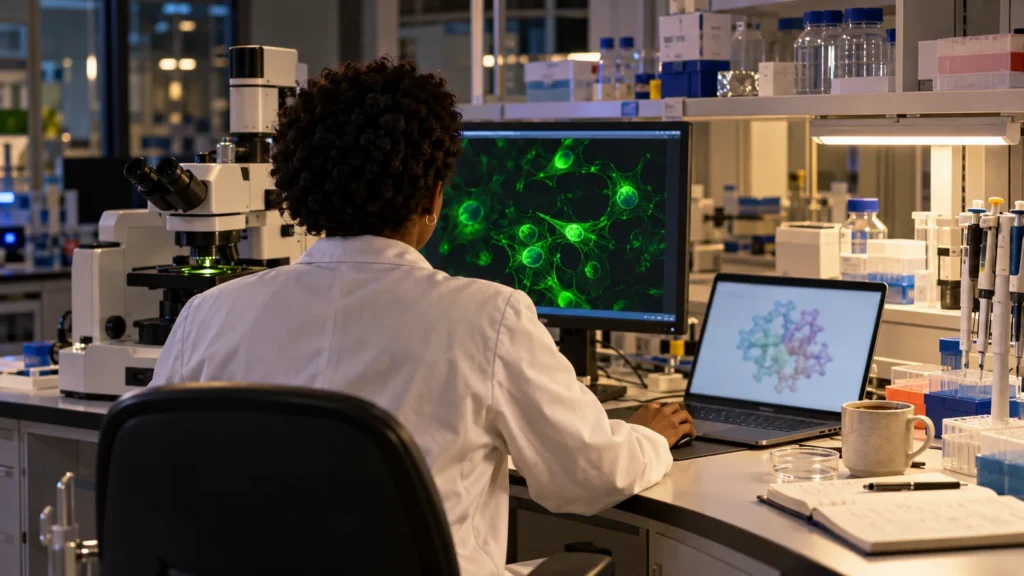
The key to changing that setting was found in 2006. Shinya Yamanaka of Kyoto University showed that adding just four proteins turns an adult skin cell back into something like a newly formed embryonic stem cell, work that won him the 2012 Nobel Prize. The trouble was efficiency. Fewer than one cell in a thousand converted, and it took weeks.
In January 2025, OpenAI revealed GPT-4b micro, an AI model built for protein design. Researchers at the longevity company Retro Biosciences redesigned two of the Yamanaka proteins along the lines the AI proposed, and reported that in early measurements the new versions worked more than 50 times better than the originals.[5] The result has not yet passed peer review. But the direction is clear. Proteins that people tweaked one at a time for decades, AI now picks out by weighing millions of variants at once. The search for the “clock” of the cells that Musk talked about has moved from laboratory hands to AI computation.
Musk’s worry has data behind it
Still, Musk’s worry is grounded. The physicist Max Planck said that a new scientific truth wins not by convincing its opponents but because its opponents eventually die. In 2019 the economist Pierre Azoulay and his colleagues tested the line with data. After 452 star life scientists died suddenly, papers in their fields by researchers who had never worked with them rose by an average of 8.6 percent, and those papers were cited more.[6]
The speed of evolution shifts too. Across the past 250,000 years, a human generation has averaged about 27 years.[7] People who live to 150 have children later and have fewer of them. Stretch the gap between generations to 40 years and genetic evolution slows, and with an older generation that never retires, the evolution of ideas slows as well. So a society with longer lives will invent another device to do death’s job: a rule that makes people vacate their seats after a set number of years and start something new.

March 2071: a 104-year-old freshman
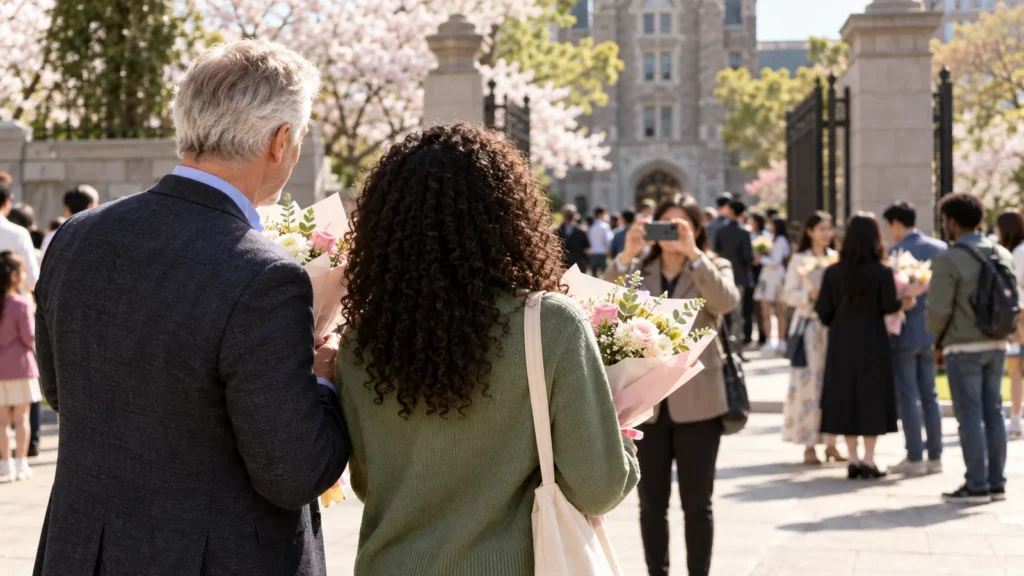
March 2, 2071, the entrance ceremony at a medical school in Seoul. The list of new students includes Park Young-ho, born in 1967. He is 104. Last year an aging-clock test put his biological age at 58, the result of the cell-rejuvenation shots he has taken every five years since he turned 70 in 2037.
He is in medical school because of the law. A “career rotation act,” passed in the 2060s, requires anyone who has worked 45 years in the same organization to give up the position. Park put in his 45 years at a chip company. After the ceremony, he poses for a photo with his great-granddaughter, a freshman in the same program. In the picture the two of them look like a grandfather and his granddaughter.
Longevity escape velocity in 2055, 150-year-olds by 2090
This is the order in which humanity becomes a 150-year species.
- 2028: Cell-rejuvenation proteins designed by AI enter their first human trials, starting with tissues like the eye and blood, where results show fast.
- 2035: Aging-clock tests become a standard part of health checkups in rich countries. Age gets written two ways, on paper and biologically.
- 2042: A country recognizes aging, for the first time, as a disease that insurance will treat.
- 2055: Life expectancy in rich countries first reaches “longevity escape velocity,” growing by more than a year every year.
- 2062: A country passes a career rotation act capping time in one organization at 45 years. The work Planck assigned to funerals is handed to the law.
- 2090: The number of people living to 150 passes 1,000 for the first time. The average age of first-time parents rises above 40.
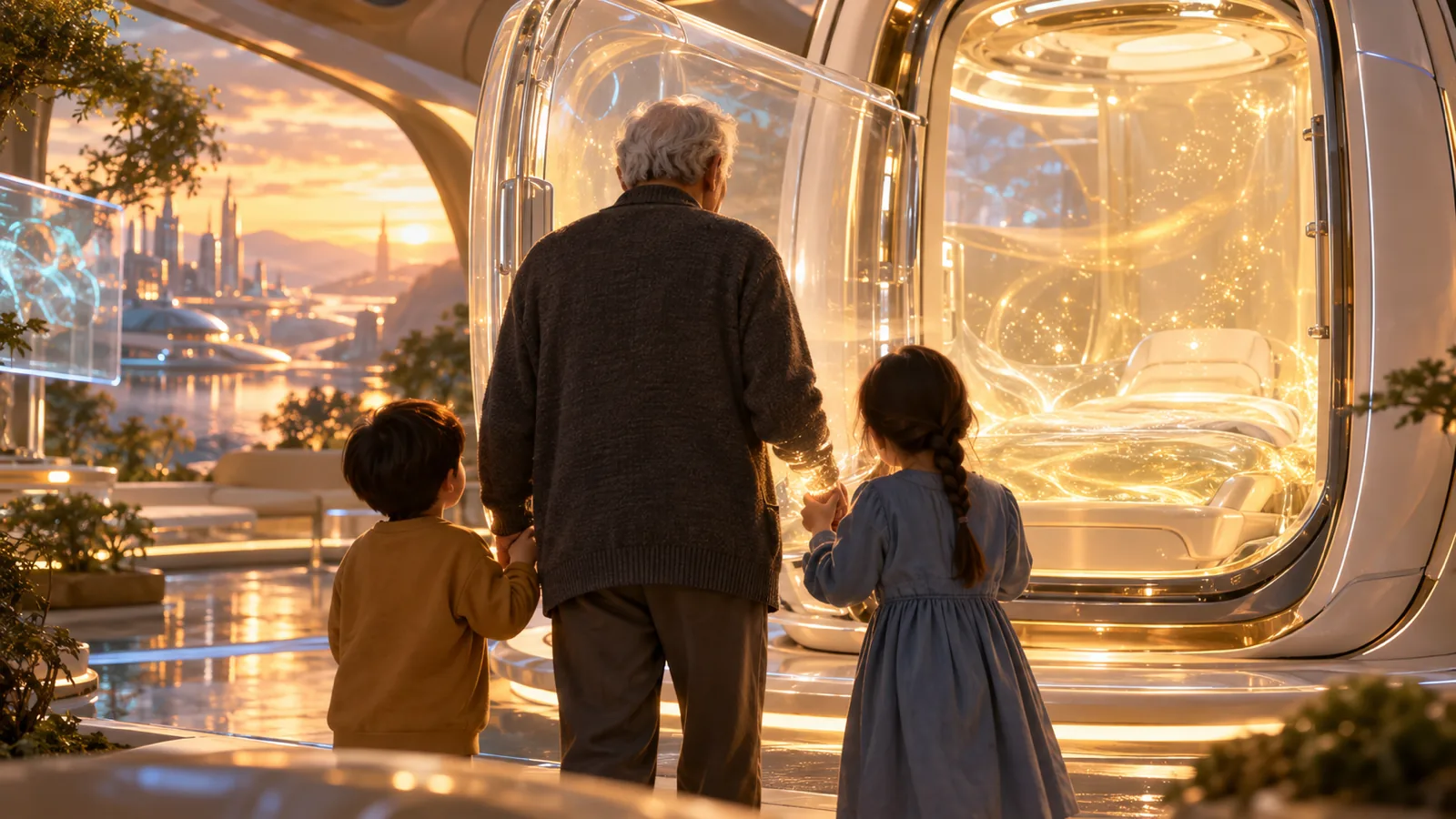
Musk said death has its benefits. He is right. That is why a 150-year humanity replaces death with graduation. It becomes a species whose members are freshmen three or four times in one life.
Next in the series · Humans Who Hand Their Thinking to AI Will See Their Brains Shrink Again, Like 3,000 Years Ago: Is AI Making Us Dumber
A study suggests the human brain has been shrinking for about 3,000 years. A brain that started handing knowledge to the group, as ants do, changes again once it hands over thinking itself to AI.
Homo Conspirans: The Humans Who Come After Us · Part 5 of 27
Part 6 arrives Nov. 1.
Read next
 Children Raised by AI on Musk's Mars Will Evolve Bodies That Can Never Return to Earth: How Humans Would Evolve on Mars
 AI Will Wire 8 Billion Brains Into One Superorganism, Like an Ant Colony: The Global Brain
 Homo Sapiens Will End in Musk's AI Age, and Homo Conspirans Will Begin: The Next Stage of Human Evolution
Trending on Seol Notes
- Kim You-jung Cracked Japan Despite the 'Anti-Japan Drama' Label
- The Emperor of K-pop Came Back, and Korea Flipped
- K-pop News Today (Oct 27, 2026): IVE's EP Drop, ILLIT 'You're Under Arrest', LISA's 59M
- His First Film Never Opened. His First Role Had No Name. Then Korea Called Him "Sam-sik"
- The No. 1 Korea Doesn't Want to Believe: Why Fans Doubt A2O
Sources
- Business Insider, “Elon Musk thinks you should die,” December 2021 (remarks at the Wall Street Journal CEO Council Summit: “If you live forever, we might become a very ossified society where new ideas cannot succeed”). https://businessinsider.nl/elon-musk-thinks-you-should-die/
- Bloomberg, “Musk Says Reversing Ageing May Be Possible,” January 22, 2026 (World Economic Forum conversation with Larry Fink); TechSpot, “Elon Musk calls aging a solvable problem during surprise World Economic Forum appearance,” January 2026. https://www.bloomberg.com/news/videos/2026-01-22/musk-says-reversing-ageing-may-be-possible-video
- Peter B. Medawar, An Unsolved Problem of Biology, H. K. Lewis, 1952; George C. Williams, “Pleiotropy, Natural Selection, and the Evolution of Senescence,” Evolution 11(4), 398–411, 1957.
- Julius Nielsen et al., “Eye lens radiocarbon reveals centuries of longevity in the Greenland shark (Somniosus microcephalus),” Science 353(6300), 702–704, August 12, 2016. https://doi.org/10.1126/science.aaf1703
- Antonio Regalado, “OpenAI has created an AI model for longevity science,” MIT Technology Review, January 17, 2025. https://www.technologyreview.com/2025/01/17/1110086/openai-has-created-an-ai-model-for-longevity-science/
- Pierre Azoulay, Christian Fons-Rosen & Joshua S. Graff Zivin, “Does Science Advance One Funeral at a Time?,” American Economic Review 109(8), 2889–2920, 2019. https://www.nber.org/papers/w21788
- Richard J. Wang et al., “Human generation times across the past 250,000 years,” Science Advances 9(1), eabm7047, January 6, 2023. https://doi.org/10.1126/sciadv.abm7047
Discover more from Seol Notes
Subscribe to get the latest posts sent to your email.