
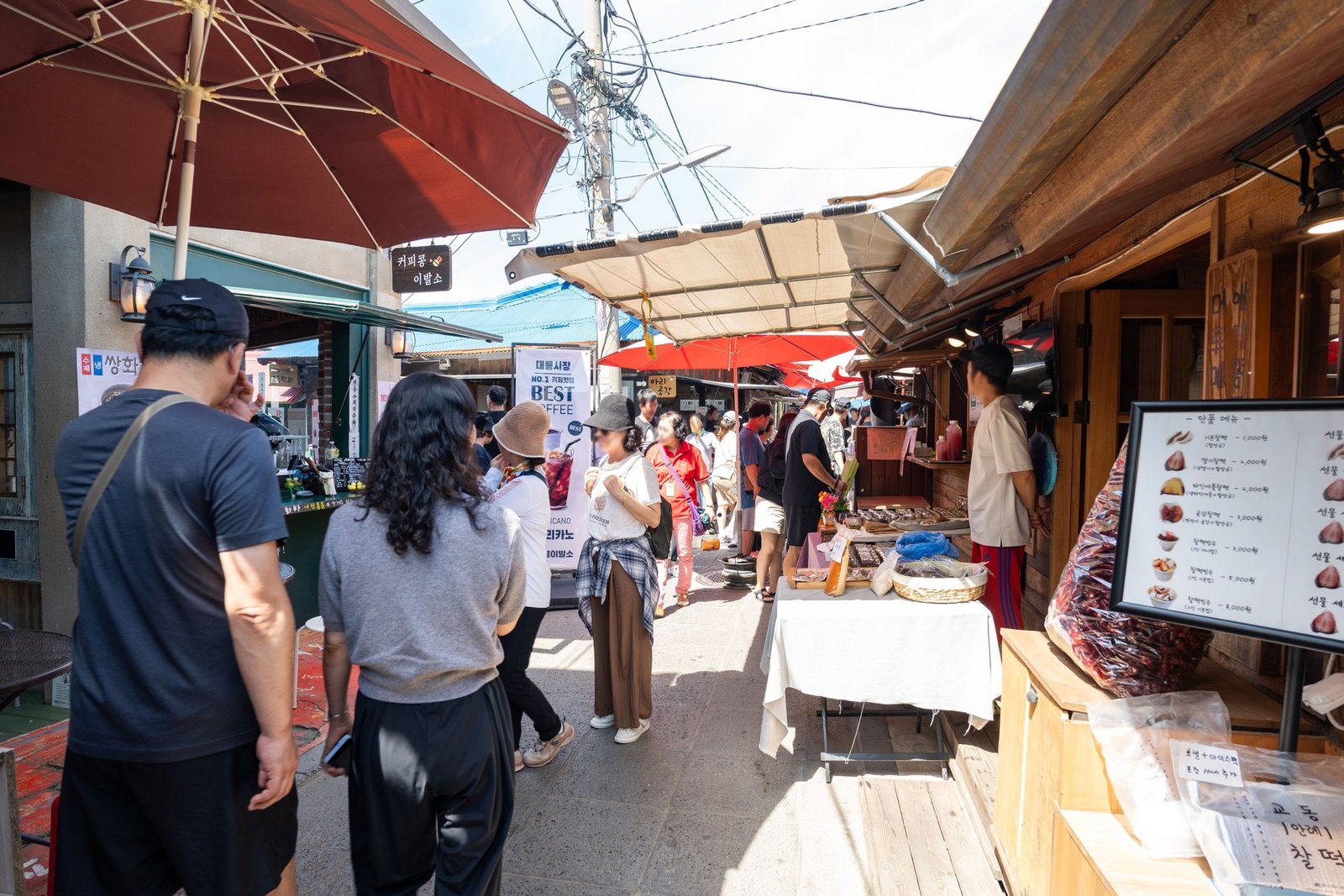
Featured photo: Travelers strolling an alley of Daeryong Market on Gyodongdo and picking out snacks. Photo: Cheon Jun-gyo / KTO Photo Korea, KOGL Type 1.
Take a bus from Sinchon in Seoul, cross two bridges, and you’re sitting in a swimsuit in an outdoor bath at the edge of the sea, watching the sun go down over the Yellow Sea. Out of the water, a giant Buddha carved under a cliff, a boardwalk over tidal flats gone red and an island market with its 1960s alleys intact are all within 30 minutes by car.
In this story
At a glance
- What makes it special: Seongmodo Mineral Hot Spring pipes seawater-based hot spring water, rising at 51°C (124°F) from bedrock 460 m underground, into indoor baths and 15 outdoor pools by the sea. The outdoor area is split into many small pools, and the sea is right in front of them (Central Economy, October 31, 2026, citing Ganghwa County; Incheon Island Info blog, October 2026).
- You wear a swimsuit: Korean public bathhouses are usually nude, but because this one has outdoor pools, you need a swimsuit or a rental bath suit. Bath suit rental is 2,000 won (about $1.50) (Incheon Island Info blog, October 7, 2026, citing the county fee table).
- Fees: Adults 9,000 won (about $6.80), ages 4 to 7 6,000 won (about $4.50), 65+ 6,000 won. Free parking (same source).
- Winter hours: November to March, 7 a.m. to 8 p.m., last entry 6 p.m., closed Tuesdays (same source; Incheon News, November 2026). Hours differ slightly from one travel site to the next, so call before you go (+82-32-930-7053).
- The outdoor baths are back: They shut in January 2024 over water volume and temperature problems and reopened on July 11, 2025. Reviews saying “the outdoor bath is closed” date from those 18 months (Incheon Island Info blog, October 7, 2026).
- From Seoul: Bus 3000 from Sinchon Station to Ganghwa Terminal takes 1 hour 20 minutes to 2 hours (Naver blog route guide, 2026). From Ganghwa Terminal, buses 31A, 31B, 35A and 35B cross Seongmo Bridge and run straight to Bomunsa with no transfer. For the hot spring, get off at “Jeondeugi Gogae” (Incheon Island Info blog).
- No ferry needed: Since Seongmo Bridge opened in 2017, you reach Seongmodo by car or bus.
- Winter sunset: From late November through December, the sun sets around 5:15 p.m. in this area. Get in before the 6 p.m. last entry and you watch it go down from the water.
Top 10 things to do on a winter trip to Ganghwa and Seongmodo
1. The seaside outdoor baths at Seongmodo Mineral Hot Spring (experience)
This is why you come to the island. The 51°C water, drawn fresh every day without disinfection, is rich in calcium, potassium and magnesium, so it feels salty and silky (blog quoting Ganghwa County’s official description). Warm up in the indoor bath, put on a swimsuit and walk out to the seaside pools, and the cold sea wind and hot water hit you at the same time. There’s also a red-clay sauna room, a rooftop viewing deck and a foot bath.
- Price: Adults 9,000 won (about $6.80) plus 2,000 won (about $1.50) for a bath suit. Bring your own swimsuit and skip the rental.
- Hours: Winter 7 a.m. to 8 p.m., last entry 6 p.m., closed Tuesdays.
- Wait tip: Weekend afternoons and sunset are the busiest. For fewer people, go at the 7 a.m. opening; for the sunset, go in around 4 p.m. and stay about an hour and a half.
- Note: Blog posts listing a separate outdoor-bath fee (4,000 won weekdays, 6,000 won weekends) appear to have copied the discount rate for Ganghwa residents by mistake (Incheon Island Info blog).
Here are the outdoor pools from above in winter: cold outside, a bathhouse in the water.
- Sources: Seongmodo outdoor baths reopened in July 2025 after 18 months (Incheon Island Info, Naver blog, October 7, 2026), Central Economy, domestic hot spring trips (October 31, 2026), Incheon News, “Ganghwa Seongmodo, an island the world visits (5)”
2. Bomunsa’s Eyebrow Rock Buddha and the Yellow Sea sunset (see)
Climb the stairs to a huge carving of the bodhisattva Avalokiteshvara under a rock that juts out from the cliffs of Nakgasan like an eyebrow, and the Yellow Sea and its small islands spread out below you. Bomunsa is counted among Korea’s three great temples for prayers to Avalokiteshvara, so many people come to make a wish, and it’s famous for its sunsets. It’s a 10-minute walk from the hot spring, so “Bomunsa in the afternoon, hot spring at sunset” is the easiest plan (Incheon Island Info blog).
- Price: Adults 2,000 won (about $1.50) (Naver blog, 2026).
- Time: About 55 minutes round trip from the parking lot to Eyebrow Rock. Many reviews say the slope is steep enough to feel like a hike (Naver blog, 2026).
- Tip: There’s hardly any fall foliage here. You come for the view from the rock and the sea.
3. The red tidal flat boardwalk at the Seongmodo seablite colony (photo spot)
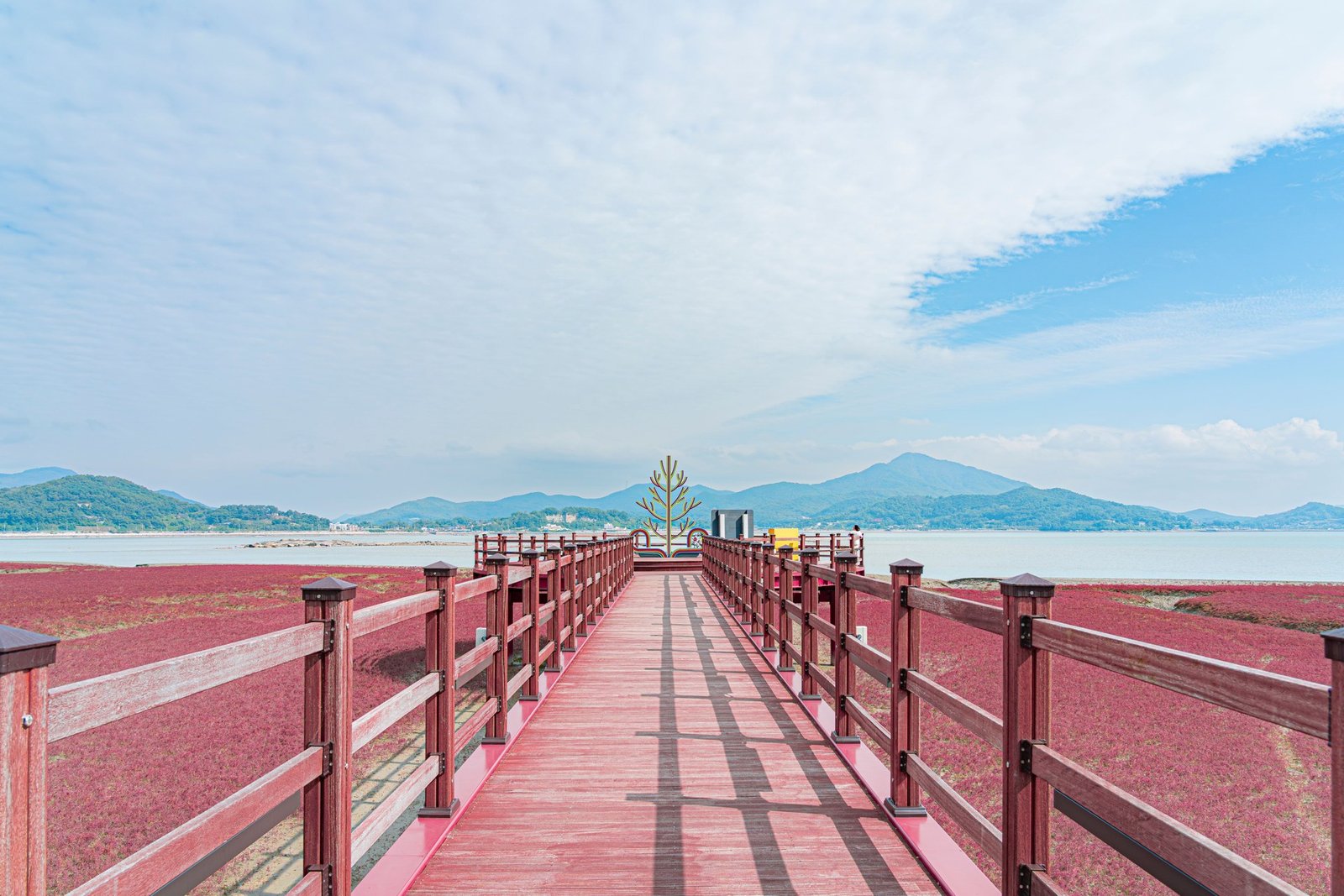
In autumn, chilmyeoncho, a salt-marsh seablite that covers the mudflats, turns red, and the boardwalk running out toward the sea looks like it crosses a red carpet. It’s around Seokpo-ri, and the red lasts from late October through November (Incheon Island Info blog). By December the color fades, so go in November for this shot.
- Tip: The color spreads widest at low tide. The wind is strong, so bring a windproof jacket in winter.
- Sources: Incheon Island Info blog (October 7, 2026), Seongmodo seablite colony and Bomunsa (Naver blog, 2026)
4. Mudflats and sunset at Minmeoru Beach (experience)
The only beach on Seongmodo with both sand and mudflats. When the tide goes out, flats full of clams and crabs open all the way to the horizon, and at sunset every tide pool catches the light. A paid mudflat experience run by the fishing village (about 10,000 won, about $7.50, for adults with gear) sits next to a free area (Incheon Island Info blog).
- Parking: 2,000 won (about $1.50) (same source).
- Tip: The mudflat experience changes with the tides and season. Even without it, the sunset walk is worth it.
5. Forest paths at Seokmodo Arboretum (see)
A county-run arboretum on the island, with a pavilion over a pond and conifer forest paths, good for an hour’s walk before the hot spring. In winter you go for the evergreens and the sea view rather than flowers.

6. The retro alleys of Daeryong Market on Gyodongdo (see, eat)
An alley market built by refugees who crossed from Hwanghae Province during the Korean War, modeled on the Yeonbaek Market back home. In narrow lanes where the barbershop, tearoom and old signboards still stand, you walk with twisted doughnuts, sticky rice cakes and ssanghwa-cha (a dark herbal tea). This is the place in the photo at the top.
- Getting in: Gyodongdo is in the civilian control zone, so there’s a Marine Corps checkpoint before Gyodong Bridge. From September 14 to November 27, 2026, a no-stop check runs as a pilot from 4 a.m. to 8 p.m.: you drive through at 40 km/h or less without stopping. Even so, the driver and every passenger should carry a physical ID (a passport for foreigners) (Incheon Island Info blog, October 16, 2026).
- Tip: The alleys are busiest around weekend lunchtime. Go in the morning for clean photos.

7. Banjaengi sashimi and turnip kimchi at Ganghwa Pungmul Market (eat)
A permanent market next to the terminal in Ganghwa-eup. Upstairs, restaurants serve banjaengi (a small local herring) as sashimi or in a spicy salad; downstairs, you buy kimchi made with Ganghwa’s purple turnips, Ganghwa ginseng and salted shrimp. It sits right by the last stop of bus 3000, so it’s the natural last meal before heading back.
- Tip: Banjaengi is in season from spring to early summer; in winter, the spicy salad and grilled versions are more common.
8. Joyang Bangjik, a café in a 1933 textile mill (photo spot)
A huge café made from a textile mill built under Japanese colonial rule. You drink coffee inside the factory, among rusted machines, long worktables and old chairs and props left in place. It’s in Ganghwa-eup, the same town as the bus terminal.
- Price: Americano 7,000 won (about $5.30). Reviewers say ordering a drink works as your admission (Naver blog, 2026).
- Hours: Weekdays 11 a.m. to 8 p.m., weekends and holidays 11 a.m. to 9 p.m. (Naver blog, 2026).
- Tip: Seats are hard to find on weekend afternoons. Right after the 11 a.m. opening is best for photos.
- Sources: Ganghwa Joyang Bangjik café review (Naver blog, 2026), Ganghwa’s big café Joyang Bangjik (Naver blog, 2026)
9. Ganghwa Luge (experience)
Ride a gondola up the hill, then race a wheeled sled down a winding track with the sea and mudflats of southern Ganghwa in front of you. It’s for anyone who wants some speed on an island trip, and for families with kids.
- Price: Single ride paid on site 19,000 won (about $14.30, gondola included), with discounts for advance booking on Naver (Naver blog, October 2026).
- Tip: There’s a height limit, so check the rules for kids riding with an adult before you go.
- Sources: Ganghwa fall trip with luge prices (Naver blog, October 2026), Ganghwa Luge 2026 prices and height limit (Naver blog, October 22, 2026)
10. Jeondeungsa, a mountain temple on a snowy day (see)
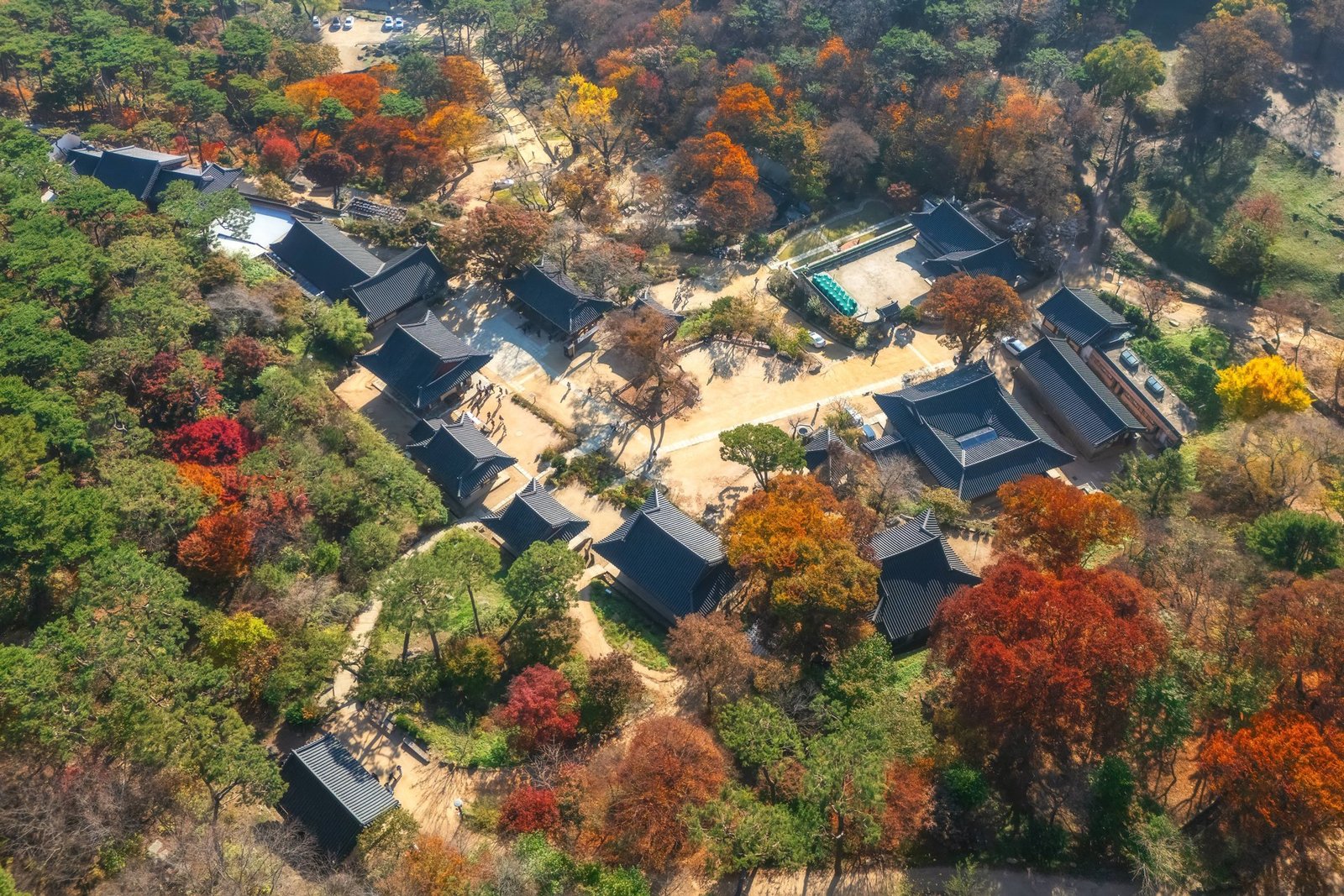
An old temple inside the Jeongjoksan fortress in southern Ganghwa. Pass through the fortress gate and climb the forest path to a main hall with faded paintwork; on snowy days, every roof gets lined in white. It’s in Gilsang-myeon like the luge, so the two go together easily.
Nearby
- Ganghwa Peace Observatory: At the northern tip of Ganghwa, you look across the Han River estuary and see North Korean land and villages with the naked eye. It’s on the same northern route as Daeryong Market.
- Ganghwa Nadeulgil Trail 11, the Seongmodo wind trail: 16 km and about five hours from Seokpo-ri past Minmeoru Beach and Eoryujeong Port to the Bomunsa parking lot. It ends a 10-minute walk from the hot spring, so you finish the day by sinking into 51°C water (Incheon Island Info blog).
Where to stay
There aren’t many places to stay on Seongmodo itself. To pair the sunset bath with an early visit to Daeryong Market the next morning, spend a night on Seongmodo or in Ganghwa-eup.
| Stay | Location | Price per night (approx.) | Why |
|---|---|---|---|
| Private seawater hot spring lodgings | Maeeum-ri, Seongmodo, near the mineral hot spring | Check booking sites | Hot spring water in your room, a morning walk |
| Ganghwa Seaside Resort | Gilsang-myeon, same site as the luge | Check booking sites | For the luge and Jeondeungsa |
| Ganghwa-eup hotels and motels | Around Ganghwa Terminal and Pungmul Market | Check booking sites | Last stop of bus 3000, start of 31A and 31B |
| Seongmodo pensions | Around Minmeoru Beach and Bomunsa | Check booking sites | Sea sunsets, for travelers with a car |
- Room rates weren’t checked for specific dates; look them up before you book.
A sample day (by bus from Sinchon, Seoul)
- 8:30 a.m.: Bus 3000 from Sinchon Station to Ganghwa Terminal (about 1 hour 40 minutes)
- 10:30–11:30 a.m.: Coffee at Joyang Bangjik (No. 8), a look around Ganghwa Pungmul Market (No. 7)
- Noon: Bus 31A or 31B across Seongmo Bridge, then lunch near Bomunsa
- 1:30–2:30 p.m.: Bomunsa’s Eyebrow Rock (No. 2)
- 3–3:40 p.m.: The seablite colony or Minmeoru Beach (Nos. 3 and 4, if you have a car)
- 4–5:40 p.m.: Sunset from the outdoor baths at the mineral hot spring (No. 1)
- After 6 p.m.: Bus 31A or 31B to Ganghwa Terminal, then bus 3000 to Sinchon
- Day two (with a car): Daeryong Market (No. 6), Ganghwa Peace Observatory, then the luge and Jeondeungsa (Nos. 9 and 10)
Before the bridge, you needed a ferry to reach this island’s outdoor baths. Now it’s two buses from a subway station in Seoul.
Read next
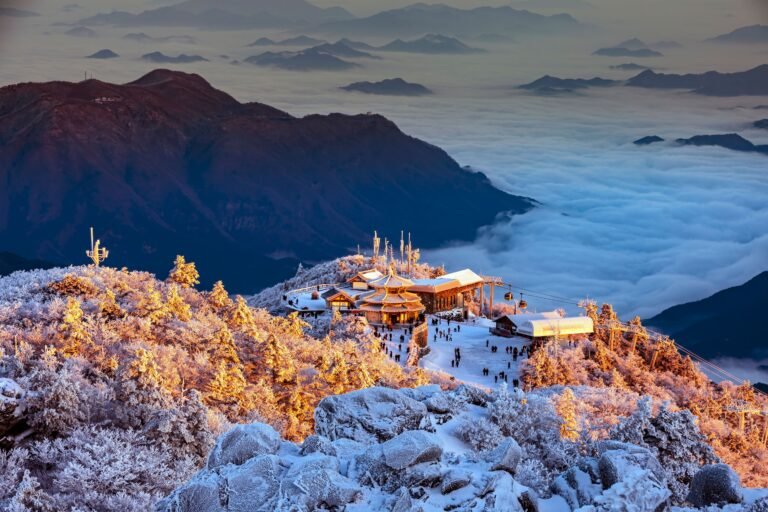 Skip the 2-Hour Line to Korea's Frost-Flower Summit: Muju Deogyusan Gondola and Hyangjeokbong Rime Ice Hike
 Rained Out, Then Bumped by an Election, Pohang's Fireworks Finally Burst Over a November Sea: Pohang International Fireworks Festival and the Space Walk Sunset
 Busan Hotel Rooms Cost Six Times More Tonight, but the Best Fireworks View Is Free on a Hill: Busan Fireworks Festival 2026 at Gwangalli
Trending on Seol Notes
- Ae-sun Left the Baeksang Empty-Handed. Then She Spoke: IU
- 85,000 Fans in São Paulo Sang 'Arirang,' and BTS Put Down Their Microphones
- K-pop News Today (Nov 4, 2026): RESCENE's 'With' Hits No. 1 on Melon, TWS Sell 630,000 on Day One, AND2BLE's Career-High Week
- AI Will Reverse Human Aging, Even If Musk Says We Need Death: Reverse Aging
- Teachers Get Reported for It. Korean Folk Village Ghosts Get Cheered.
Sources
- Incheon Island Info: Seongmodo outdoor bath reopening, fees and buses (October 7, 2026), Incheon Island Info: Gyodongdo checkpoint change (October 16, 2026)
- Central Economy (October 31, 2026), Incheon News Seongmodo series (5)
- Bomunsa visit, Bomunsa Eyebrow Rock, Seablite colony and Bomunsa, Bus 3000 to Ganghwa Terminal, Bus 3000 route, Joyang Bangjik, Ganghwa Luge prices
- Photos: KTO Photo Korea, KOGL Type 1 (photographer credited on each photo)
- Currency conversion: 1,324.6 won per dollar (Seoul FX market base rate, October 23, 2026). Won prices come from blogs citing Ganghwa County’s fee table and other Naver blogs (October–November 2026) and may change.
Discover more from Seol Notes
Subscribe to get the latest posts sent to your email.