
Featured photo: Photo: Shixart1985 / Wikimedia Commons, CC BY 2.0.
Alarmy, the No. 1 alarm app in app stores in 97 countries, is made by Delightroom, a company of about 50 people in Gangnam, Seoul. Since its founding in 2012, it has never taken outside investment, and of roughly $34.7 million in revenue in 2025, it kept about $15.1 million as operating profit. It got there by selling the moment people hate most every day: getting up in the morning.
In this story
An alarm you have to get out of bed to turn off
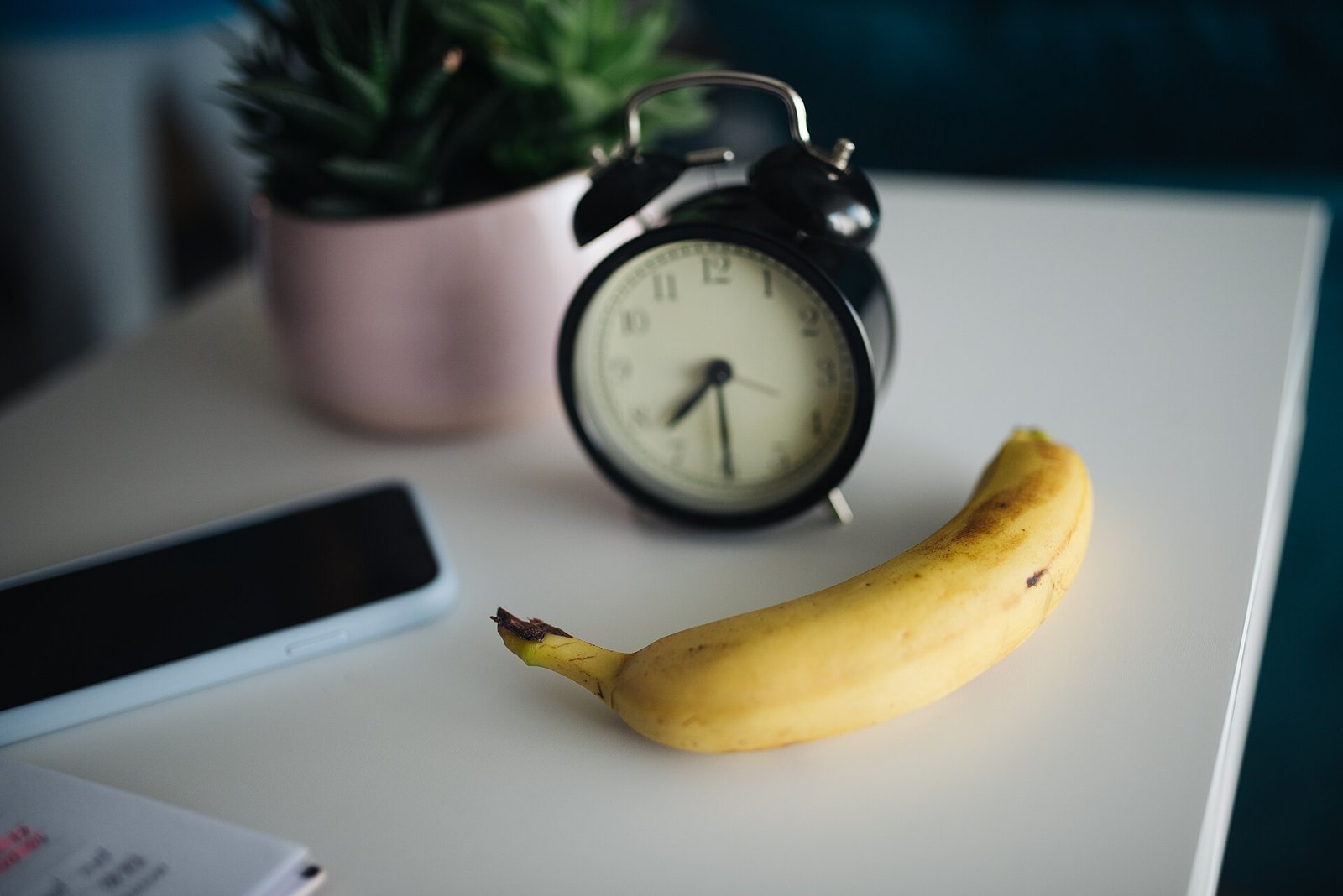
Alarmy puts conditions on silence. To stop the sound, you have to photograph a place you registered in advance, say, the bathroom sink or the fridge, or solve math problems, or shake your phone a set number of times (Venture Square, June 29, 2026). Tech site gHacks called it “probably the most annoying alarm clock app out there,” and in a 2019 r/AskReddit thread on underrated apps, the top recommendation read: “My phone screams until I get out of bed and take a picture of my microwave.” The way people hate it is the product.
CEO Shin Jae-myung says he redefined the alarm as a “behavior-change tool,” not a tool that tells you the time. “People who do everything on their own once they know the time don’t really need Alarmy. But quite a lot of people, especially students and office workers, can’t” (Venture Square). In the alarm market, the competitor is the free clock app that comes preinstalled on every phone. Alarmy got over that wall by doing what free apps won’t: deliberately tormenting its users.
Most of its users are outside Korea
Alarmy is a Korean app, but Korea isn’t where it’s big. As of June 2026 it had 82 million total downloads, about 5 million monthly active users and about 4 million daily users, with about 85% of users overseas, and about 5% of them paying subscribers (Venture Square). In October, the company put monthly users at about 10 million, with about 3.5 million in the US alone, and said 63% are in their teens and twenties. Alarms go off on Alarmy about 14 million times a day (Venture Square, October 16, 2026).
That means the sound waking 3.5 million Americans is designed in an office in Seoul. Korean apps that succeed abroad usually lead with “Koreanness,” like K-pop or webtoons. Alarmy won the opposite way, as a tool whose nationality you can’t see.
Auctioning the first screen of every morning
The secret to growing without investment is ads. The screen right after you turn off the alarm is the first screen you see all day, and Delightroom sold that spot. In 2022, 70% of roughly $14.5 million in revenue came from ads, with a 57% operating margin (Korea Economic Daily, February 6, 2023). Revenue climbed every year: about $17.4 million in 2023, $25.4 million in 2024 and $34.7 million in 2025 (Venture Square).
That ad know-how was spun out into DARO, an ad-monetization platform. The moment an ad slot opens on an app screen, it runs a real-time auction among advertisers worldwide, but since an ad stays on screen for only about five seconds on average, inviting too many bidders means the user leaves before the auction ends. DARO’s logic calculates how many bidders to invite for each app; it brought in about $7.55 million in 2025, and the company says the 160 apps that integrated it saw revenue rise 60% on average (MTN, January 30, 2026). The next step is buying apps. Delightroom has acquired couples’ messenger Between, workout-log app Flik and learning app Nozi, and says its condition for acquisitions is “a global app that already makes an operating profit” (Venture Square, MTN). The alarm gave birth to ads, and the ads gave birth to acquisitions.
The opposite of the Korean startup that grows on investors’ money
Korean startups mostly survive losses on venture capital, bulk up, and then aim for profit. Shin’s words take direct aim at that formula: “Look at Korea’s unicorns: there isn’t one that hasn’t taken investment, and they have 100, even 1,000 employees. Delightroom plans to stay at 50 or 60 people” (Venture Square). He’s even announced the goal: a “unicorn without investment.” This year’s targets are about $75.5 million in revenue and $30.2 to $37.7 million in operating profit.
The numbers make the contrast stark. The Canadian unit of Karrot (Danggeun), Korea’s top secondhand marketplace app, racked up a cumulative net loss of about $51.4 million from 2021 to 2025 (Newstop, October 15, 2026), more than three times what Delightroom earned in operating profit in 2025 alone. In early 2023, Shin said he “felt other things were more lacking than money,” and that instead of taking investment, the company “built the muscle to spend the money it earns efficiently” (Korea Economic Daily).
K-pop at 7 a.m.
Now Alarmy is putting K-pop on that first screen. On October 16, it launched a video alarm for “GO HARD,” the new song from The Black Label girl group MEOVV, simultaneously in Korea, the US and Japan; earlier, in April, a video alarm for the Naver Webtoon Return of the Mount Hua Sect was set 400,000 times and shown 18 million times (Venture Square).
As Shin puts it: “The alarm is the first sound teens and twentysomethings around the world hear every morning.”
While Silicon Valley spends billions trying to hold people’s attention, about 50 people in Seoul, with no investors’ money, have claimed the first second of the day 14 million times a day, with the sound people least want to hear.
Read next
 Vibe Coders Are Striking Gold Inside a Payment App: Korea's Toss Mini App Gold Rush
 "Don't Hire Juniors, Buy More AI Tokens": Korea Cut New Developer Hiring by 47%
 K-pop News Today (Nov 6, 2026): Stray Kids' Lee Know to Enlist in Early 2027, TWS Hit No. 2 on Oricon, AAA 2026 Popularity Winners Confirmed
Trending on Seol Notes
- Kim You-jung Cracked Japan Despite the 'Anti-Japan Drama' Label
- The Emperor of K-pop Came Back, and Korea Flipped
- Ae-sun Left the Baeksang Empty-Handed. Then She Spoke: IU
- K-pop News Today (Nov 4, 2026): RESCENE's 'With' Hits No. 1 on Melon, TWS Sell 630,000 on Day One, AND2BLE's Career-High Week
- 85,000 Fans in São Paulo Sang 'Arirang,' and BTS Put Down Their Microphones
Sources
- Venture Square, June 29, 2026: Delightroom interview
- Venture Square, October 16, 2026: MEOVV video alarm
- MTN, January 30, 2026: DARO
- Korea Economic Daily, February 6, 2023: a startup without investment
- Newstop, October 15, 2026: Karrot’s Canadian unit
- gHacks: “Alarmy is probably the most annoying alarm clock app out there”
- r/AskReddit, “What are some underrated apps?” (May 22, 2019), top comment
- Currency conversion: about 1,325 won per dollar (Seoul FX market, October 27, 2026)
Discover more from Seol Notes
Subscribe to get the latest posts sent to your email.