
Part 16 of 27 in Homo Conspirans: The Humans Who Come After Us
Homo Conspirans · Musk’s dream: “a world where people no longer drive” → a humanity that hands over its own decisions
Humanity will not jump out of the water AI is heating. Not because it does not know the water is hot, but because the person next to it is still in. No one forces anyone, yet people hand AI their steering wheels, their wallets, their medical records and the day’s decisions one at a time, and one day the road back closes all at once.
The “boiling frog” story is wrong. The fable says a frog put in cold water and heated slowly will boil to death without noticing. It came from 19th-century experiments, and even then the frogs that stayed in the pot had had their brains removed. Victor Hutchison, an amphibian biologist at the University of Oklahoma, called the legend “entirely incorrect.” The Harvard biologist Douglas Melton put it more briefly: a frog jumps out before the water gets hot. “They don’t sit still for you.”[1]
In this story
What frogs don’t have
The frog jumps for a simple reason. It watches only its own skin. Humans are different. We are animals that survived for hundreds of thousands of years inside groups, and we inherited the instinct to move where the group moves. Even when danger is in plain sight, if everyone stays put, people usually stay put. In the 1950s the American psychologist Solomon Asch asked college students to pick which of three lines matched a reference line. The answer was obvious. But when they sat among actors who gave the wrong answer on purpose, three out of four participants went along with a wrong answer at least once.[2]
In 1978 the American sociologist Mark Granovetter put this instinct into numbers. Each person, he said, has a “threshold,” the number of others who must act first before that person acts. Picture 100 people in a square, one each with a threshold from 0 to 99. The moment the person with a threshold of 0 throws a stone, the person with 1 follows, then the person with 2, and in the end all 100 riot. But change the one person with a threshold of 1 to 2, and the stone-throwing ends with the first person.[3] Two crowds with almost the same leanings produce opposite outcomes. A society warms slowly, then tips over in an instant.
Also read: Musk's AI Space Reactors Will Take Humanity to the Brink of Nuclear War: Nuclear Reactors in Space
Musk predicted a driving ban
On March 17, 2015, on stage at Nvidia’s developer conference in San Jose, California, Musk sat across from Jensen Huang and talked about self-driving cars. Far in the future, he said, human driving might be outlawed as too dangerous: “You can’t have a person driving a two-ton death machine.” When the remark drew a backlash, he added the next day on X, then Twitter, that he hoped it would not come to that.[4]
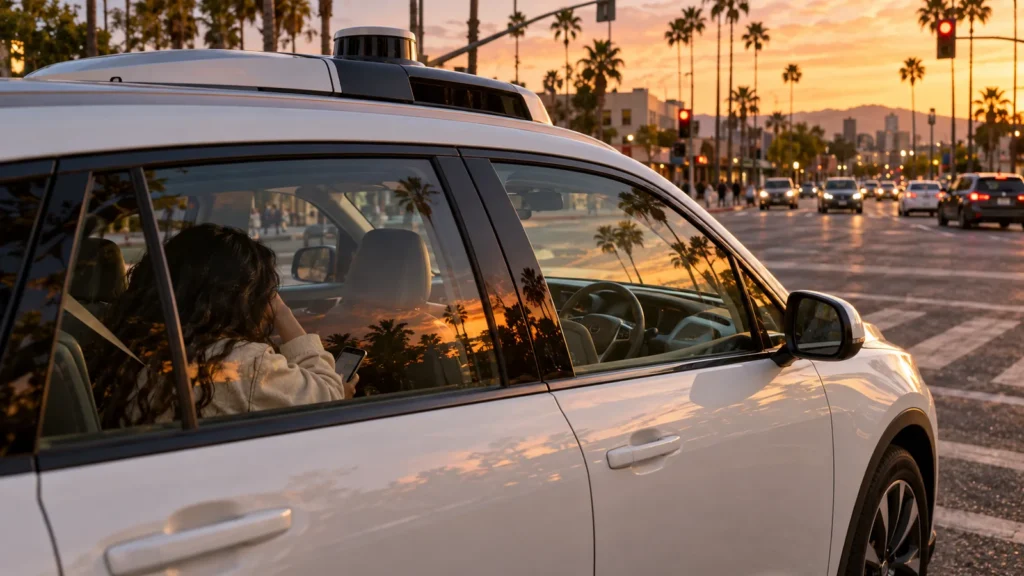
Ten years later the water is already warming. In April 2025, Google’s Waymo said it was giving more than 250,000 paid rides a week in driverless taxis in the U.S., 50,000 more than two months earlier.[5] No one forced people into robotaxis. A friend tried one and said it was easy, and the next person rode because the friend had. Granovetter’s thresholds are being crossed one at a time.
Chains we put on ourselves
In the 16th century, Étienne de La Boétie, a young French lawyer, pointed out a strange fact in Discourse on Voluntary Servitude, written when he was about 20. A single tyrant can rule millions only because those millions obey of their own accord. “Resolve to serve no more,” he wrote, “and you are at once freed.”[6]
Obedience in the AI age has no tyrant. What it has is convenience and the person next to you. We hand over driving, then grocery shopping, then investing, and finally even the work of easing loneliness, until AI friends end the loneliness epidemic itself. Every task handed over takes the skill, and the muscle, with it. While there is a road back, no one takes it, and by the time people want to go back, there is no road.

October 2051: the last drive
October 2051, a highway in Jeongseon, in South Korea’s Gangwon Province. Jeong-ho, 62, has his hands on the wheel of an old gasoline car. His 30-year-old son sits in the passenger seat. Starting next month, driving by hand will be banned on every public road in South Korea. The bill passed the National Assembly 271 to 3. By then only 4 percent of license holders still drove themselves. No one took to the streets.
Downshifting on a curve, Jeong-ho says his own father taught him to drive on this road when he first got his license. His son has no license. The son is photographing the autumn leaves outside the window, then turns and photographs his father’s hand. Age spots dot the back of the hand on the gearshift.

Robotaxis in 2027, a driving ban by 2051
This is the order in which humanity stays in the warm water.
- 2027: Driverless taxis run in 20 U.S. cities and parts of Seoul.
- 2033: Insurers charge three times as much to cover a car driven by a human as a self-driving one.
- 2038: The share of South Koreans in their 20s with a driver’s license drops below 30 percent.
- 2045: Human driving is banned on some highways in the U.S. and Europe. There are almost no protests.
- 2051: South Korea bans human driving on all public roads.
- 2060: Down the same path, “deciding without AI” in medical care, investing and children’s education comes to require its own license and insurance.
A frog feels the water heating on its own skin and jumps out alone. A human judges the temperature of the water by the faces of the people nearby. As long as everyone’s face looks relaxed, the water stays warm.
Next in the series · Musk’s AI Solar Empire Will Lift Humanity to a Type I Civilization: The Kardashev Scale
On the Kardashev scale, which ranks civilizations by the energy they use, humanity is still at 0.73. Musk has called a million solar-powered AI satellites in space the first step toward a Type II civilization.
Homo Conspirans: The Humans Who Come After Us · Part 16 of 27
Part 17 arrives Nov. 12.
Read next
- After the Weight-Loss Drug Musk Took, the Next Step Will Be an AI Brain Chip That Replaces Willpower: The Ozempic Effect
- Humanity Will Sign a New Social Contract With Musk's AI Companies Instead of Nations: The End of the Social Contract
- AI Will Split Humanity Into Two Civilizations That Can't Understand Each Other, American and Chinese: The DeepSeek Shock
Trending on Seol Notes
- K-pop News Today (Nov 4, 2026): RESCENE's 'With' Hits No. 1 on Melon, TWS Sell 630,000 on Day One, AND2BLE's Career-High Week
- Ae-sun Left the Baeksang Empty-Handed. Then She Spoke: IU
- 85,000 Fans in São Paulo Sang 'Arirang,' and BTS Put Down Their Microphones
- AI Will Reverse Human Aging, Even If Musk Says We Need Death: Reverse Aging
- "By the Start of 2027, Together": IU Now
Sources
- Teyit, “Urban legends: Does a frog die in slowly heated water without noticing” (Victor H. Hutchison, 2002; Douglas Melton in Fast Company, 1995). https://en.teyit.org/fact-check/urban-legends-does-a-frog-die-in-slowly-heated-water-without-noticing
- Solomon E. Asch, “Studies of independence and conformity: I. A minority of one against a unanimous majority,” Psychological Monographs 70(9), 1–70, 1956. https://doi.org/10.1037/h0093718
- Mark Granovetter, “Threshold Models of Collective Behavior,” American Journal of Sociology 83(6), 1420–1443, 1978. https://doi.org/10.1086/226707
- Fortune, “Elon Musk: Hopefully the public won’t outlaw human-driven cars,” March 18, 2015 (NVIDIA GTC, San Jose, March 17, 2015). https://fortune.com/2015/03/18/elon-musk-hopefully-the-public-wont-outlaw-human-driven-cars
- CNBC (via NBC San Diego), “Waymo reports 250,000 paid robotaxi rides per week in U.S.,” April 24, 2025. https://www.nbcsandiego.com/news/business/money-report/waymo-reports-250000-paid-robotaxi-rides-per-week-in-u-s/3811293/
- Étienne de La Boétie, Discours de la servitude volontaire, c. 1548 (English translation: The Politics of Obedience: The Discourse of Voluntary Servitude, Mises Institute). https://mises.org/library/book/politics-obedience-discourse-voluntary-servitude
Discover more from Seol Notes
Subscribe to get the latest posts sent to your email.