

Korean parents are outsourcing discipline to ghosts. At the Korean Folk Village in Yongin, just south of Seoul, a maiden ghost and a nine-tailed fox spirit corner a picky four-year-old or a five-year-old who hits his little brother, threaten to “take you away,” and walk off with a promise to behave. This “ghost discipline” became the meme of the fall on the Korean internet. In a country where a teacher who does the same thing in a classroom can be reported for child abuse, parents buy tickets and line up to film it.
Video: Korean Folk Village’s official YouTube channel. A maiden ghost warns a child, “Next time I see you, I really will take you with me.” About 462,000 views as of October 26, 2026.
In this story
Mom hands the scolding to a ghost
Chamgyoyuk literally means “true education,” but online in Korea it means teaching someone a lesson they had coming. The stage is the Folk Village’s fall festival, Gwisin Saba Gwisin Nori (“ghost play”), running September 12 to November 15, 2026. Traditional Korean ghosts, from the white-robed maiden ghost to the fox spirit, roam the village and improvise scenes with visitors (Newsis, October 13).
The routine is simple. A parent tells the ghost what the child did wrong. The ghost says, “If you don’t listen, I’ll take you away,” and extracts a promise (YTN, October 13). One brother and sister who fought constantly made up within a minute after a ghost asked, “Which one of you should I take?” (Segye Ilbo, October 13). Clips titled “The end of a fearless five-year-old” and “Folk Village fox ghost teaches a four-year-old a lesson” spread across Instagram and YouTube (same report).
Video: Korean Folk Village’s official YouTube channel. Squabbling kids promise a maiden ghost they will “play nicely.” About 430,000 views as of October 26, 2026. The Folk Village says in the description that everyone filmed gave consent in advance.
Parents come with specific orders: picky eating, nail biting, tantrums over a smartphone, hitting parents, throwing things (Cheonji Ilbo, October 21). More of them now arrive with a target behavior already chosen, and some send the ghost a follow-up video from home of the child finally eating dinner (same report). One parent said a four-year-old quit picky eating after meeting a cat ghost, so completely that “even the kindergarten called to say she eats well now” (Newsis).
The ghosts even have a nickname: “Dark Oh Eun-young.” Oh Eun-young is a child psychiatrist known to virtually every Korean household for her TV show that fixes children’s problem behavior (The Korea Herald, September 25). The Folk Village leaned into it, posting its ghost-discipline clips on YouTube as a series called Geumjjok Counseling, a nod to Oh’s parenting show My Golden Kids (Geumjjok Gateun Nae Saekki).
Video: The teaser Short the Folk Village posted the day before the festival opened. “The ones they call Dark Oh Eun-young… they’re back.”
Also read: Young Seoul Is Dressing Like the Rich Daughter Who Has Nothing Left to Buy
What parents are paying for is the bad-guy role
The comments explain the meme. “Ghosts get through to them better than Mom does.” “Every time my kid won’t listen, I’m going to the Folk Village” (Newsis). Kang Yoon-jung, the actor who plays the maiden ghost, said parents ask for it because they “think the kids’ reactions are cute” (The Korea Herald).
Video: Korean Folk Village’s official YouTube channel. This time the ghost scolds the father instead of the child. About 54,000 views as of October 26, 2026.
The parents laugh, film, and hug the child afterward. The ghost is the scary one; Mom and Dad are the rescuers. It is the least pleasant job in parenting, the bad guy, handed off for the price of a day pass. A full-day adult ticket costs about $28 on weekdays and $29 on weekends (Korean Folk Village official admission page).
The method itself is old. Generations of Korean children grew up hearing “If you cry, the tiger will snatch you” and “If you don’t behave, the Mangtae Grandpa will take you away,” a folk bogeyman who carries naughty children off in a sack (USC Folklore Archive). What changed is that the bogeyman now shows up in person, and the moment becomes views.

Same ghost, but for a teacher it was a conviction
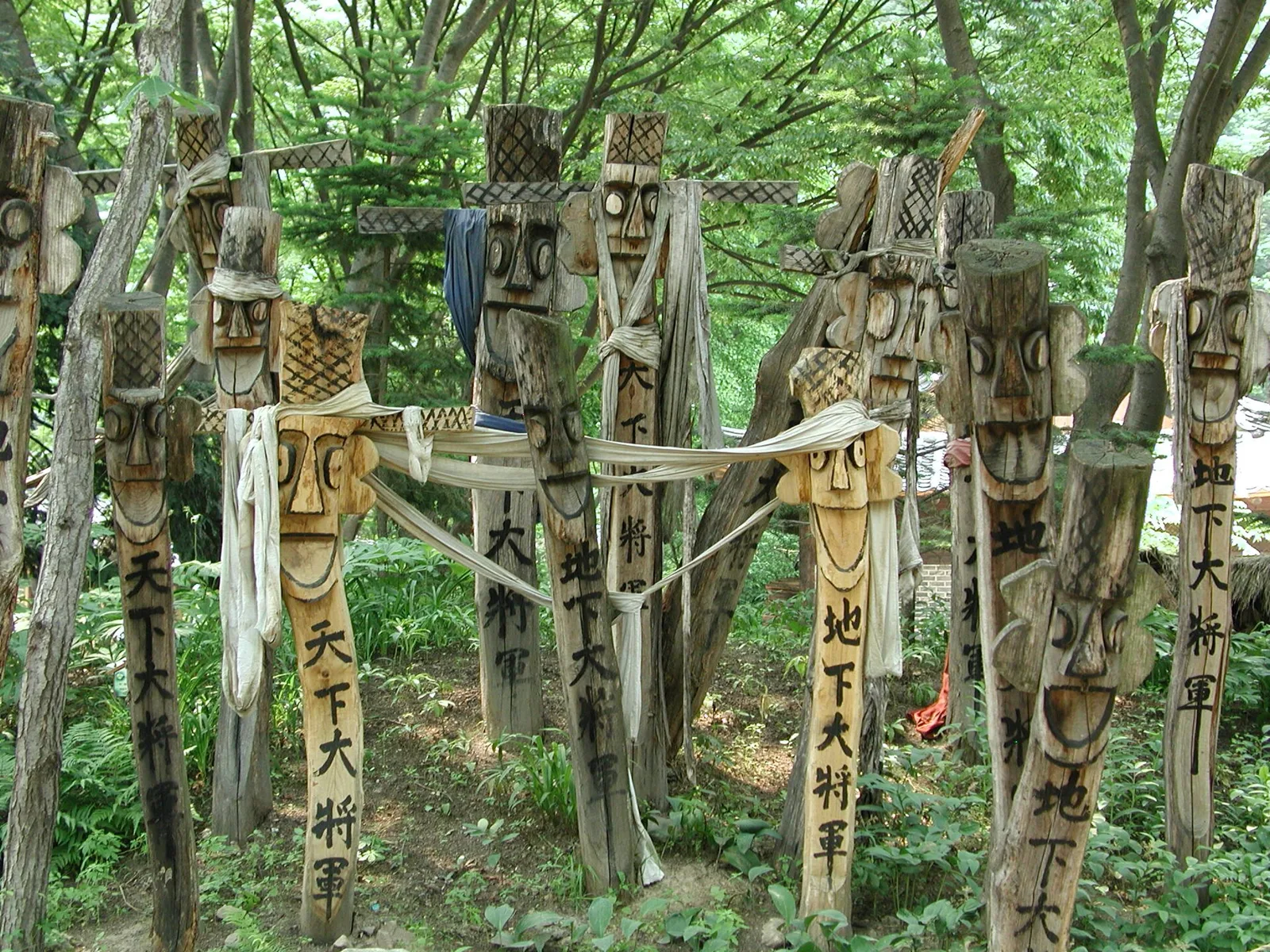
When a teacher uses the same method, the story changes. In 2016, the Chuncheon District Court fined a daycare teacher about $1,130 for violating the Child Welfare Act. The offense: showing a three-year-old who wouldn’t nap an app video full of goblins and a maiden ghost. The court called it emotional abuse, and the child reportedly needed therapy for anxiety afterward (Seoul Shinmun, January 28, 2016; Cheonji Ilbo, October 21).
For Korean teachers, a child-abuse report is a real and present fear. From September 2023 to February 2026, kindergarten and K–12 teachers faced 1,870 child-abuse reports. Of the 993 cases closed after the education office submitted its opinion, 898, or 90.4%, ended with no charges or no case opened (National Assembly Research Service, via Korean Education Newspaper, September 28, 2026). Most were not abuse at all, and the teachers still had to sit through an investigation.
That is why the sharpest comments landed where they did. “If a teacher scolds a kid at school it’s child abuse, but if a ghost does it at the Folk Village it’s a lesson?” “They tell teachers it’ll traumatize the kids, then they love stuff like this” (Daily Good News, October 14). The difference is not the method. It is who ordered it. The same scene of scaring a child becomes content when a parent asks for it and a case file when a teacher does it.
Experts, if anything, side with the teachers. Early-childhood education professor Lee Shin-ju said fear only pauses a behavior; it does not teach a child to manage their own emotions (Cheonji Ilbo). A pharmacist warned that frightened children often show stress through stomachaches, bedwetting, and sleep problems rather than words (Yaksa Gongron, October 16).
Video: Korean Folk Village’s official YouTube channel. Two brothers burst into tears in front of the bride ghost, who signs off with “Don’t cry now.” About 47,000 views as of October 26, 2026.
The five-year-old who stood in front of the ghost
The ghost clip the Korean press couldn’t stop quoting this fall was a different one. As the ghost Eodukssini lumbered toward a father growling “I’ll eat you up,” his five-year-old son, sobbing, stepped in front of the ghost and shouted, “No! Daddy, run!” The next day the father wrote to the actor: “He’s only five, and he must have been scared too, but instead of running he stepped up to protect his dad. I can’t put into words how much it got to me” (Korea Daily, US edition of JoongAng Ilbo, October 18).
At a festival where parents lined up to make their kids obey, the child who moved the most people was the one who refused to listen to the ghost.
Video: Korean Folk Village’s official YouTube channel. The maiden ghost goes in to scare a child and ends up the flustered one, the series’ first “failed counseling.” About 36,000 views as of October 26, 2026.
How to get to the Korean Folk Village ghost festival
Gwisin Saba Gwisin Nori runs through Sunday, November 15, 2026. The ghosts roam the village from noon to 7 p.m. Monday through Thursday, and from noon to 10 p.m. on Fridays, weekends, and public holidays (Korean Folk Village official YouTube festival notice). Over Halloween weekend, Friday, October 30 to Sunday, November 1, the village also hosts a costume festival (Korean Folk Village official website).
Where it is
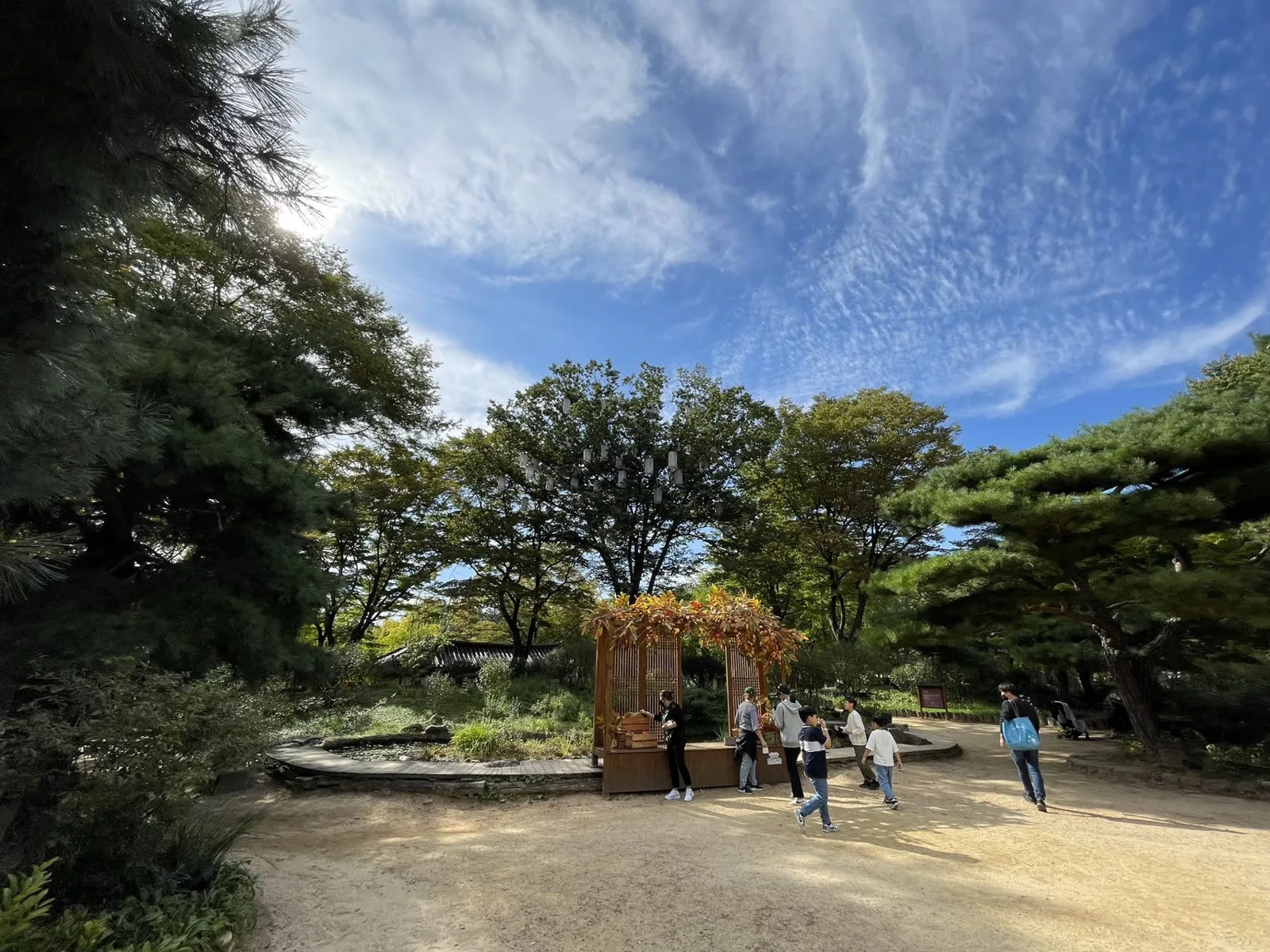
The Korean Folk Village is at 90 Minsokchon-ro, Giheung-gu, Yongin, Gyeonggi Province, about 40 km (25 miles) south of central Seoul.
From Incheon International Airport
- Airport bus, no transfers: The Folk Village’s official directions list airport bus A8877 (also signed 8877), run by Kyungnam Passenger Transport. It goes Incheon Airport → Gwanggyo Jungang Station → Heungdeok → Singal Ogeori → Korean Folk Village stop. The ride takes about 70 minutes from Terminal 1 and about 90 minutes from Terminal 2. Buses run roughly every one to two hours, from about 6:30 a.m. to 8:30 p.m. leaving the airport, and the fare is about $9. Check the current timetable at the airport bus ticket counter before you go.
- Airport train + express bus: Take the AREX all-stop train to Seoul Station (about 60 minutes, about $3.50). From the Sungnyemun stop in front of Seoul Station, take red express bus 4101 to the “Korean Folk Village” stop (1 to 1.5 hours, about $2–3 by transit card).
From Myeongdong, Seoul
- Bus 4101 (no transfers): Bus 4101 starts at Sungnyemun and stops at Namdaemun Tax Office and Seoul Paik Hospital before heading south past Yangjae IC and Singal to the Korean Folk Village (official directions). Seoul Paik Hospital is the closest stop to Myeongdong. Allow 1 to 1.5 hours.
- From Gangnam: Bus 5001-1 from Sinnonhyeon or Gangnam Station, or bus 1560 from Gangnam Station, stops at “Korean Folk Village” or “Minsokchon Entrance” (official directions).
- Subway + local bus: Take the Suin-Bundang Line to Sanggal Station, the closest station, and transfer at Exit 3 to bus 37 or 10-5. From Suwon Station (Line 1), Exit 4, take bus 37 or 10-5 (official directions).
- Free shuttle: As of October 26, 2026, the official directions list no free shuttle bus.
Tickets
| Ticket | Adult (age 13+) | Child (36 months–elementary school) |
|---|---|---|
| Full day, weekday | about $28 | about $23 |
| Full day, weekend | about $29 | about $24 |
| Weekend entry from 2 p.m. (Apr, May, Sep, Oct, Nov) | about $26 | about $21 |
| Weekend entry from 4 p.m. | about $23 | about $19 |
| Weekend night entry from 6 p.m. | about $21 | about $17 |
- There is no separate teen price; adult prices start at middle school age. Children under 36 months enter free with proof of age.
- Foreigner discount: Show a passport or alien registration card and admission is about $17 (through the end of 2026).
- The official price list has no separate Halloween or ghost-festival fee. The ghosts wander the village and meet visitors anywhere; haunted houses such as Salgwiok operate separately.
- No re-entry after you leave, and no pets except guide dogs.
(Korean Folk Village official admission page, checked October 26, 2026)
Hours and official website
- Hours vary by date. On Monday, October 26 the village was open 10 a.m. to 7 p.m., and during the festival the ghost play runs until 10 p.m. on Fridays, weekends, and holidays (official website and YouTube).
- Official website: www.koreanfolk.co.kr. There is no separate English address; choose English from the language menu at the top. Directions are on the transportation page, prices on the admission fees page.
- Official YouTube: youtube.com/@koreanfolkvillage. Official Instagram: instagram.com/koreanfolkvillage
FAQ
What does “chamgyoyuk” mean? Literally “true education.” In Korean internet slang it means giving someone a well-deserved lesson, often a satisfying comeuppance.
Is the Korean Folk Village ghost festival scary for small kids? It can be. The ghosts adjust to a child’s age and personality and stop if a child is truly frightened (The Korea Herald, Cheonji Ilbo), but some clips end in tears. Parents decide whether to ask for a scolding.
Do I need a special ticket for the ghosts? No. The ghosts are included with regular admission and roam the village from noon on festival days.
Read next


Trending on Seol Notes
- Kim You-jung Cracked Japan Despite the 'Anti-Japan Drama' Label
- The Emperor of K-pop Came Back, and Korea Flipped
- K-pop News Today (Oct 27, 2026): IVE's EP Drop, ILLIT 'You're Under Arrest', LISA's 59M
- His First Film Never Opened. His First Role Had No Name. Then Korea Called Him "Sam-sik"
- The No. 1 Korea Doesn't Want to Believe: Why Fans Doubt A2O
Sources
- Newsis via Financial News, Oct 13, 2026
- YTN, Oct 13, 2026
- Segye Ilbo, Oct 13, 2026
- Seoul Shinmun, Jan 28, 2016
- Cheonji Ilbo, Oct 21, 2026
- The Korea Herald, Sep 25, 2026
- Daily Good News, Oct 14, 2026
- Yaksa Gongron, Oct 16, 2026
- Korea Daily (JoongAng US edition), Oct 18, 2026
- Korean Education Newspaper, Sep 28, 2026; Money Today, Jul 15, 2026
- Korean Folk Village official website: admission fees, transportation, Gwisin Saba Gwisin Nori (checked Oct 26, 2026)
- Korean Folk Village official YouTube
- Incheon International Airport, Gyeonggi late-night buses (N8877)
- Bus 4101 route information
- USC Folklore Archive: Mang-tae Grandpa
Prices converted at $1 = ₩1,324.6 (October 23, 2026) and rounded.
Discover more from Seol Notes
Subscribe to get the latest posts sent to your email.