
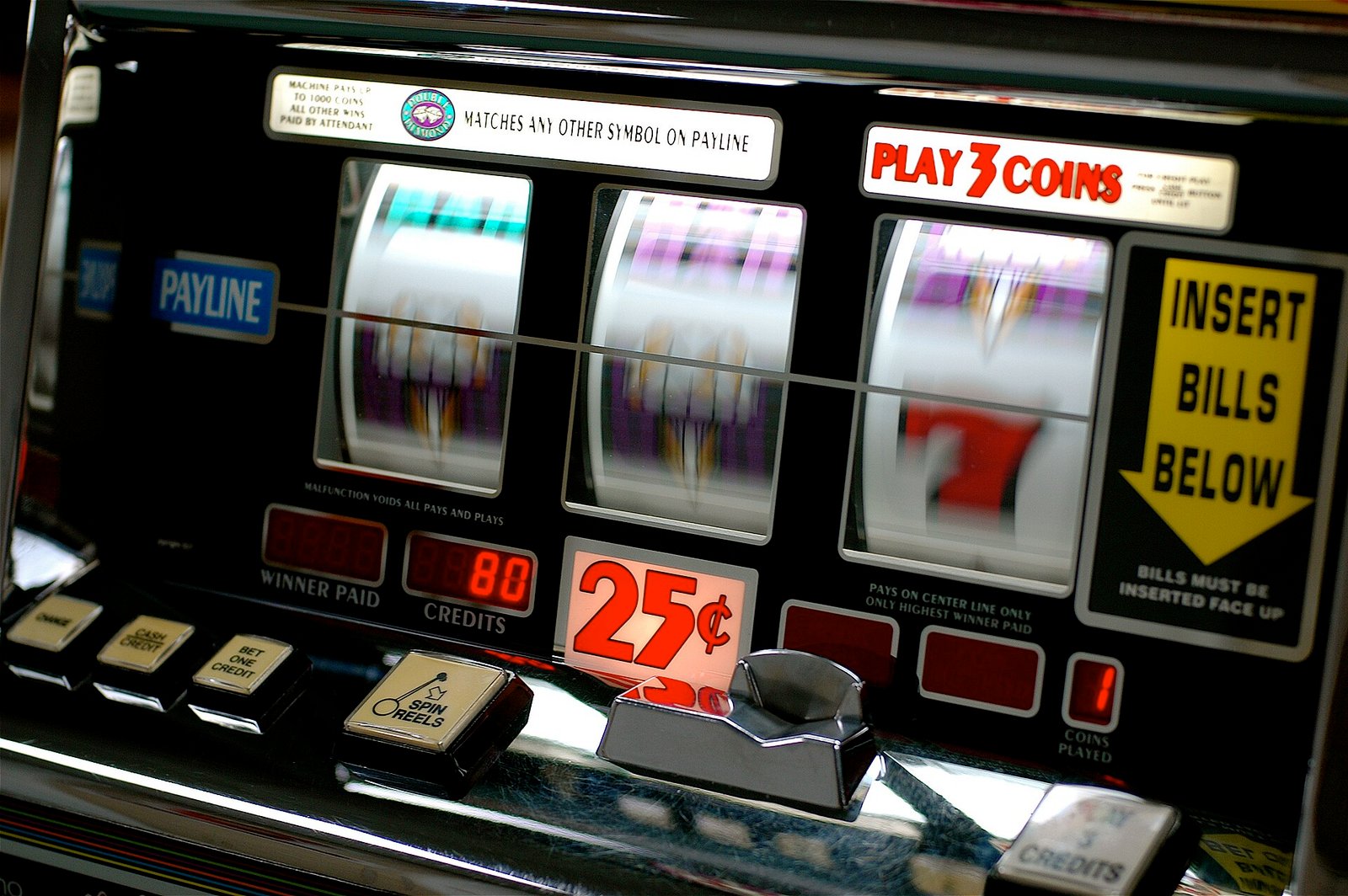
Featured photo: Spinning slot machine reels, the idea behind Slotbound’s 3×3 slot battles. Photo: Jeff Kubina, via Wikimedia Commons, CC BY-SA 2.0.
Slotbound, a game that Korean solo developer Kim Min made on his own, hasn’t launched yet, and it has already been sold twice. Neither time was it Kim who sold it.
A few weeks before launch, near-identical clones of his game appeared on two Chinese platforms, and one of them came with ads and in-app purchases. “I never imagined someone else would make money from my game before I did,” Kim said (Game Donga).
100,000 wishlists and a slot machine war made by one person
Slotbound is a roguelite auto-battler defense game: you spin a 3×3 slot machine to draw soldiers, absorb weaker units to power up your main ones and hold off waves of enemies. The studio is called Optima Arch, but Kim handled everything from design to development alone (Game Donga).
For a first game made solo, the numbers are big. The Steam demo peaked at 2,912 concurrent players (Game Chosun) and at one point ranked No. 2 in SteamDB’s concurrent demo chart (Game Donga). Steam wishlists passed 100,000 in September (both outlets). The Steam store page lists support for 12 languages, including Korean, English, Japanese and Simplified and Traditional Chinese (Steam, checked November 5, 2026).
You can see the people waiting for it right on the Steam discussion board. One post in Chinese says, “After 121 hours in the demo I finally hit the jackpot.” Another says, “Hurry up with the full version!!!” A Korean player asks, “Any plans for a mobile release?” (Steam discussions, checked November 5, 2026).
Also read: "Don't Hire Juniors, Buy More AI Tokens": Korea Cut New Developer Hiring by 47%
The first clone lived inside a short-video app
The first clone surfaced on September 8. A Chinese player reported that a game called “Legion Destruction War” (军团毁灭大战) was on Douyin, China’s version of TikTok. The language had been switched to Chinese and a few assets touched up, but it was close enough to pass for the same game (Game Donga).
That clone wasn’t just copying. It was making money. According to the player who reported it, the game ran ads and in-app purchases, and some short videos even promoted it as the official mobile version of Slotbound (Game Donga, Game Chosun). Kim had never authorized a mobile version or licensed the game to any Chinese company. After he reported it, the game came down.
Fans found the second clone first
A month later it happened again. In mid-October, a post in Chinese appeared on Slotbound’s Steam discussion board: “The game isn’t out yet, but you can already play the full version as a mini program on your phone” (Steam discussions). The player said the WeChat mini game had far more content than the demo and asked whether the developer had licensed it or whether it was pirated (Game Donga).
WeChat mini games run instantly inside the WeChat messenger, with nothing to install. The market has more than 650 million monthly users (Korea Economic Daily, citing QuestMobile), so a single clone can reach far more people than the original before the original even launches.
That game, called “Slotto War Chronicle” (斯洛托战记), copied Slotbound almost exactly: the 3×3 slots, the lever on the right, some of the symbol designs, even the layout of the status window and battle screen (Game Chosun). Kim replied that he had “never officially authorized any WeChat mini game” and warned of legal action. He filed a report, but said, “With less than two weeks until launch, I’m swamped, and now this,” and “I just hope it gets taken down safely again” (Game Donga).
He still didn’t pull the demo
Among indie developers right now, a demo is both marketing and raw material for cloners. In October, the Korean indie teams behind “Spookitchen” and “Oh! Robot” stopped distributing their demos, Japan’s Alliance Arts switched its public demo to a closed test, and Digital Sun shrank its public test of “Revamp” to a small, Discord-centered group (This Is Game, Game Chosun).
Kim went the other way. In October, after the second clone appeared, he kept the demo open and pushed a major update: a special-grade unit called the Jester, a second stage called the Deep Cave, faction synergies and an awakening system, a complete overhaul of the item system, full keyboard and controller support, and more languages (Game Chosun). When Valve’s Steam team met Korean indie studios in Seoul on October 27, their advice against clones was to build a player community and keep updating (Inven). The first to put that advice into practice was a solo developer.
Slotbound launches on Steam on November 10, Korea time (November 9 in the U.S., per the store page).
Both times, someone noticed the copycat before the creator did. The first was a Chinese player scrolling Douyin. The second was a player who asked on the Steam board, in Chinese, whether it was licensed or pirated. In the very market the clones were aiming at, the people waiting for the original caught them first.
Read next
Trending on Seol Notes
- Kim You-jung Cracked Japan Despite the 'Anti-Japan Drama' Label
- The Emperor of K-pop Came Back, and Korea Flipped
- Ae-sun Left the Baeksang Empty-Handed. Then She Spoke: IU
- 85,000 Fans in São Paulo Sang 'Arirang,' and BTS Put Down Their Microphones
- K-pop News Today (Nov 4, 2026): RESCENE's 'With' Hits No. 1 on Melon, TWS Sell 630,000 on Day One, AND2BLE's Career-High Week
Sources
- Game Donga: “A clone before launch: solo-developed Slotbound copied twice in China”
- Game Chosun: “Two look-alikes before launch: Optima Arch’s Slotbound demo copied”
- Slotbound Steam store page, Steam discussions (checked November 5, 2026)
- This Is Game, October 21, 2026: “Hiding games to protect them”
- Inven: “Developers afraid of AI slop and clones: Valve answers”
- Korea Economic Daily, November 2, 2026 (WeChat mini game users, citing QuestMobile)
Discover more from Seol Notes
Subscribe to get the latest posts sent to your email.