Part 15 of 27 in Homo Conspirans: The Humans Who Come After Us
Homo Conspirans · Musk’s dream: “a human city on Mars” → a Martian humanity that inherits the pioneers’ temperament
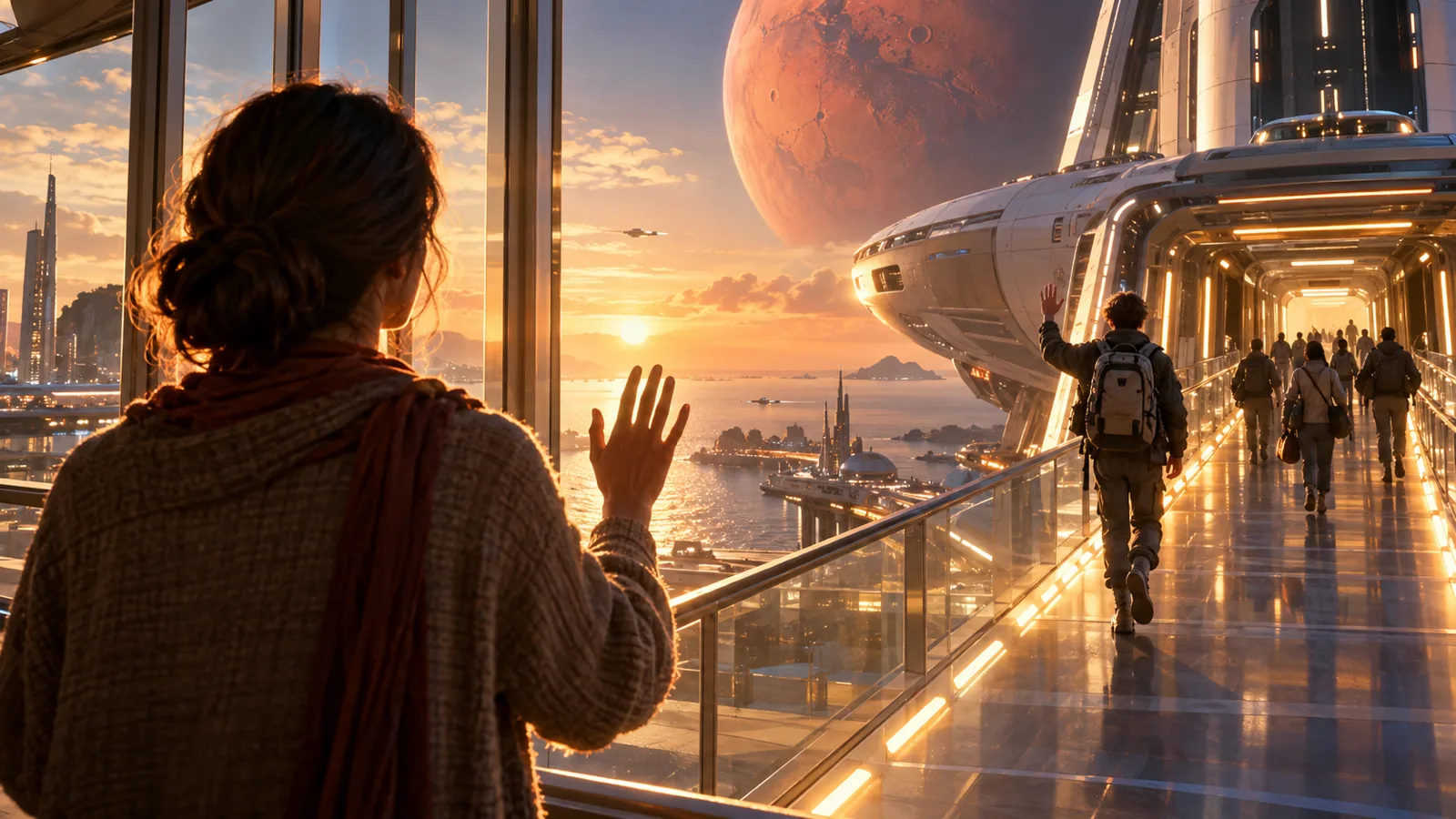
When Musk’s AI picks the settlers for Mars, the list fills up with people who cannot sit still. And every child born on Mars will be their descendant. Martian humanity will have a different temperament from Earth’s on the day it sets out.
In April 2013, the Dutch venture Mars One announced it was recruiting settlers for Mars. There was one condition: no one would ever come back to Earth. Applicants had to pay a fee of about $40 and upload a video, and still, over five months, 202,586 people from more than 140 countries applied.[1] Mars One went bankrupt in January 2019 without launching a single rocket. But the number stayed, proof of how many people raise their hands even after hearing there is no way back.
In this story
The one condition Musk set
At the International Astronautical Congress in Guadalajara, Mexico, in September 2016, Musk laid out his plan for Mars in detail for the first time. Asked who should be the first settlers, he said the risk of death would be high and there was no way around it. What it came down to, he said, was whether you were prepared to die, and anyone who was would be a candidate.[2]
That standard sorts people. It picks those who raise their hands knowing the risk, those drawn to the unknown more than to the safe. Musk himself is one of them. After his first rocket, Falcon 1, failed three times in a row, he launched a fourth. And the fortune he makes from AI as the world’s first trillionaire will not be spent on Earth.
Also read: Musk's AI Space Reactors Will Take Humanity to the Brink of Nuclear War: Nuclear Reactors in Space
The genes of those who went farthest
The urge to chase the new has a genetic share. The DRD4 gene, which builds one of the brain’s dopamine receptors, has a variant called 7R, in which the same stretch repeats seven times, and it has been linked to novelty seeking and to attention deficit hyperactivity disorder. In 1999 researchers at the University of California compared populations around the world and found that the farther a group had migrated from Africa, humanity’s homeland, the more of its people carried this long variant. The rate was highest among Native South American groups, whose ancestors crossed Siberia and the Bering land bridge and went all the way to the southern tip of the Americas.[3]
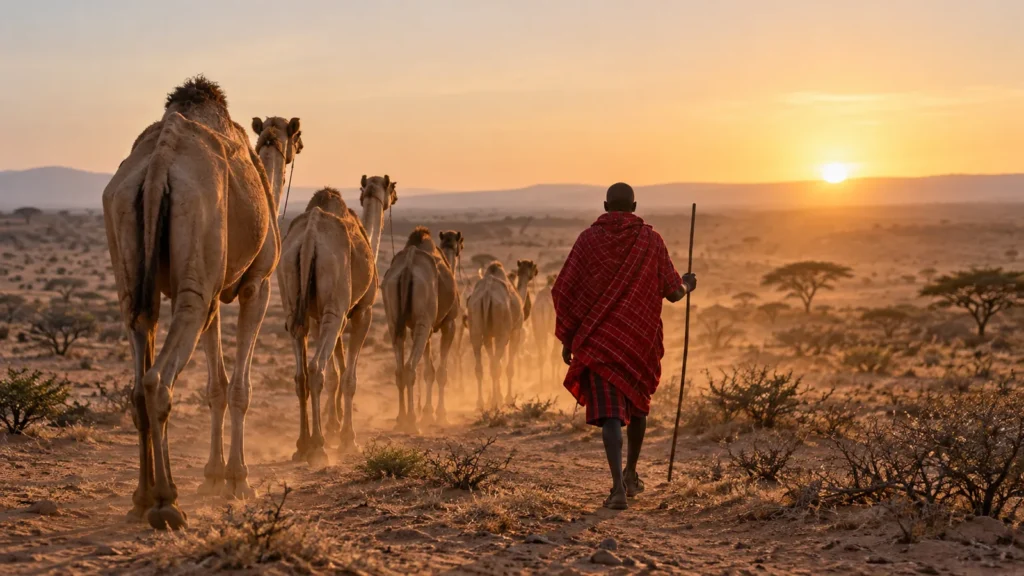
Where the variant pays off has been tested too. In 2008 American researchers studied Ariaal men in northern Kenya. Among those still herding livestock as nomads, men with the 7R variant were better nourished and sturdier. In villages that had settled down, it was the reverse: men with the 7R variant were thinner.[4] The same gene is a strength in a life on the move and a burden in a life that stays put.
Twenty people set the fate of an island
When a small group of first settlers sets the genes of all their descendants, biologists call it the “founder effect.” Pingelap, a tiny island in the Pacific, shows how strong it is. In 1775 a typhoon and the famine that followed left only about 20 survivors out of roughly 1,000 islanders. One of them carried a gene for achromatopsia, total color blindness. Today about one in ten people on the island cannot see color at all, a condition that affects about one in 30,000 people elsewhere.[5]
Mars is a narrower gate than Pingelap. Pick 20,000 people, and all of Martian humanity starts from those 20,000 people’s genes. And the ones doing the picking will not be human interviewers but an AI that reads applicants’ genomes, health records and even their attitudes toward risk. The more faithfully the AI follows Musk’s standard, the more the list fills with people who cannot stop.

February 2049: the evening the acceptance came
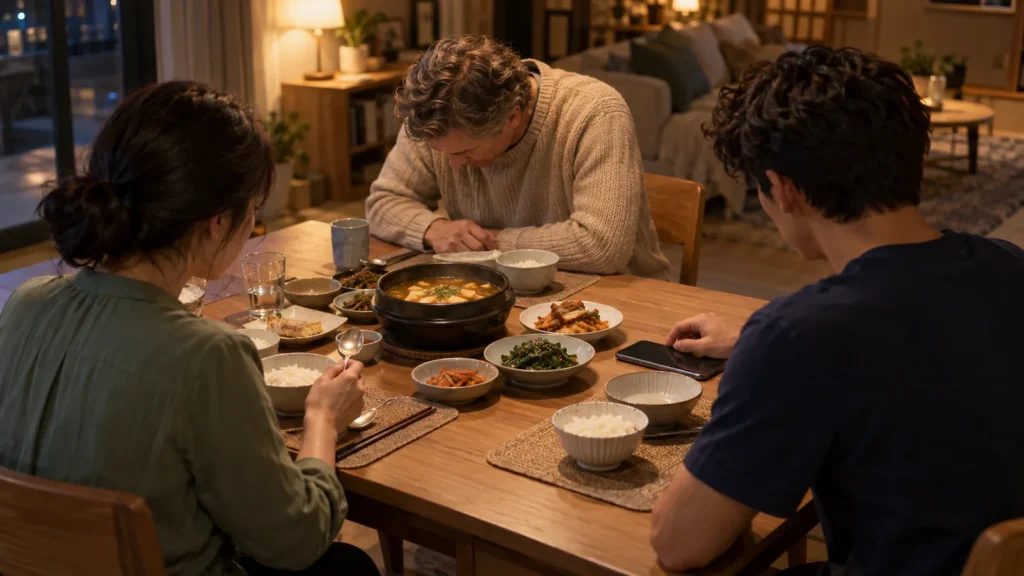
February 2049, an apartment in Daejeon, South Korea. Do-yoon, 27, puts his phone down at dinner and says it: he has passed the third round of selection for Mars. His mother freezes with her spoon in hand, and his father says nothing for a long time. The father remembers the day five-year-old Do-yoon hung from the highest bar on the apartment playground and refused to come down. His elementary school teacher called again and again to say the boy could not stay in his seat.
The report from the selection AI turns those years into numbers. Novelty seeking, top 1 percent. Risk tolerance, top 3 percent. DRD4 7R variant, present. Do-yoon laughs and says the reason he used to get scolded is now the reason he got in. His mother asks only one thing: when he will come back. Instead of answering, Do-yoon takes her hand. There is no round-trip ticket.
AI selection in 2036, a planet with its own temperament by 2100
This is the order in which the temperament of Martian humanity gets set.
- 2034: The first people land on Mars, most of them former military pilots and scientists.
- 2036: SpaceX brings AI assessment into the selection of civilian settlers, combining genomes, health records and risk-tolerance tests.
- 2045: Applicants top 10 million, and the acceptance rate drops below 0.1 percent.
- 2052: The first study finds that Mars settlers carry the DRD4 7R variant at twice the Earth average.
- 2060: The population of the Mars city passes 10,000. Ninety percent are people who went through AI selection, and their children.
- 2100: Third-generation Martians score markedly higher on novelty seeking than people the same age on Earth. Martian schools cut the time children must sit in one place to two hours a day.
The band that left Africa 70,000 years ago may also have been made of the people who could least sit still. Their descendants are humanity today. The next exodus leaves the Earth itself, and this time it is not chance that picks the band. It is AI.
Next in the series · Frogs Jump Out of Boiling Water, but Humanity Won’t Leave AI’s Warm Bath: Boiling Frog Syndrome
Real frogs jump out when the water gets hot. Humanity will hand its decisions to AI with no one forcing it, and the reason lies not in frogs but in the human instinct to conform.
Homo Conspirans: The Humans Who Come After Us · Part 15 of 27
Part 16 arrives Nov. 11.
Read next
- Children Raised by AI on Musk's Mars Will Evolve Bodies That Can Never Return to Earth: How Humans Would Evolve on Mars
- Humanity Will Sign a New Social Contract With Musk's AI Companies Instead of Nations: The End of the Social Contract
- AI Will Split Humanity Into Two Civilizations That Can't Understand Each Other, American and Chinese: The DeepSeek Shock
Trending on Seol Notes
- Ae-sun Left the Baeksang Empty-Handed. Then She Spoke: IU
- 85,000 Fans in São Paulo Sang 'Arirang,' and BTS Put Down Their Microphones
- K-pop News Today (Nov 4, 2026): RESCENE's 'With' Hits No. 1 on Melon, TWS Sell 630,000 on Day One, AND2BLE's Career-High Week
- Teachers Get Reported for It. Korean Folk Village Ghosts Get Cheered.
- AI Will Reverse Human Aging, Even If Musk Says We Need Death: Reverse Aging
Sources
- NPR, “Mars One Fizzles Into Bankruptcy After Promising A New Life In Space,” February 12, 2019. https://www.npr.org/2019/02/12/693945694/mars-one-fizzles-into-bankruptcy-after-promising-a-new-life-in-space
- Tech Times, “Elon Musk’s Grim Words For First Mars Colonists: Be Prepared To Die,” October 1, 2016 (IAC, Guadalajara, September 27, 2016). https://www.techtimes.com/articles/180398/20161001/elon-musks-grim-words-first-mars-colonists-prepared-die.htm
- Chuansheng Chen, Michael Burton, Ellen Greenberger & Julia Dmitrieva, “Population Migration and the Variation of Dopamine D4 Receptor (DRD4) Allele Frequencies Around the Globe,” Evolution and Human Behavior 20(5), 309–324, 1999. https://doi.org/10.1016/S1090-5138(99)00015-X
- Dan T. A. Eisenberg et al., “Dopamine receptor genetic polymorphisms and body composition in undernourished pastoralists: An exploration of nutrition indices among nomadic and recently settled Ariaal men of northern Kenya,” BMC Evolutionary Biology 8, 173, 2008. https://doi.org/10.1186/1471-2148-8-173
- The New York Review of Books, “Outcasts of the Islands” (on Oliver Sacks, The Island of the Colorblind), March 6, 1997. https://www.nybooks.com/articles/1997/03/06/outcasts-of-the-islands/
Discover more from Seol Notes
Subscribe to get the latest posts sent to your email.