
Part 5 of 39 in Only Here: 39 Things You Can Only Do in Korea
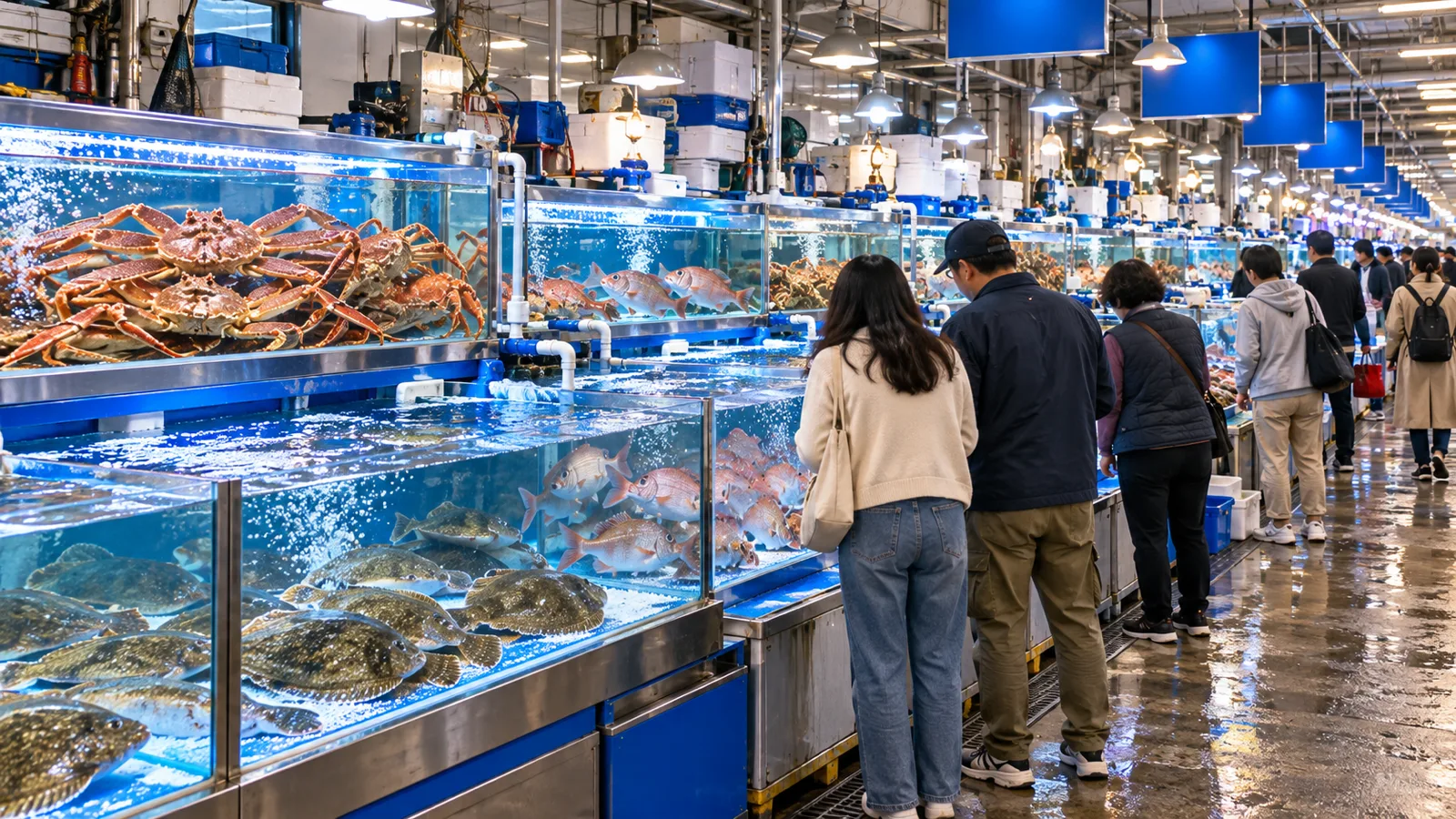
At Noryangjin you point at a fish still swimming in the tank, the vendor slices it on the spot, and you eat it upstairs or on the Han River lawn. November is peak season, when giant winter yellowtail fill the tanks.
Only Here: 39 Things You Can Only Do in Korea · Part 5 · Seoul
View this post on Instagram
In this story
At a glance
- What: Choose a fish from a tank, have it sliced into sashimi, and eat it upstairs or by the river.
- Where: Noryangjin Fish Market, 674 Nodeul-ro, Dongjak-gu, Seoul. Five minutes on foot from Noryangjin Station (Lines 1 and 9).
- Hours: Retail stalls generally run 7 a.m. to midnight (@seoultravel, October 2026). The market itself runs nearly 24 hours because of the dawn auctions. Stalls take different days off.
- Cost: Budget ₩50,000–80,000 ($38–60) for a plate of sashimi for two. A mixed flounder plate, for example, was ₩70,000 ($53) (@the_eatinggg, October 2026). Upstairs restaurants add a table fee of about ₩3,000–5,000 ($2.30–3.80) per person, plus ₩10,000–15,000 for spicy fish stew. Expect ₩50,000–100,000 in total for two (Dining Code reviews).
- Price app: Install the Korean app “Ineo Gyoju Haejeokdan” before you go; it shows the day’s prices, stall locations and menus, and takes bookings (@seoultravel). Wholesale auction prices go up daily on the Suhyup Noryangjin website. In early August 2026 the average auction price for farmed flatfish was ₩22,300 per kg (YTN, citing Suhyup).
- Payment: Cards work. More stalls now take orders at a kiosk by the entrance (@korea_foodzone).
- Language: Big stalls communicate with photo menus and calculators. Ask the price per kg and take a photo of the number on the calculator.
Also read: V's Elementary School Wall Holds a Starry Night: A BTS Mural Walk and Seomun Night Market in Daegu
Noryangjin sashimi, done right
1. Decide where you’ll eat first
Choose where you’ll eat before you buy. There are three options.
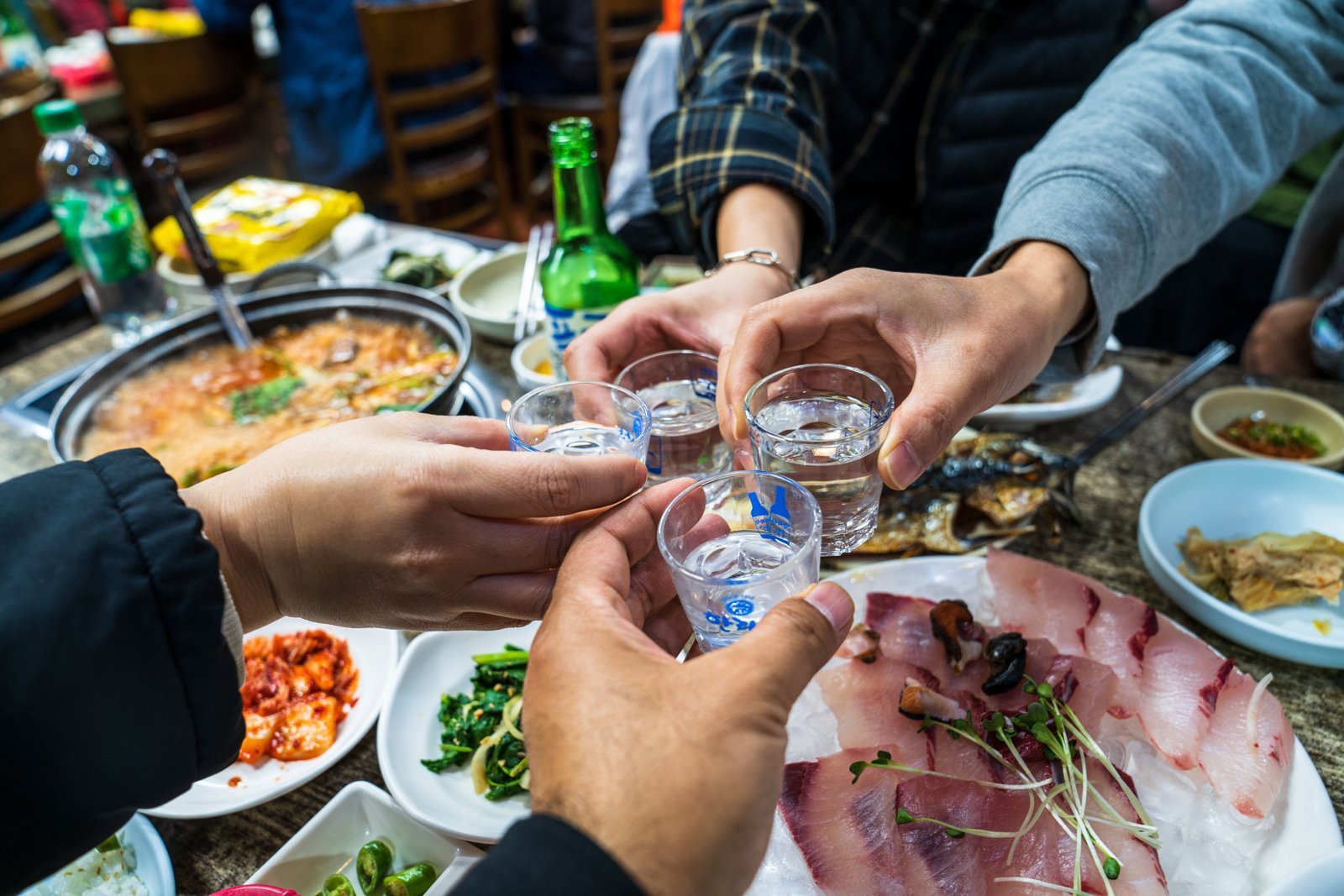
- Upstairs restaurants (chojang-jip): Bring the fish you bought downstairs and pay a table fee. They cook spicy fish stew and serve lettuce, kimchi and chili-vinegar sauce.
- A stall’s own restaurant on the ground floor: Picking the fish and the meal happen in one place. Easiest for a first-timer.
- Takeout: The sashimi picnic by the river. See No. 7 below.
On weekends and busy days, orders back up and the stall will often give you a number and tell you to come back in a few minutes. Order the sashimi as soon as you arrive, then browse or shop for sides while you wait (@seoultravel).
2. Pick a fish from the tank
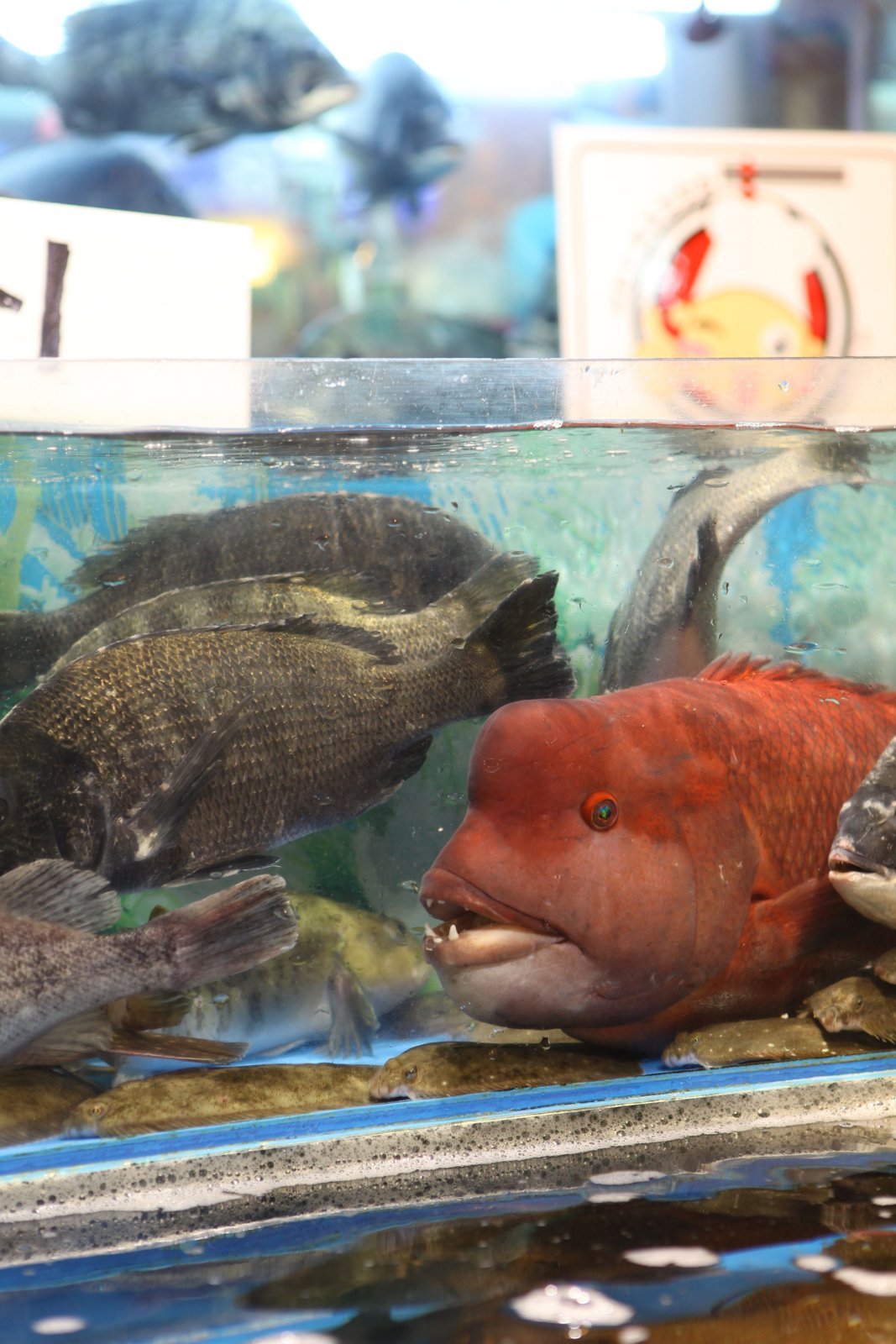
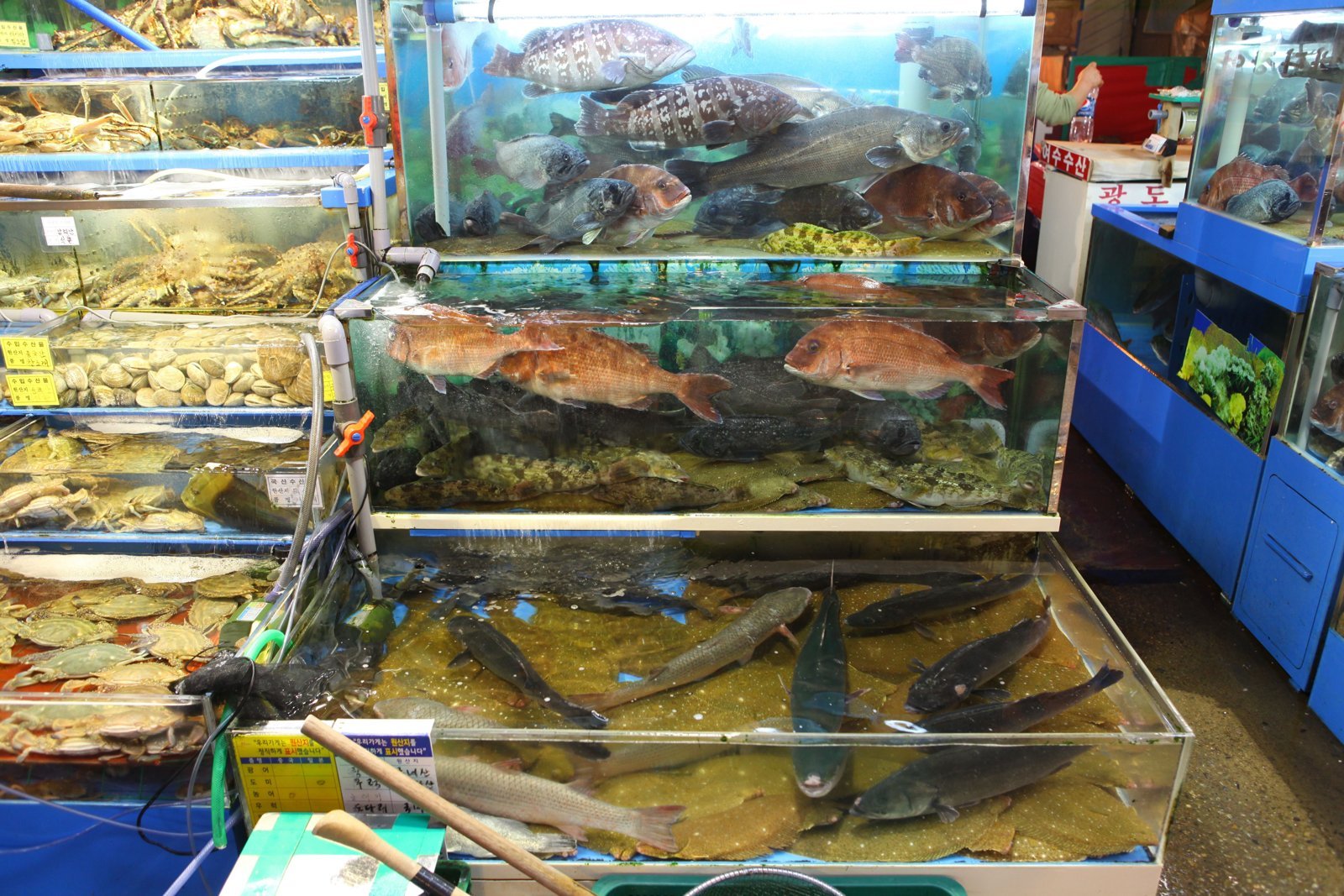
- Fish are weighed whole and priced per kg. For two people, one fish of 1–1.5 kg is about right.
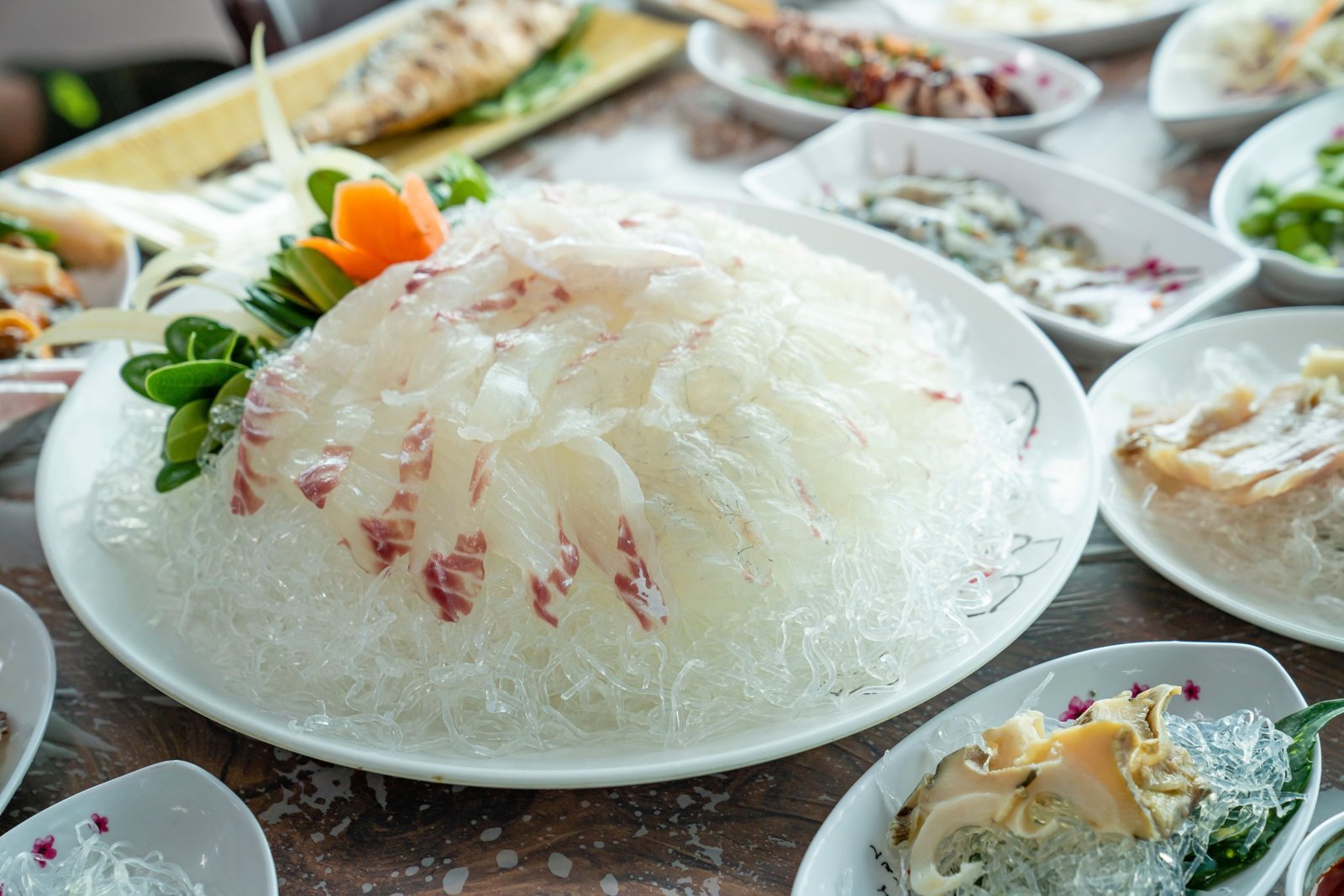
- Ask for modeum-hoe and they mix several fish, such as flatfish, rockfish and salmon. Some stalls sell mixed platters sized for one to four people (Esquire Korea, August 2026).
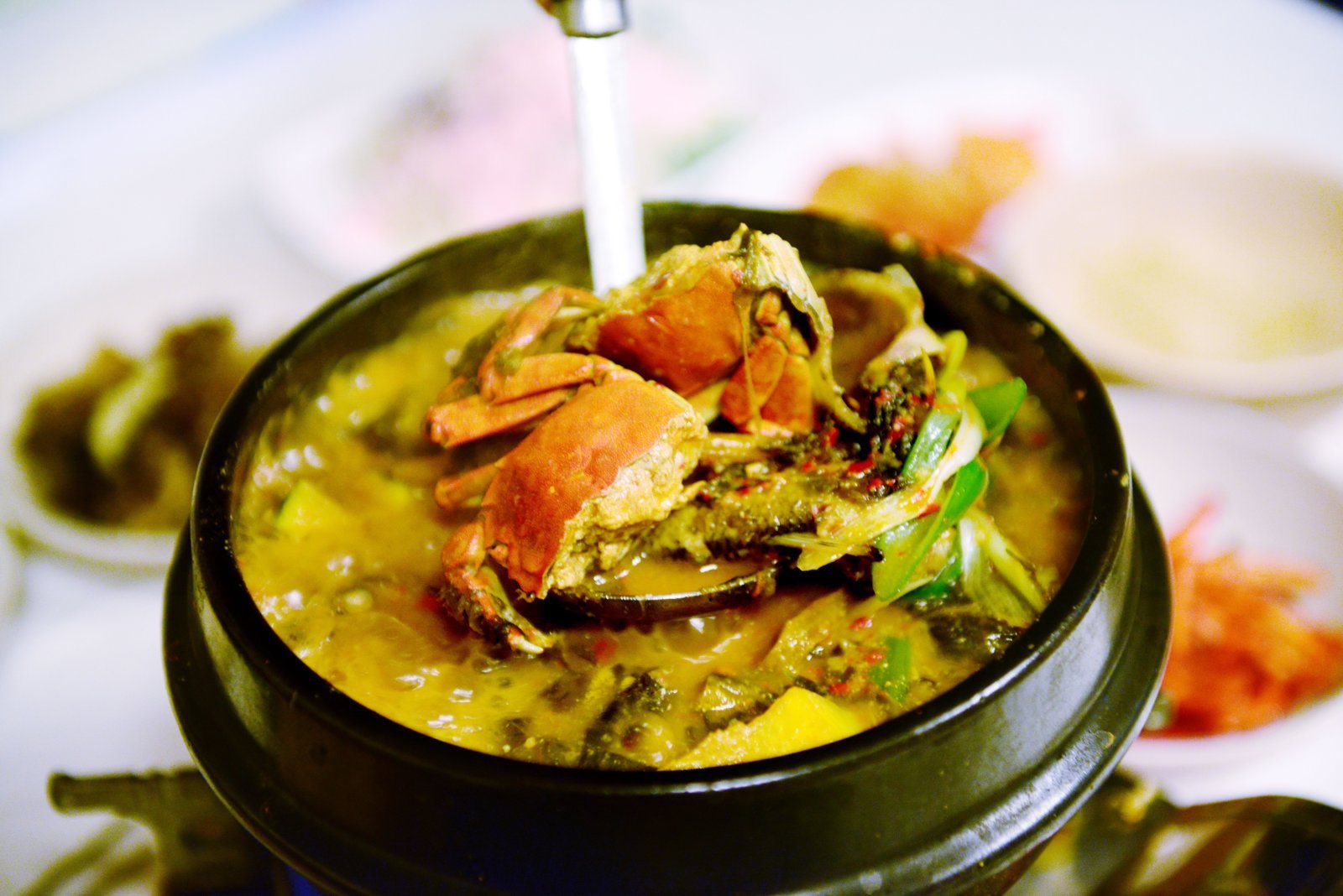
- Ask them to keep the head and bones (seodeori). The upstairs restaurant turns them into spicy fish stew.
View this post on Instagram
3. Buy your sides while they slice
- Gamtae seaweed and aged kimchi: At the second-floor spot marked “World Mart,” they slice aged kimchi for you. Good for wrapping sashimi (@seoultravel).
- Soju and beer: Sold at the upstairs restaurants.
- Chili sauce, wasabi and soy sauce: The stall packs them with takeout.
4. Eat upstairs and finish with stew
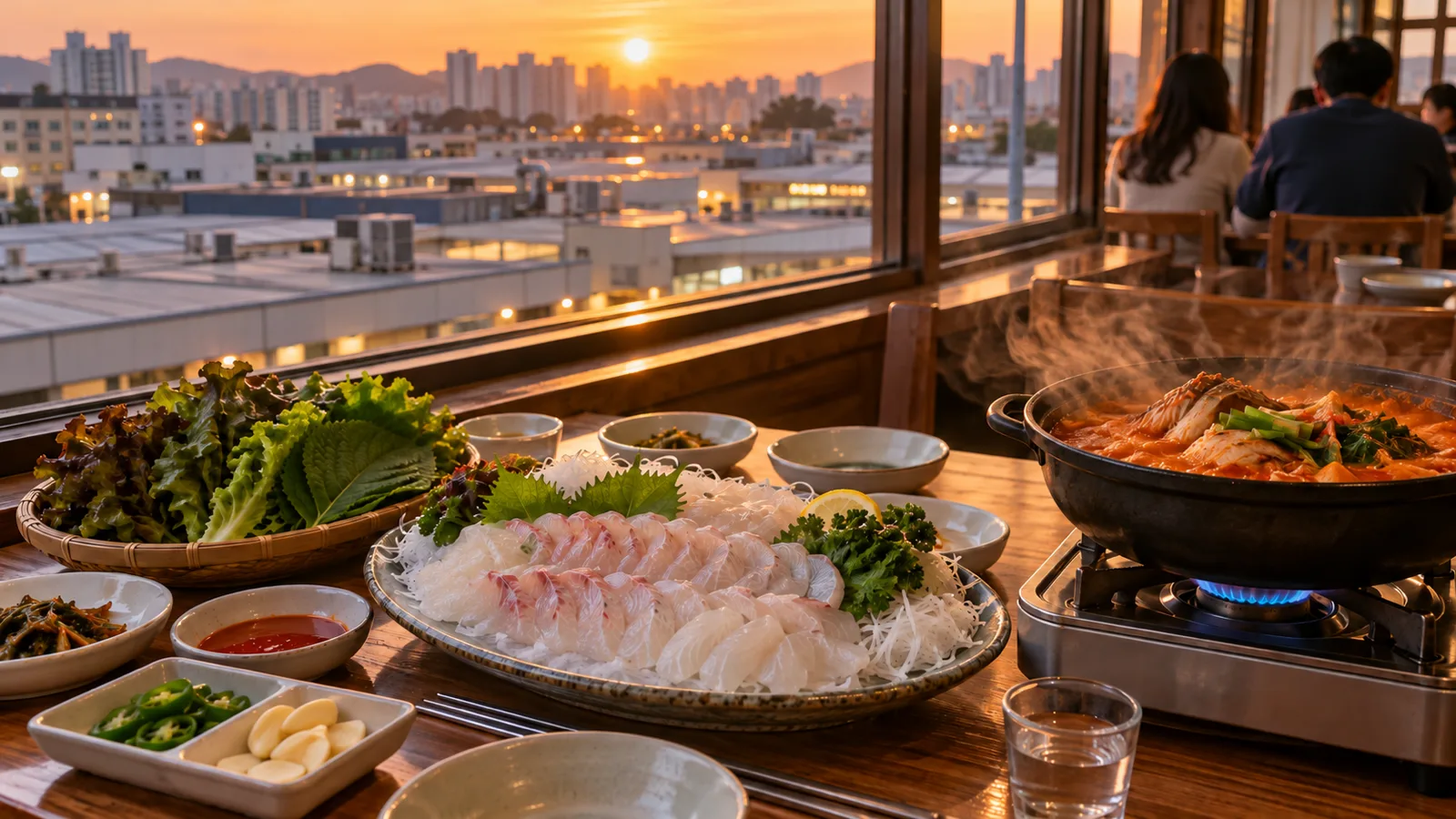
Bring your fish up and the restaurant sets the table. At the end, the stew made from the bones goes over rice and the meal is done. Some restaurants have a two-hour limit (Dining Code reviews).
View this post on Instagram
View this post on Instagram
5. Tips so it doesn’t go wrong
- Ask the price first: Confirm the price per kg, whether slicing is included, and the final weight before you pay.
- Pick stalls by rating: Google Maps ratings (checked October 26, 2026): Son Seonjang Noryangjin main store 4.8, Ilseong Susan 4.5, Hyeongje Sanghoe 4.1, Jinju Sikdang 3.9. Outside the market, the sashimi restaurant Cheonghaejin in Noryangjin-dong is 4.6.
- It doesn’t smell fishy: That’s what surprises foreign visitors most. The floors are hosed down daily. They’re wet, though, so wear shoes that grip.
Top 10 things to do at Noryangjin
1. Your first giant yellowtail (eat)
Yellowtail is graded by weight: 3–6 kg is small, 6–8 kg medium, and over 8 kg is daebangeo, giant (Hankyung). The bigger the fish, the fattier it is, and the belly of a winter giant melts like beef. Season runs from November to February, and Noryangjin vendors announced they started selling in late October (@sejin_freshfish, October 2026).
Prices swing hard from year to year. In December 2025 the auction price for domestic farmed yellowtail approached ₩50,000 per kg, up more than 30% in two weeks (Wikitree). On October 22, 2026, a market price video was titled “Giant yellowtail at ₩10,000 a kg?!” (FOODBOX on YouTube). Check the price app the day before.
View this post on Instagram
View this post on Instagram
2. Steamed king crab (eat)
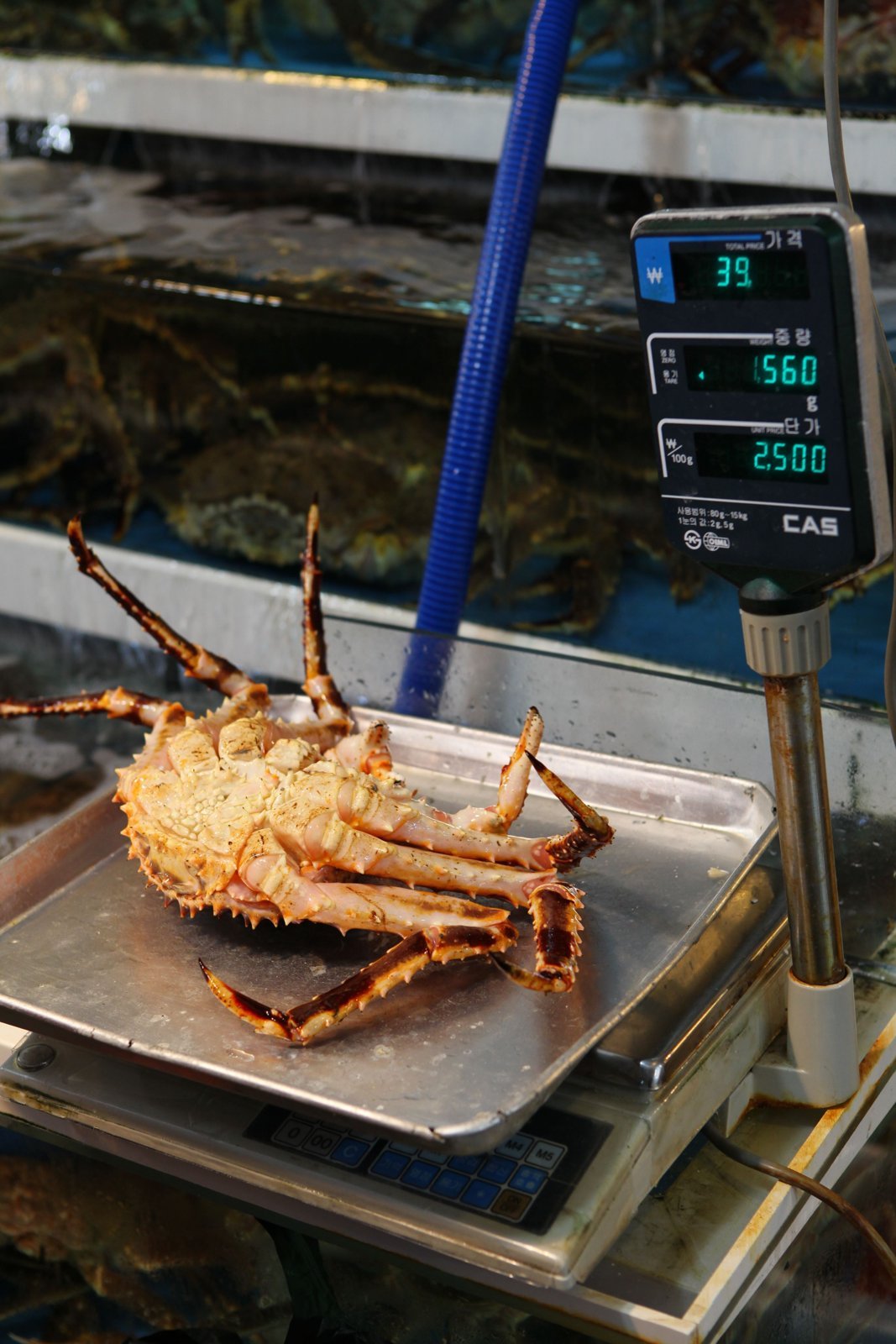
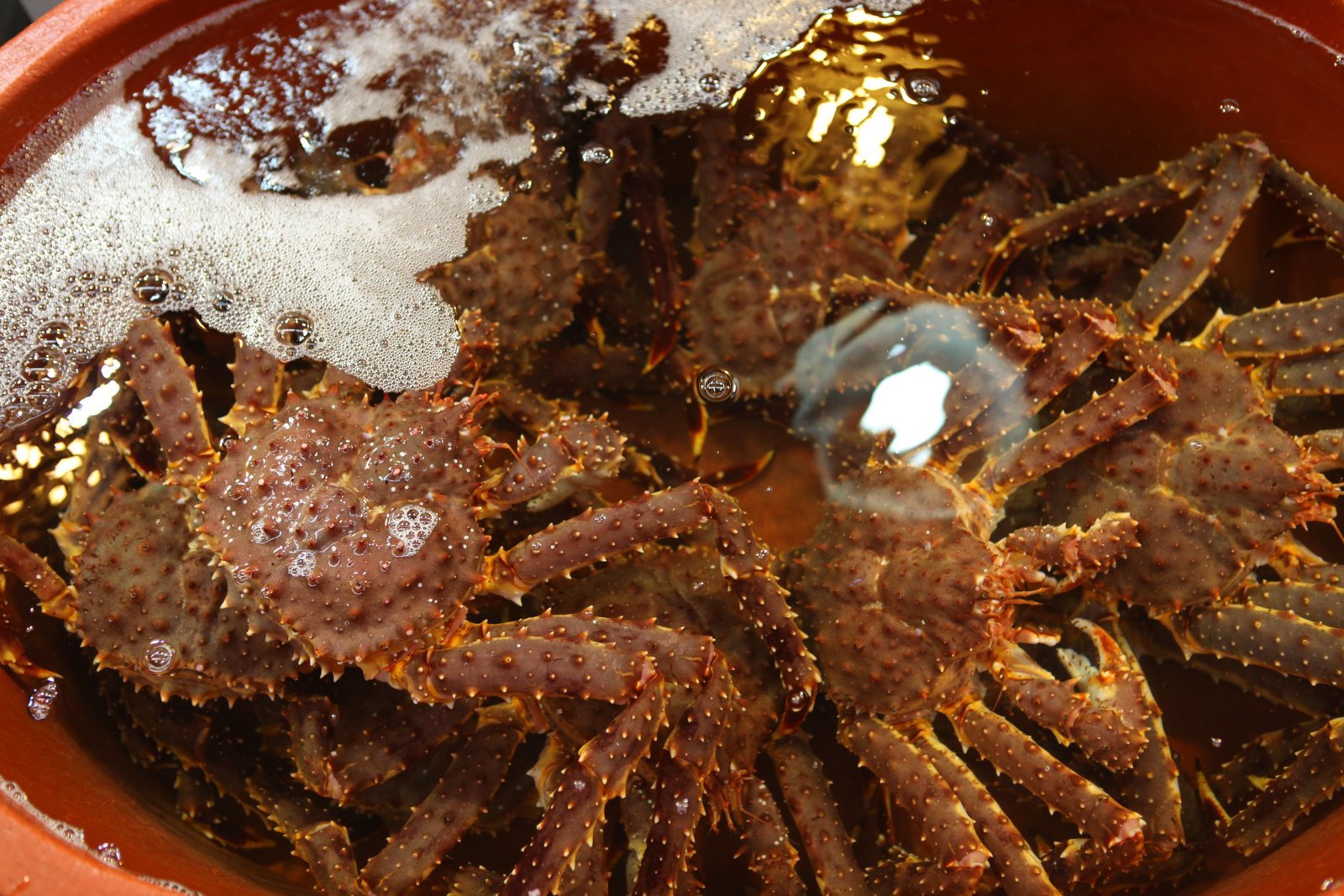
Pick a king crab from the tank and the stall steams it and sends it up to the restaurant. It’s sold by weight, and how full the legs are decides how good it is. Julpo Sanghoe has a reputation for well-filled crabs (@korea_foodzone). Check the per-kg price on the day.
View this post on Instagram
3. Live shrimp sashimi: get there early (eat)
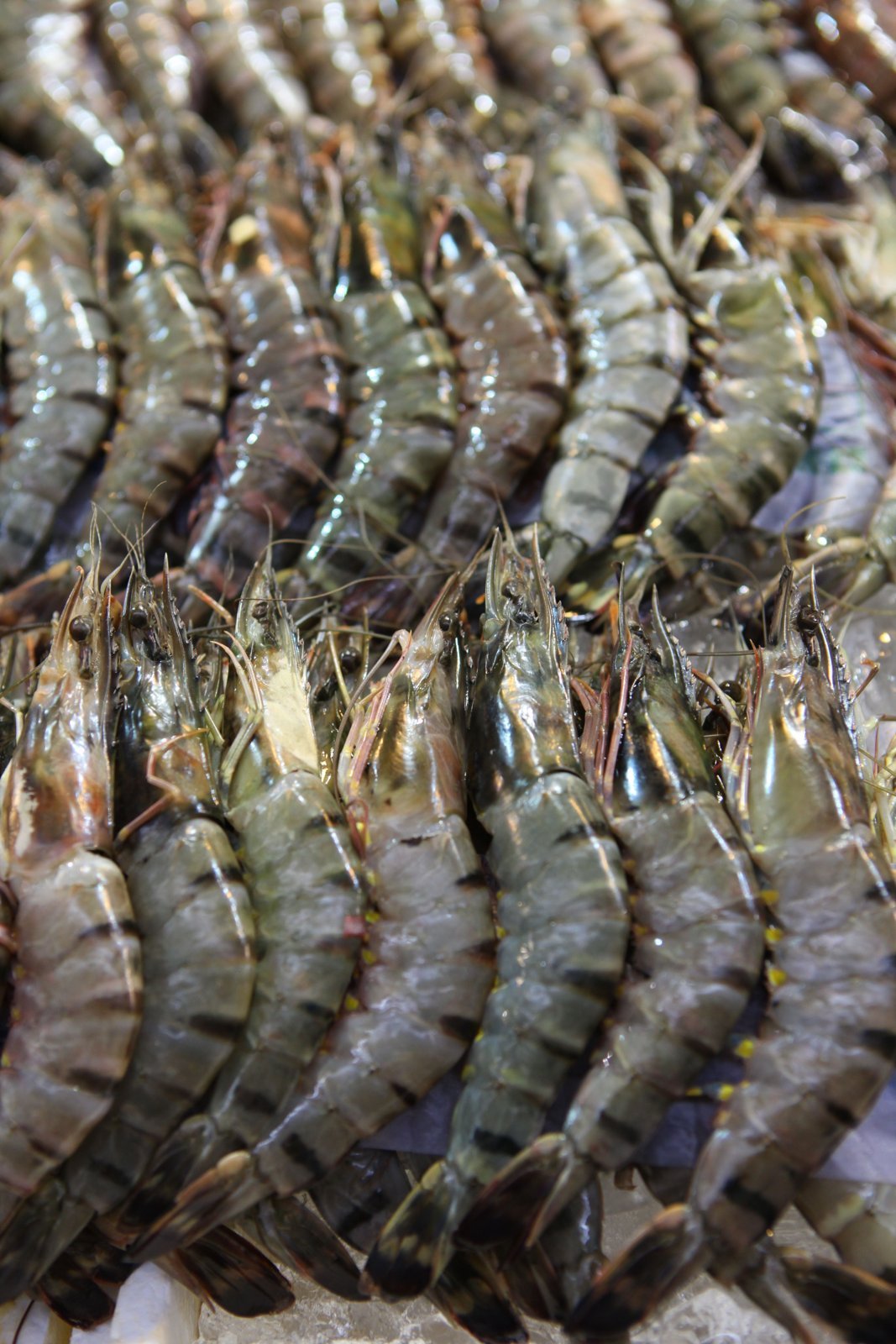
Live shrimp sashimi sells out by late morning. One review says you basically can’t get it unless you arrive at opening (@seoultravel). Seoul’s account named Tamna Jeonbok and Julpo Sanghoe as the places it visited. Autumn king prawns and blue crabs are still around.
View this post on Instagram
4. Try live octopus (eat)
Finely chopped octopus that still moves on the plate. Dip it in sesame oil and salt. The suckers can stick to your throat, so chew well before swallowing. Not recommended for children or elderly visitors.
5. Use a seasonal fish chart (tip)
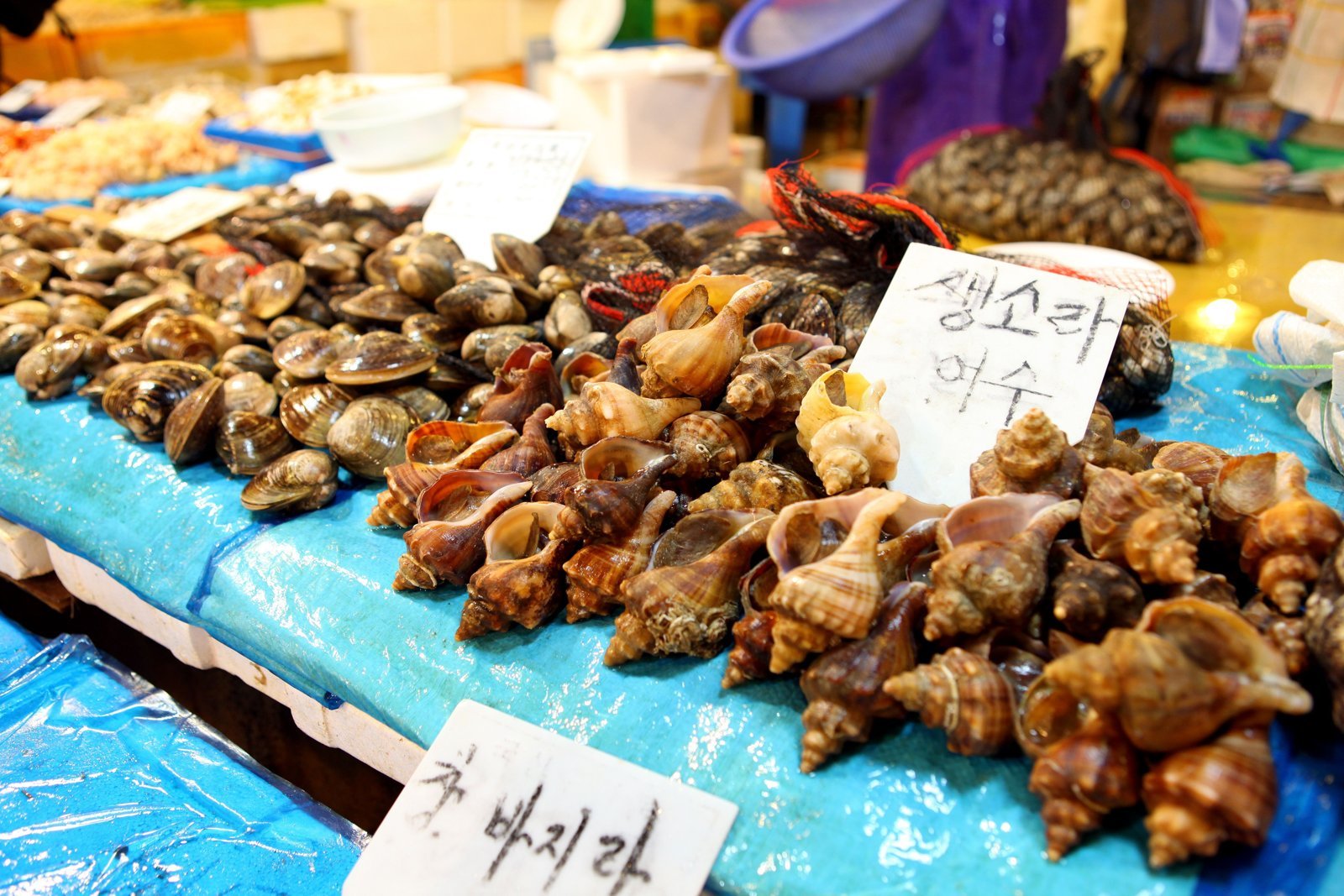
The best fish change every month. In November, go for yellowtail, flatfish, rockfish, the last of the gizzard shad, and oysters.
View this post on Instagram
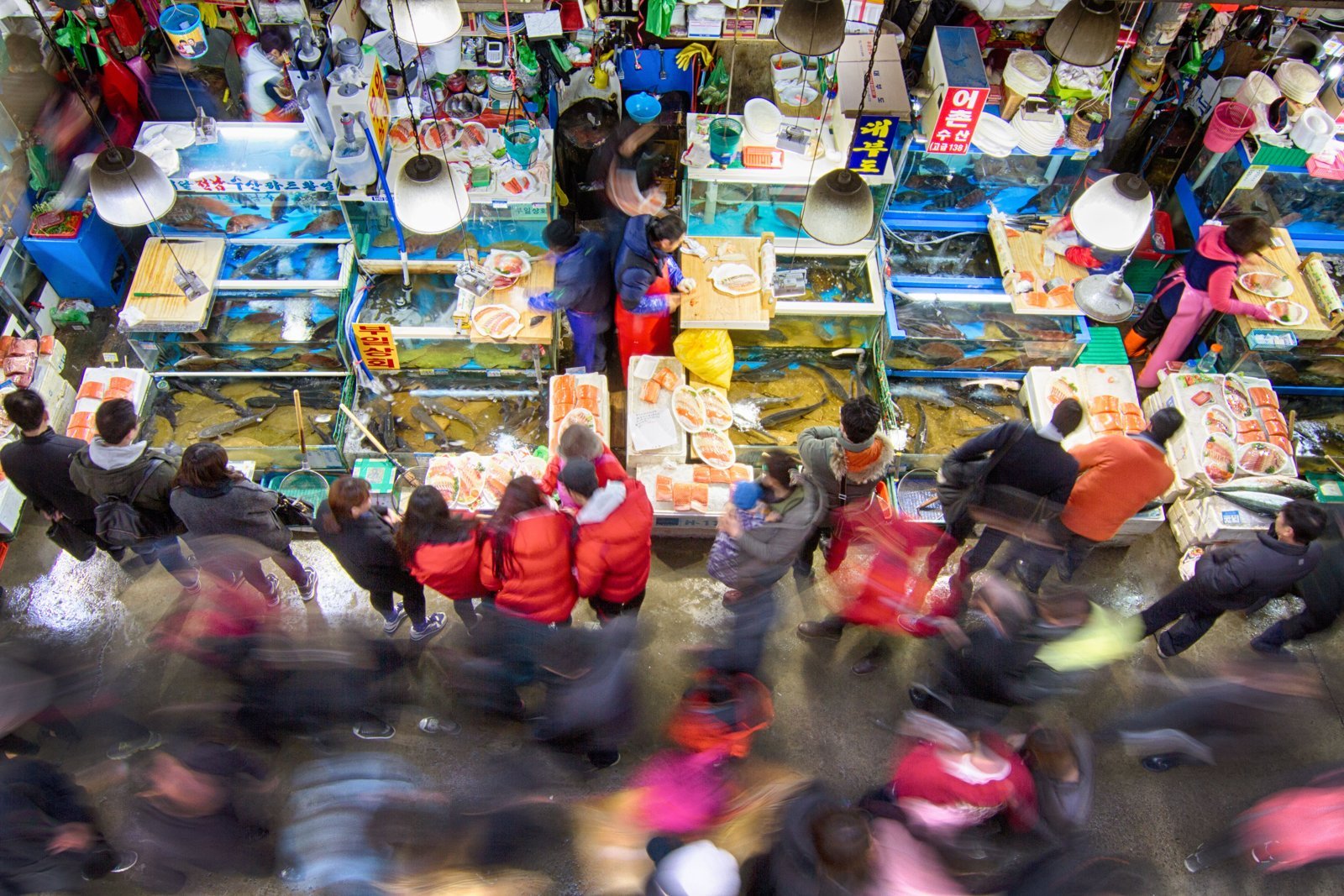
6. Look over the auction floor (see)
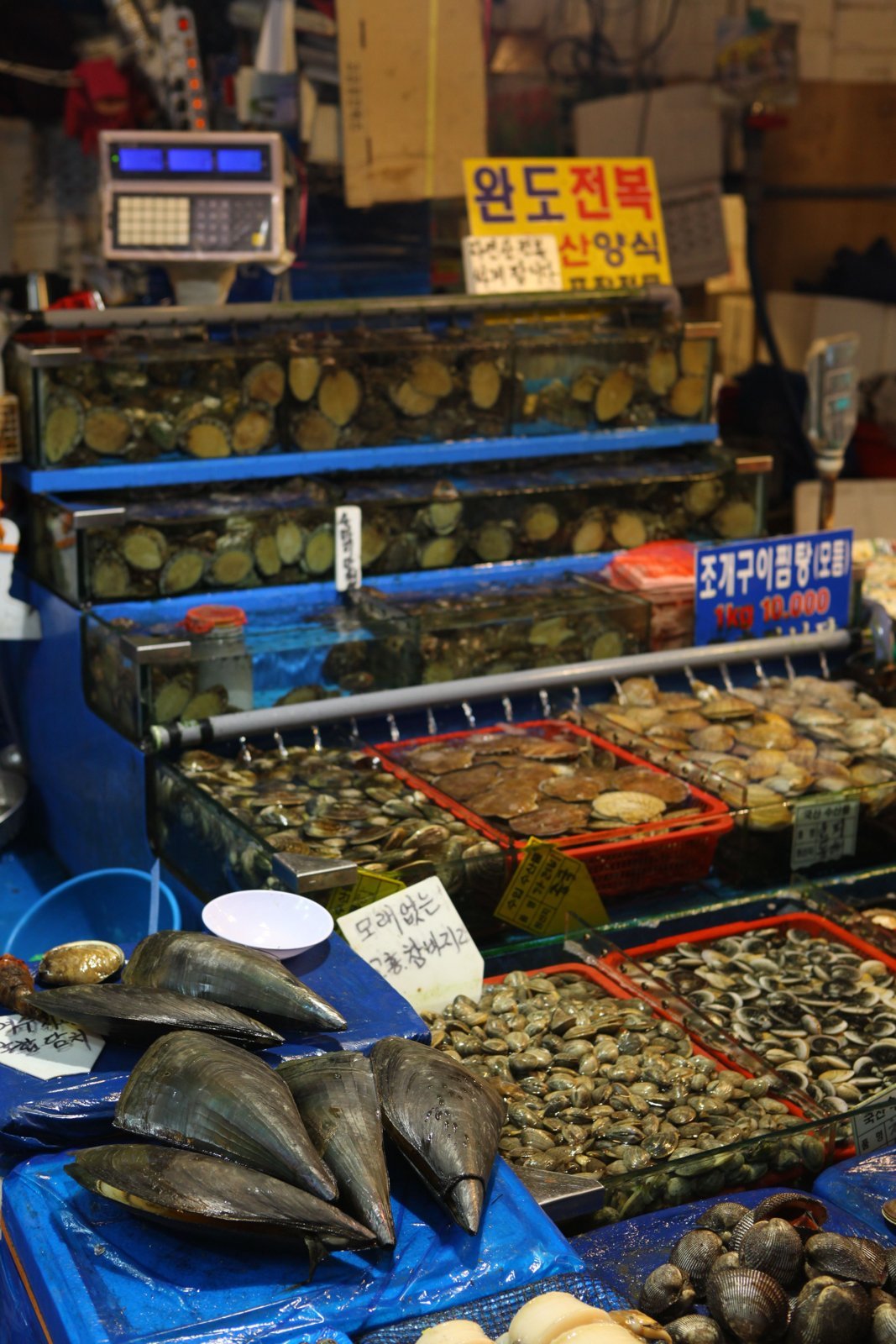
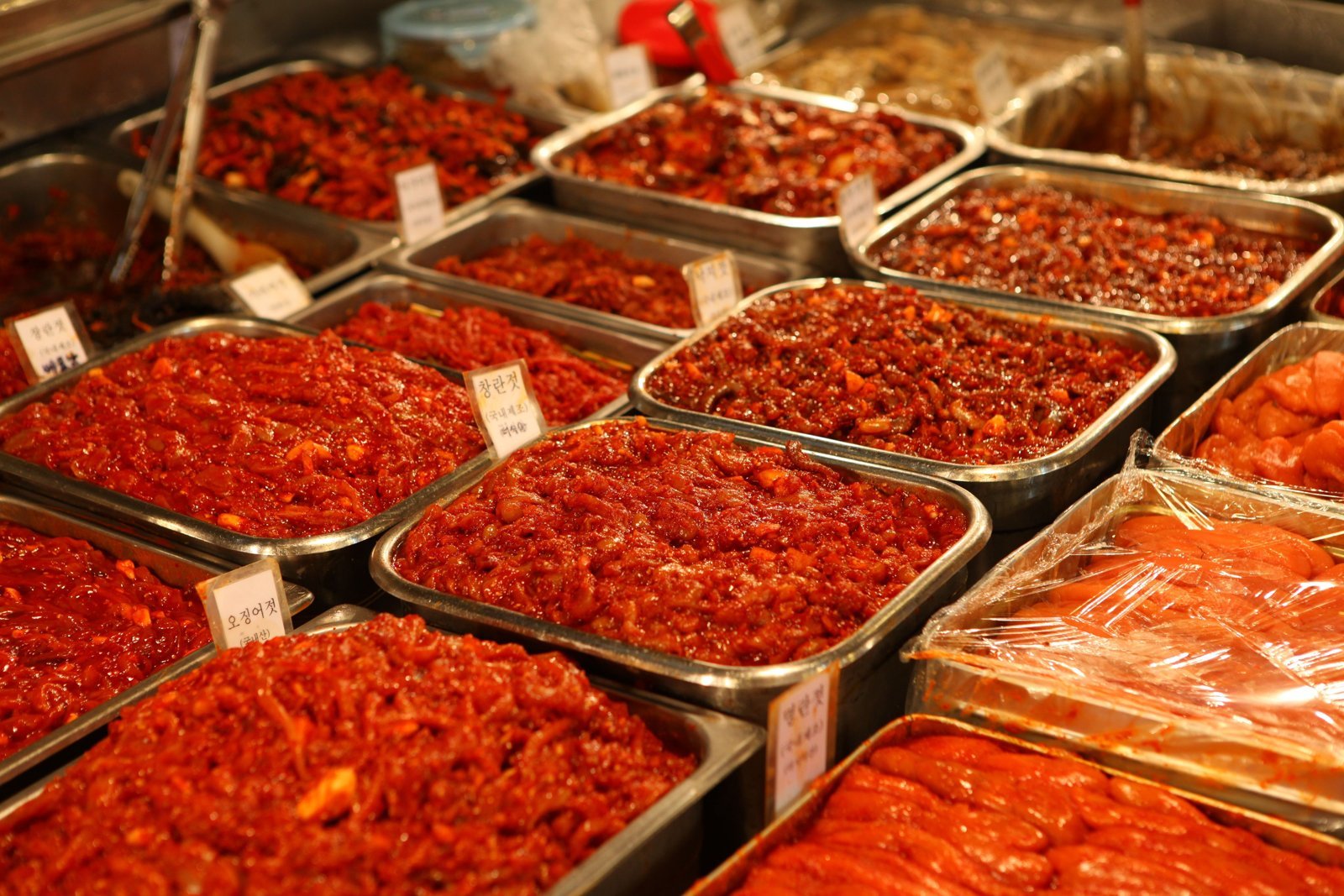
Even after the dawn auction, the ground floor is stacked with crates of fish from all over the country. Look down from the upper walkway and you see the whole market at once.
View this post on Instagram
7. Sashimi picnic: take it to Nodeul Island (experience)
Taking your sashimi to the river is how Seoul people do it now. Nodeul Island is about a 20–25 minute walk from the market. Sit on the grass at sunset, look toward the 63 Building and eat. How to add convenience-store ramyeon is in Part 4. Don’t use a burner in the park.
View this post on Instagram
View this post on Instagram
8. The night view from Yongyang Bongjeojeong Park (photo spot)
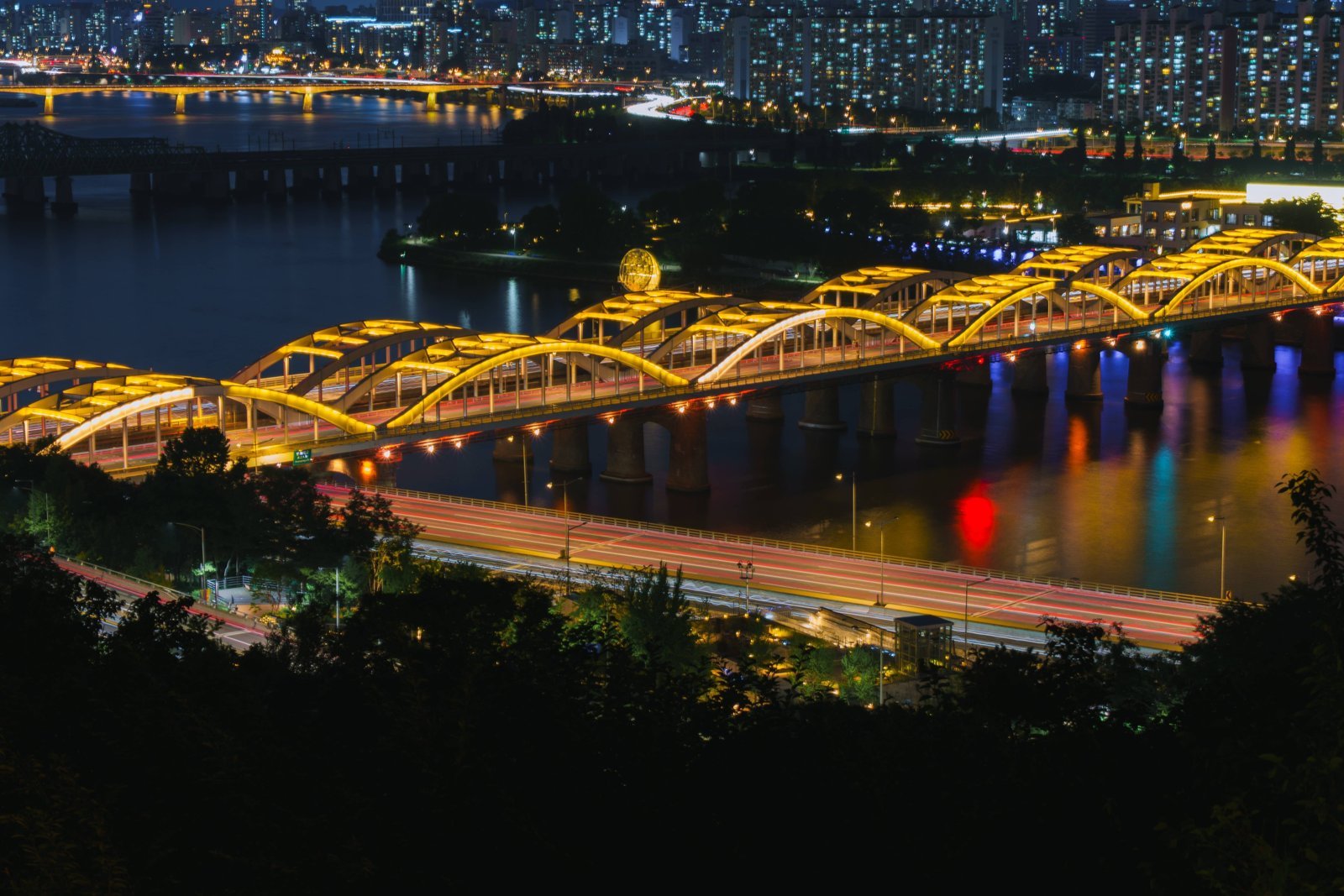
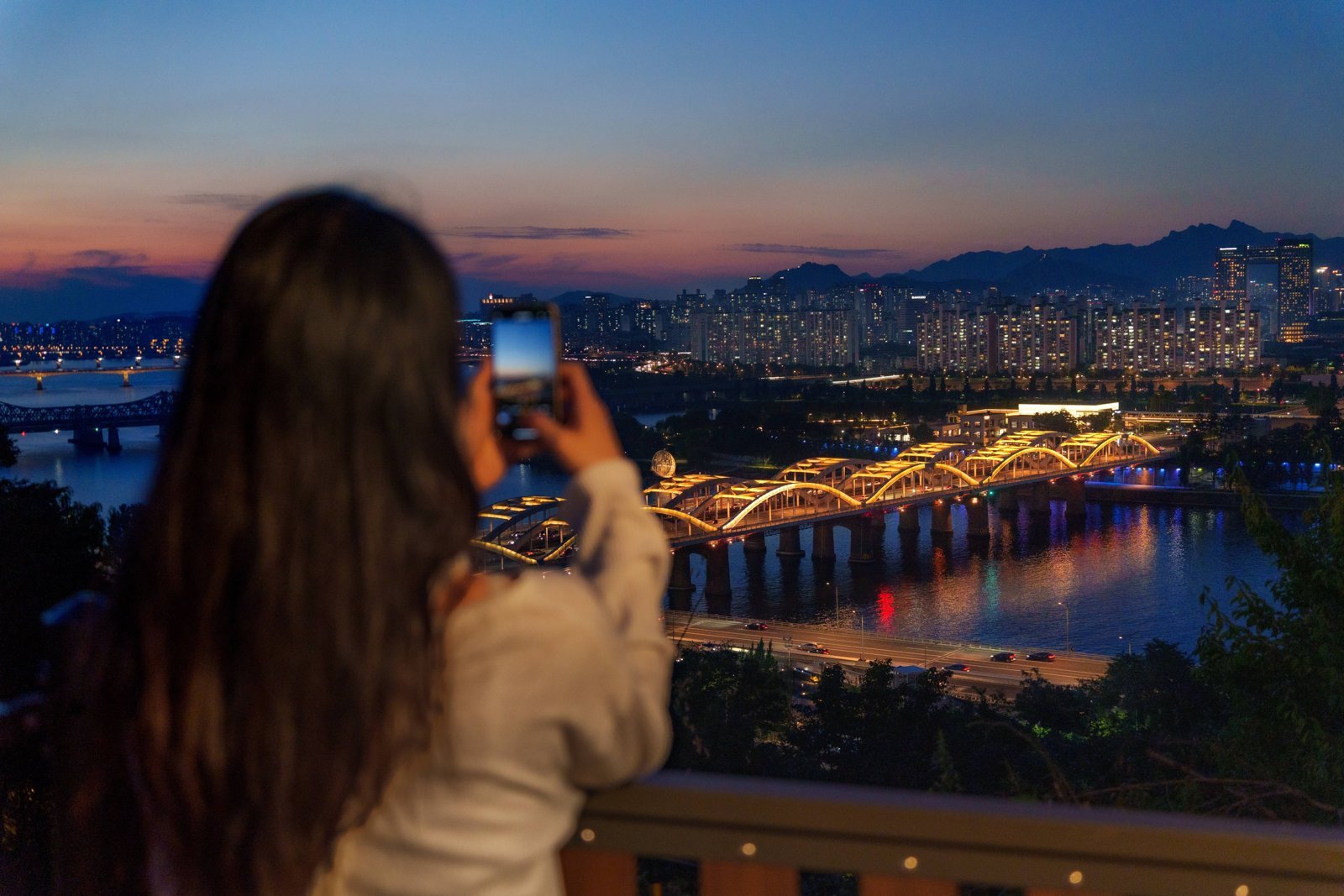
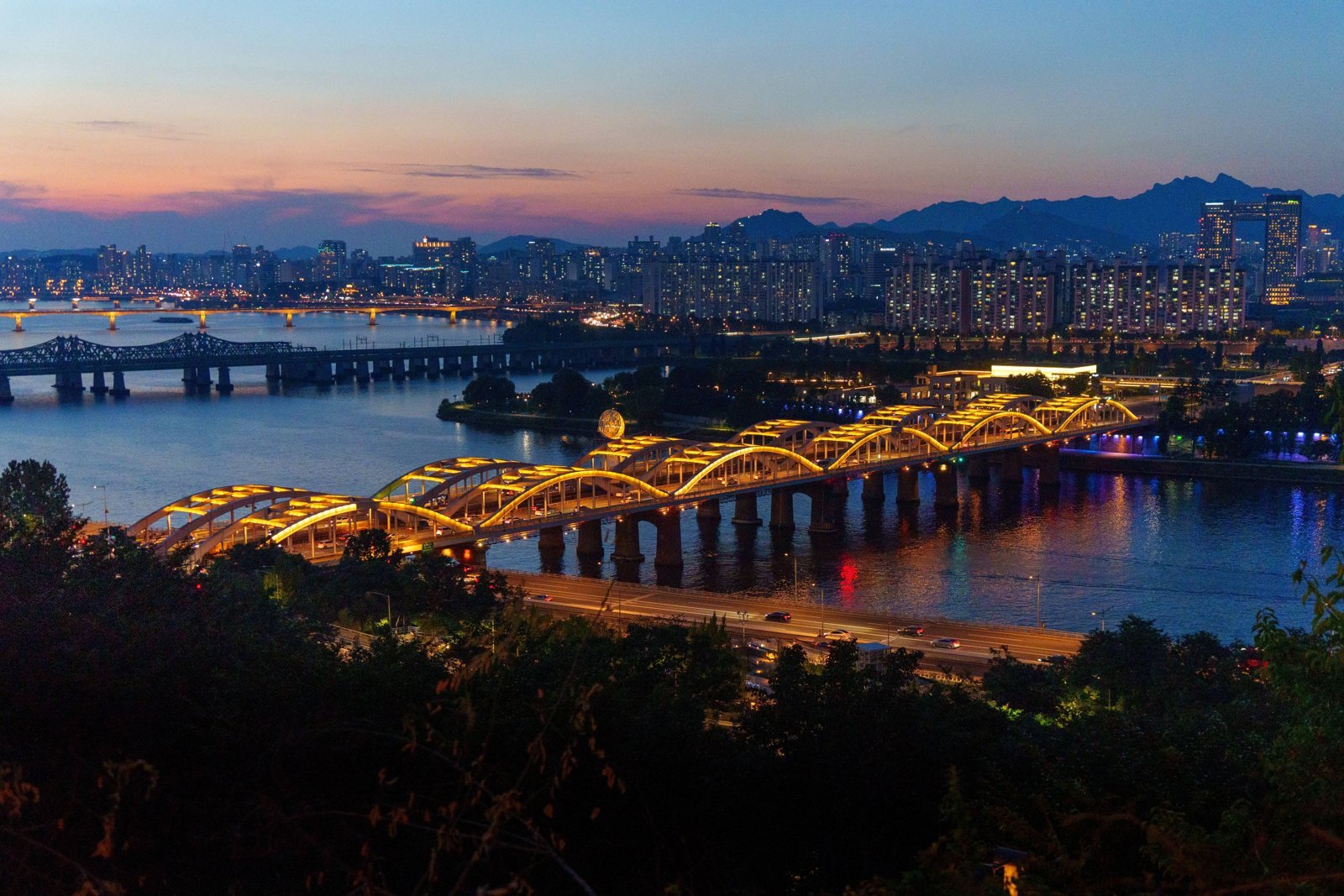
A small park on the hill behind the market. From its lookout, Hangang Bridge, the railway bridge, Nodeul Island and the Yeouido towers fit in one frame. Best from sunset until the bridge lights come on. Ten minutes on foot from the market.
View this post on Instagram
9. Trains crossing the Hangang Railway Bridge (photo spot)
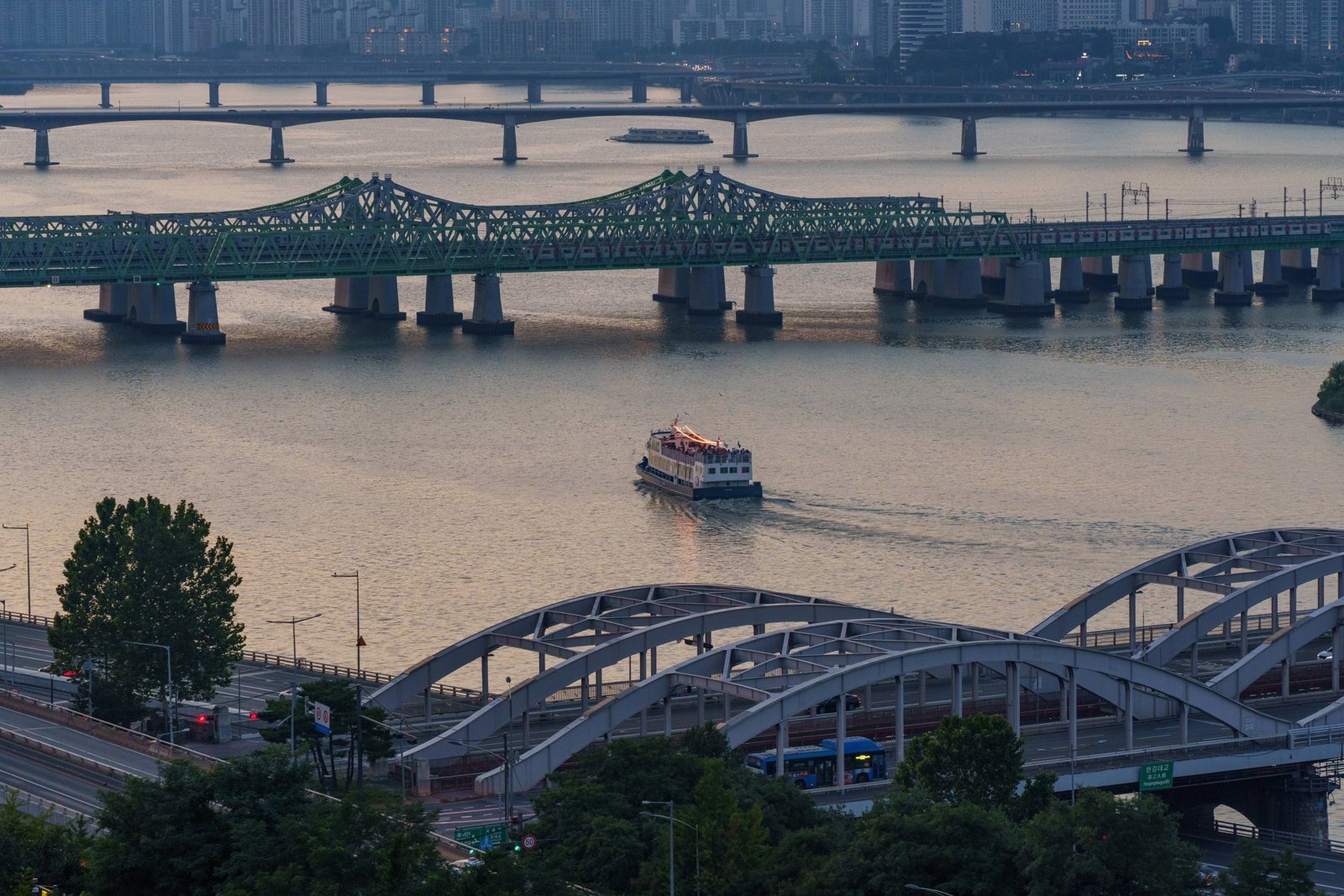
Noryangjin is where Korea’s first railway crossed the Han River. Line 1 trains and intercity trains still cross the railway bridge next to the market nonstop. From Yongyang Bongjeojeong Park or Nodeul Island, wait for a train on the bridge.
10. Noryangjin’s cup-rice alley (eat)
The streets outside Noryangjin Station are full of civil-service exam prep academies. Cupbap, rice bowls students ate standing up, became the neighborhood’s famous food. Good for a snack before the sashimi. Stall numbers and prices change, so take whatever is open.
Nearby
- Nodeul Island and the Han River parks: About a 20-minute walk. Your picnic spot.
- Yeouido Hangang Park: Two stops on Line 9 (Saetgang or Yeouido Station). Han River ramyeon is Part 4.
- 63 Building: Ten minutes by bus. The gold glass tower.
- Sayuksin Park: Near Noryangjin Station, the tombs of six loyal Joseon officials. A quiet walking path.
Hotels nearby
Prices are Google Maps nightly rates, checked October 26, 2026 ($1 = about ₩1,325).
- Noryangjin budget: Noryangjin Nstay (motel, 4.4), about $26; Hotel Noble Noryangjin (3.0), about $31. Closest to the market, but the rooms are small.
- Yeouido (two stops on Line 9): GLAD Yeouido (4-star, 4.2), about $151; Kensington Hotel Yeouido (4-star, 3.8), about $151; Kobos Hotel (3-star, 3.9), about $95.
- Luxury: Fairmont Ambassador Seoul (5-star, 4.6), about $631; Conrad Seoul (5-star, 4.4), about $695.
Getting there
① From Gimpo Airport (the airport closest to central Seoul)
- One ride on Line 9: Line 9 express from Gimpo Airport Station toward VHS Medical Center, ride to Noryangjin (no transfer, about 20 minutes), then five minutes on foot to the market. About ₩1,550 ($1.20) with a transit card.
② From Incheon Airport
- AREX + Line 9 (one transfer): AREX all-stop train from Incheon Airport Terminal 1 or 2 toward Seoul Station, change at Gimpo Airport to the Line 9 express, ride to Noryangjin. About 70 minutes, roughly ₩4,300 ($3.20).
- Alternative: AREX to Seoul Station, then Line 1 toward Incheon / Sinchang to Noryangjin (about 80 minutes).
- Transit card: Buy a T-money card at an Incheon Airport convenience store and top it up.
From Myeongdong
- Line 4 from Myeongdong, change at Seoul Station to Line 1 toward Incheon / Sinchang, ride to Noryangjin (about 25 minutes).
Only Here: 39 Things You Can Only Do in Korea · Part 5 of 39
Part 6 arrives Nov. 2.
Read next
 Only 100 People Who Booked Get Into Seoul's Secret Garden: An Autumn Tour of Changdeokgung's Huwon
 Wear a Hanbok and Seoul's Gyeongbokgung Opens Its Gates for Free: Hanbok Rental and a Palace Walk
 The World's Coolest Neighborhood Only Opens After Dark: Hanok Alleys and Street Pocha in Seoul's Jongno 3-ga
Trending on Seol Notes
- Kim You-jung Cracked Japan Despite the 'Anti-Japan Drama' Label
- The Emperor of K-pop Came Back, and Korea Flipped
- Ae-sun Left the Baeksang Empty-Handed. Then She Spoke: IU
- K-pop News Today (Oct 27, 2026): IVE's EP Drop, ILLIT 'You're Under Arrest', LISA's 59M
- His First Film Never Opened. His First Role Had No Name. Then Korea Called Him "Sam-sik"
Sources
- Market tips (price app, second-floor kimchi, order first, shrimp sells out, hours): @seoultravel (Seoul’s official account, October 2026)
- Kiosk ordering and Julpo Sanghoe: @korea_foodzone
- Table fees: Dining Code reviews of Chungnam Sikdang, Jeolla-do Hoe Yangnyeom and Haneulchae
- Mixed platters: Esquire Korea, August 2026
- Flatfish auction price: YTN, August 9, 2026
- Yellowtail grades and winter 2025 prices: Hankyung, Wikitree
- Auction prices: Suhyup Noryangjin daily prices
- Google Maps ratings and hotel rates: checked October 26, 2026
- Photos: Korea Tourism Organization (KOGL Type 1; market photos taken in 2011), photographer credited on each photo; embedded public Instagram posts and YouTube videos
Discover more from Seol Notes
Subscribe to get the latest posts sent to your email.