

Featured photo: Visitors strolling under blazing maples on the path to Baekyangsa, in the southern half of Naejangsan National Park. Photo: Song Jae-geun / Korea Tourism Organization PhotoKorea, KOGL Type 1.
Just as Seoraksan drops the last of its leaves, Naejangsan in Jeongeup, North Jeolla, is only starting to turn red, and it peaks in early to mid-November. Walk the maple tunnel from the Iljumun gate to Naejangsa temple, photograph the Uhwajeong pavilion mirrored upside down in its pond, then ride the cable car up to look down on a valley on fire: that’s a Naejangsan foliage trip.
At a glance
- When to go: This year’s predicted peak is November 4 (Korea Forest Service), November 7–8 (Jeongeup City) and November 11 (private forecaster Weather i) (Finance Today). As of October 26, Naejangsan and Duryunsan were the only major mountains in Korea where the first fall color still hadn’t been recorded (YTN, October 26), so this is a late-turning mountain. Plan broadly for the first two weeks of November, and check the Korea National Park Service’s live foliage cameras two days before you leave.
- How crowded it gets: Jeongeup City expects about 350,000 visitors this foliage season and has set October 31–November 15 as its intensive management period (Pressian). On peak weekends, plenty of visitors report that after 9 a.m. the line stretches from the ticket booth to the shuttle stop, with close to an hour’s wait for the shuttle alone (Insight, October 23).
- Where to park: From October 30 to November 15, private cars can’t drive into the park. Park at Naejangho Parking Lot (formerly Lot 4) and take the free shuttle bus to Wollyeonggyo bridge (2.1 km; weekdays 9 a.m.–5 p.m., weekends 8 a.m.–5 p.m.) (Jeonmin Ilbo). Park lots charge about $3.80 (5,000 won) per car in peak season; most private lots nearby charge a flat $7.50 (10,000 won) (Naver blog, 2026).
- Without a car: From Seoul’s Yongsan Station, the KTX to Jeongeup Station takes about 1 hour 35 minutes to 2 hours, about $26 (34,500 won) each way in standard class (Korail timetable for October 30, 2026). In front of Jeongeup Station, city bus 171 runs to Naejangsan in 30–45 minutes. On weekend mornings it often fills up at the next stop (Jeongeup Terminal), so board at the station (Naver blog, 2026).
- Admission: Free. There’s no national park entry fee and no cultural heritage fee at Naejangsa (abolished in 2023). The only costs are parking, the cable car and the in-park shuttle.
- Accessible shuttle: On November 7, 8, 14 and 15, a free shuttle for visitors with limited mobility runs once a day between the national park office and the visitor center (5.2 km); book it through the Korea National Park Service reservation system (Jeonmin Ilbo).
The free shuttle leaves from Naejangho Parking Lot.
Top 10 things to do at Naejangsan
1. Walk the maple tunnel from Iljumun to Naejangsa (see)
This is the face of Naejangsan in fall. From the Iljumun gate to Naejangsa temple, maples on both sides of the path meet overhead in a red tunnel. The tunnel itself is only about 300 m, but the whole “five-color maple road” from the visitor center runs 8–9 km (Naver blog, 2026). You can see all of Naejangsan’s color without climbing a single peak, which is why it’s the path families walk most (Finance Today).
- Time needed: For Uhwajeong, the maple tunnel, Naejangsa and the cable car, allow 3–4 hours including waits (Finance Today).
- Tip: It’s a 30–40 minute walk from Geumseongyo bridge (the visitor center) to Iljumun. If walking is hard, take the in-park shuttle bus (about $0.75, 1,000 won one way for adults) (Naver blog, 2026). Dogs aren’t allowed on regular trails.
The tunnel starts at the Iljumun gate.
- Sources: Finance Today, “Naejangsan foliage peak approaches”, shuttle and in-park bus roundup, October 2026, tunnel length and parking fees
2. The mirror-image shot at Uhwajeong pond (photo spot)
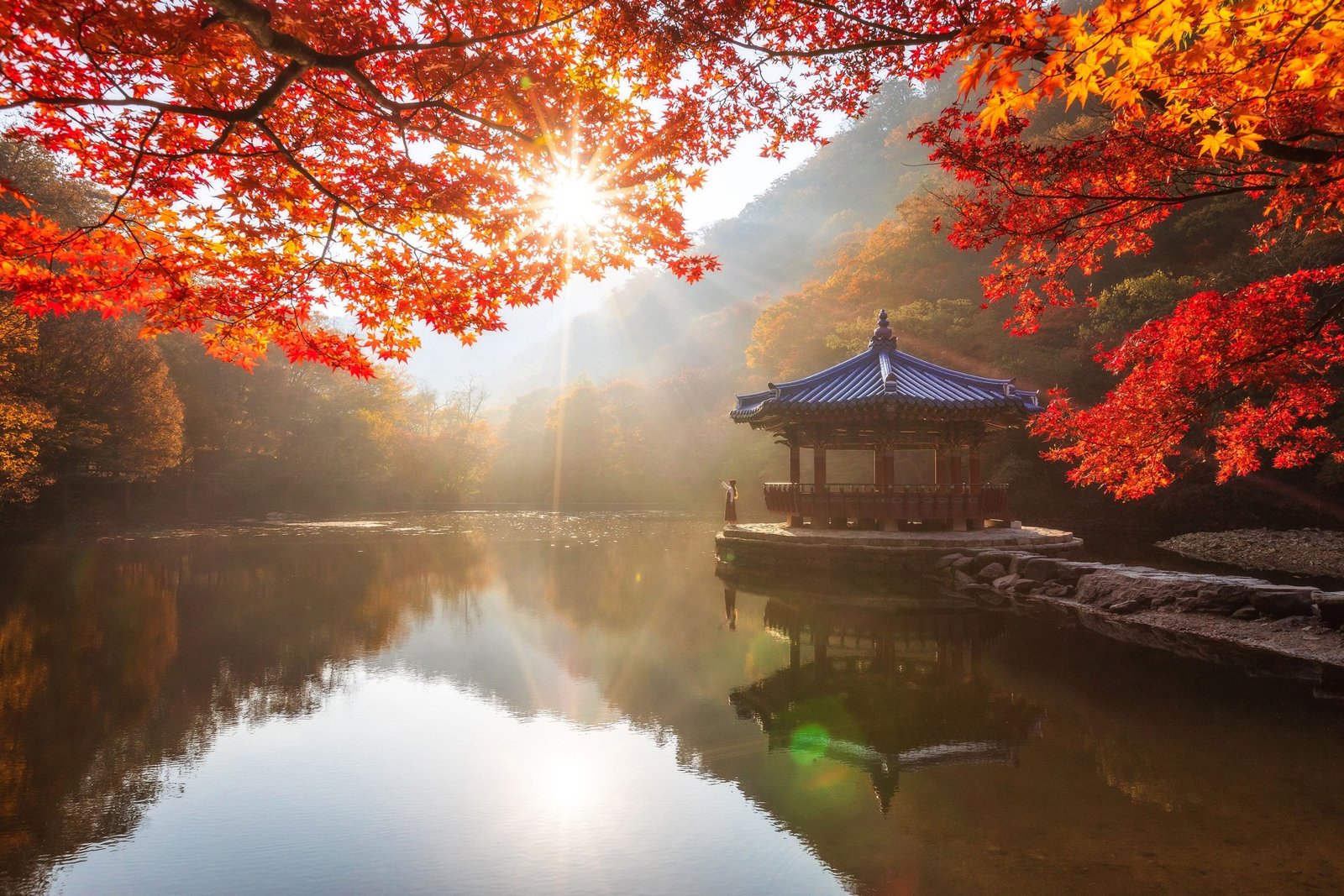
Uhwajeong, a pavilion standing in the middle of a pond, is Naejangsan’s signature photo spot. When the trees around it turn red, the pavilion and the leaves reflect perfectly in the water for a top-to-bottom symmetrical shot (Finance Today). The reflection is sharpest early in the morning, before the wind picks up.
- Tip: Foliage-season regulars share an “early bird route”: reach the Iljumun gate around 6:30 a.m. and skip the crowds entirely. At that hour there’s barely a line at the ticket booth or the shuttle stop, and you can shoot Uhwajeong with no one in the frame (Insight, October 23).
- Framing: The most popular angle is from the pond’s south bank, with the pavilion and the ridge behind it in one frame. From the cable car observatory (No. 4) you can look down on Uhwajeong.
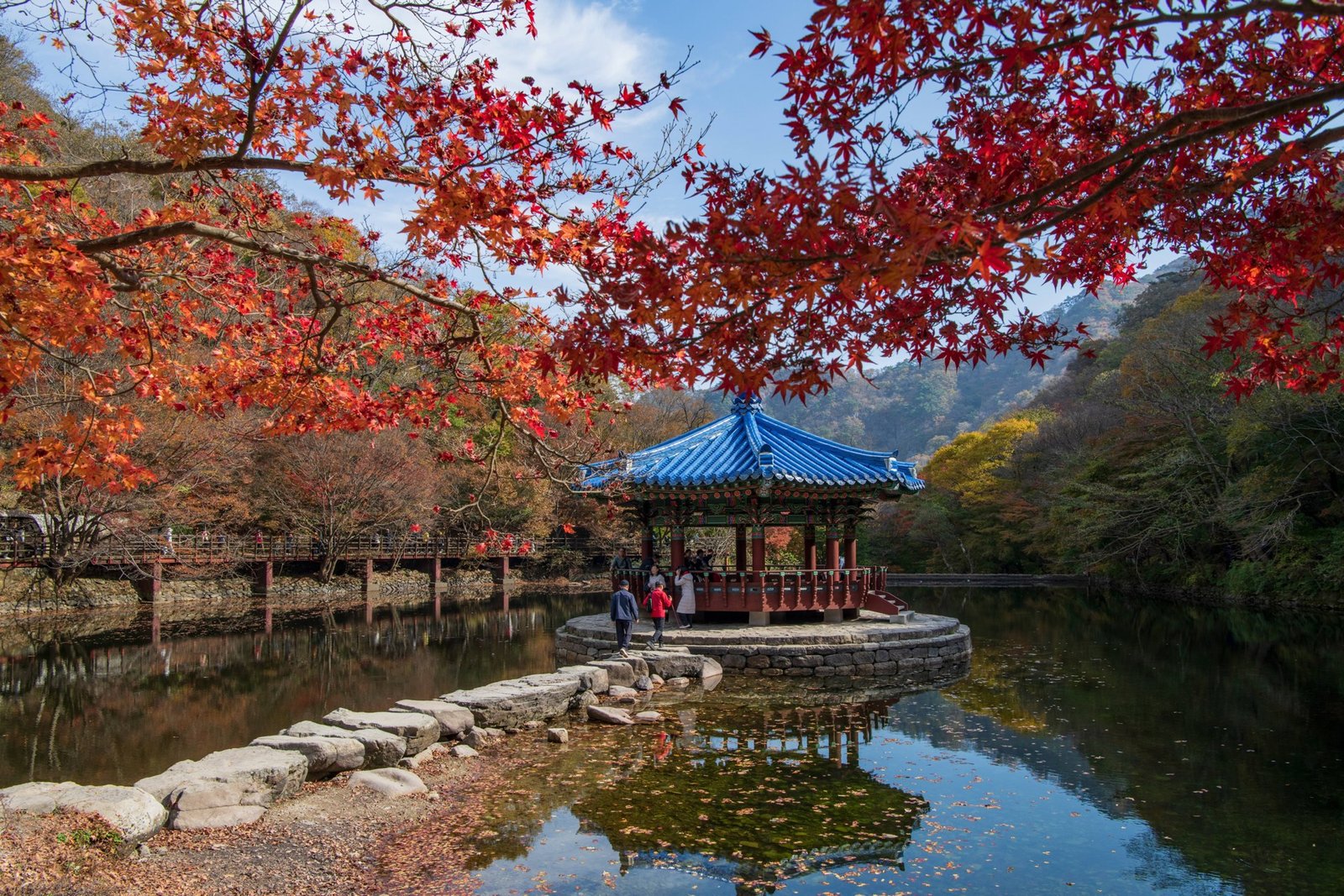
Come at sunrise and the pond often holds a layer of mist.
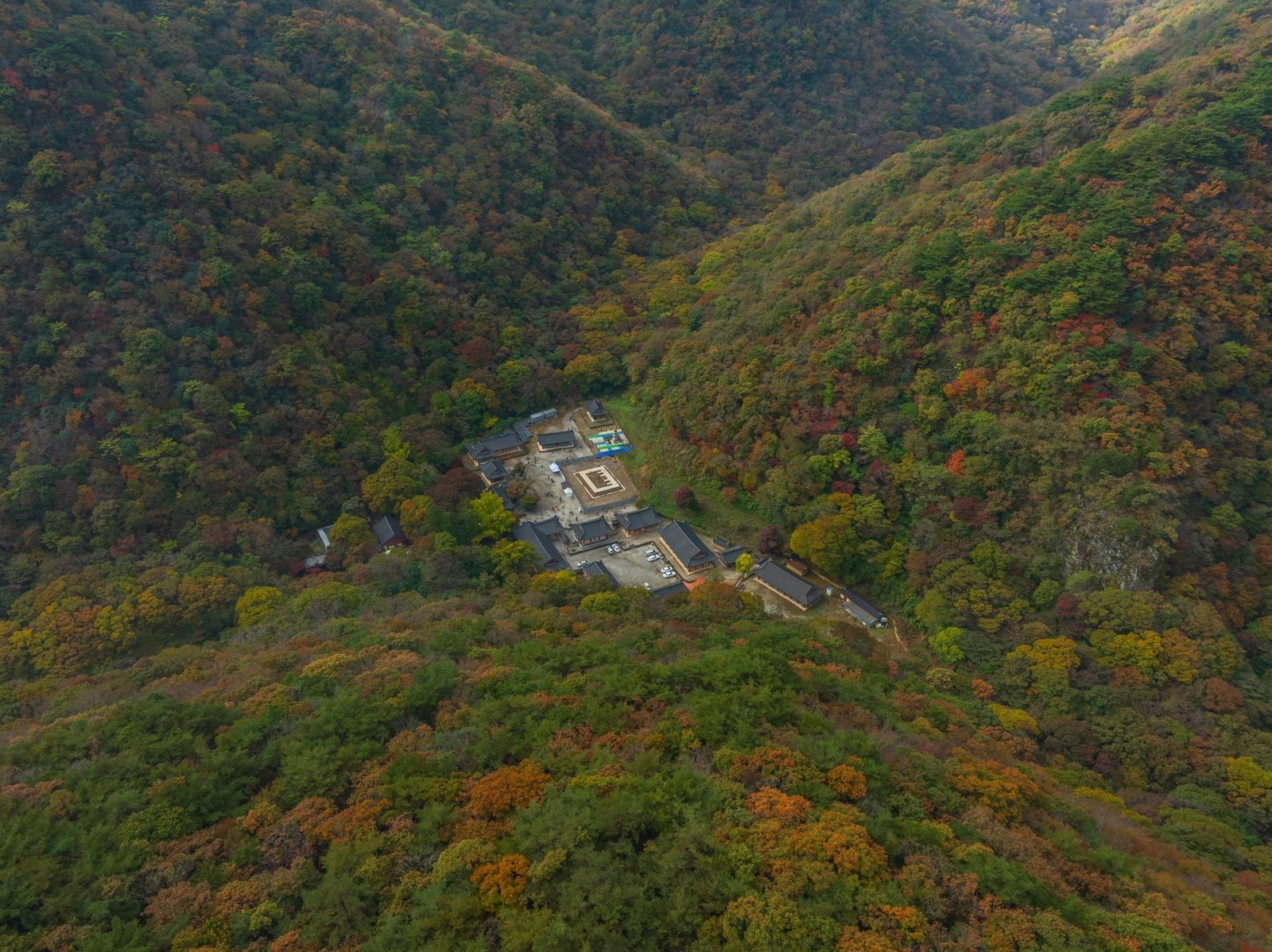
3. Naejangsa temple and the Seoraebong screen (see)
The temple sits where the maple tunnel ends. Stand in the courtyard in front of the main hall and the rocky peak of Seoraebong rises behind it like a folding screen, while the maples ringing the courtyard burn their reddest. Since 2023 there’s no cultural heritage fee, so anyone can walk straight in (Naver blog, 2026).
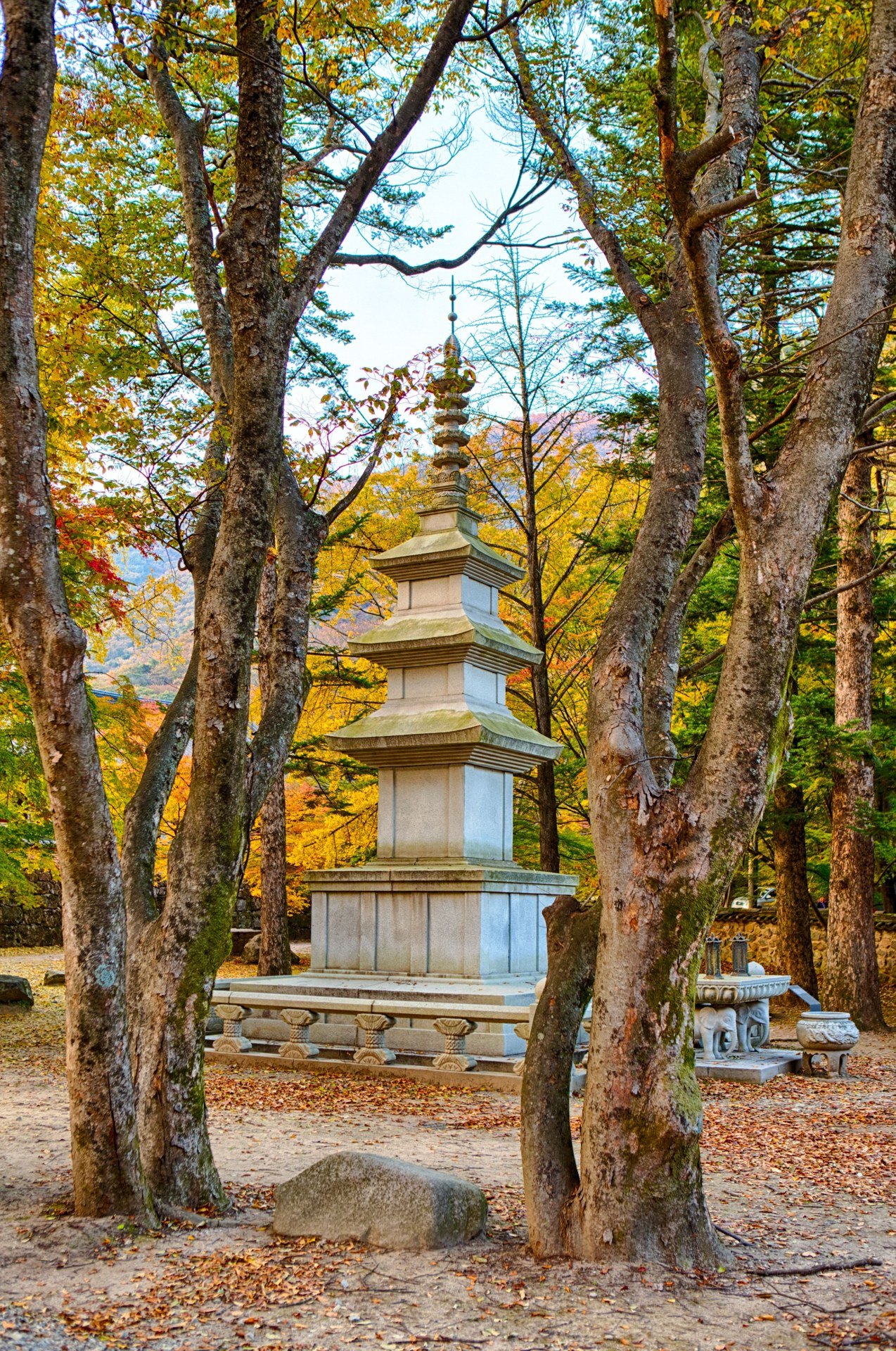
- Tip: The tunnel and the temple courtyard are busiest around noon. The area around the stone pagoda draws fewer people and makes a quieter photo spot.
Inside the grounds, the stone pagoda stands among yellow trees.
- Source: Naejangsan peak and fee roundup
4. Ride the cable car to the Yeonjabong observatory (see)
This is how you see the red valley from above without a hike. The cable car climbs from near the visitor center to the middle of Yeonjabong in about five minutes, then it’s about 300 m (10 minutes) on foot from the upper station to the observatory. From there you take in the Seoraebong ridge and Uhwajeong at a glance (Naver blog, 2026).
- Prices: round trip about $8.30 (11,000 won) for adults, one way about $5.30 (7,000 won); round trip about $5.30 (7,000 won) for children from 37 months through elementary school. No senior discount.
- Hours: March–November, 9 a.m.–6 p.m. Tickets are sold on site only, with no advance booking. In peak season cars run continuously, but they stop in high wind.
- Tip: A pop-up on the Korea National Park Service’s Naejangsan office website shows live congestion for the parking lots and the cable car (Jeonmin Ilbo). If you ride up one way and walk down, expect rocky paths and long stairs.

5. Loop the Wonjeokgol nature trail (walk)
If the tunnel alone isn’t enough, this is the forest walk. It’s a loop from Iljumun past Naejangsa, the Wonjeogam hermitage, the “Bridge of Love” and the Byeongnyeonam hermitage, then back to Iljumun: about 3.9 km and roughly 1 hour 20 minutes (Naver blog, 2026). There are far fewer people than in the tunnel, enough that you can hear the leaves crunch underfoot.
- Tip: The stairs up to Wonjeogam and some rocky stretches call for shoes with better grip than sneakers. Add extra time for photos.
The loop passes the Wonjeogam hermitage.
- Source: three Naejangsan courses
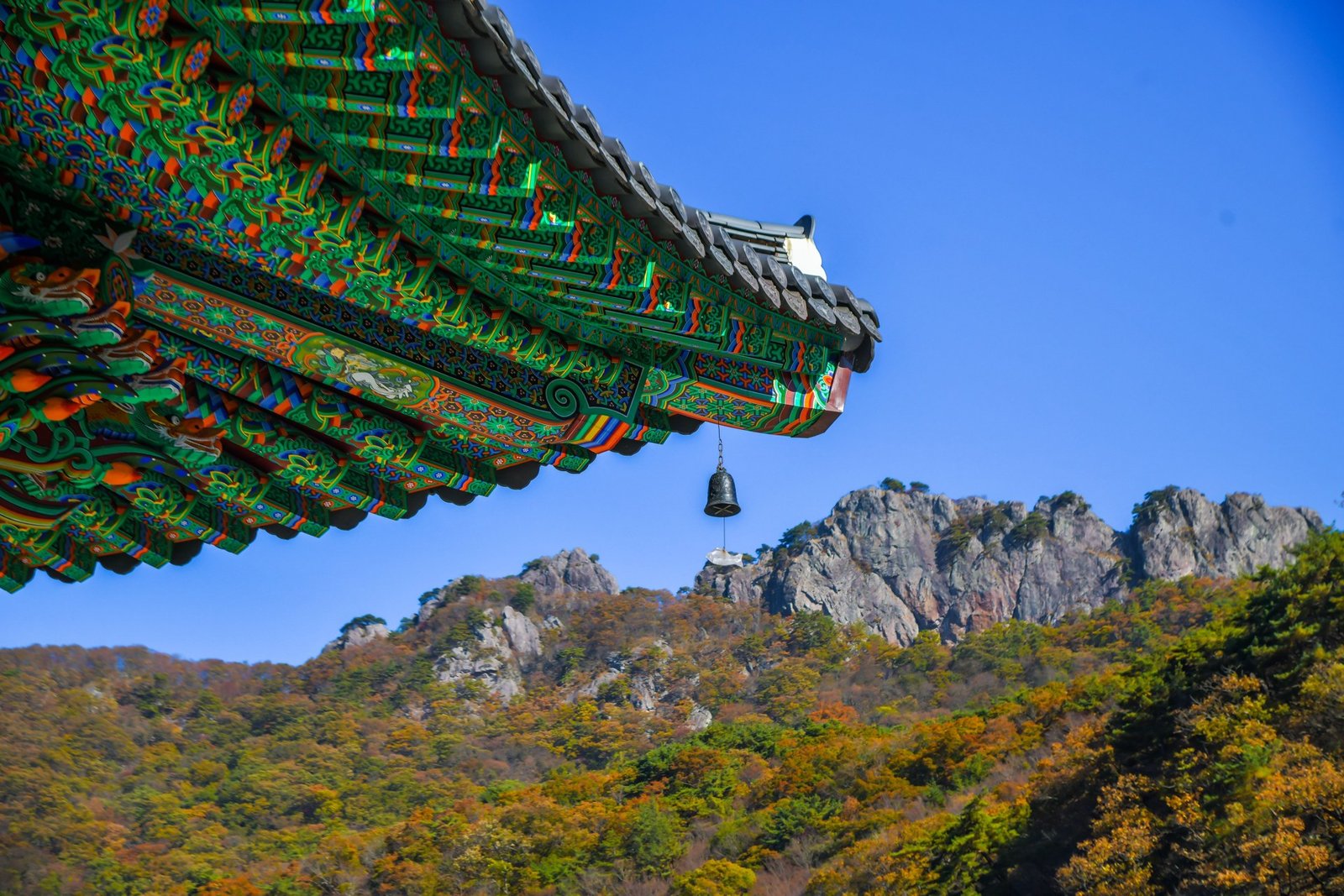
6. Hike the Seoraebong and Sinseonbong ridges (activity)
For hikers, Naejangsan is a red horseshoe of ridges. The Seoraebong course is about 5.9 km with steep stairs and rock sections; the course to Sinseonbong, the highest peak, is about 7.4 km and takes a full day (Finance Today).
- Heads up: In fall, some trail sections require reservations, so check the Korea National Park Service trail reservation system first. From November the sun sets early, so it’s safer not to start up the mountain late in the afternoon.
- Source: Finance Today
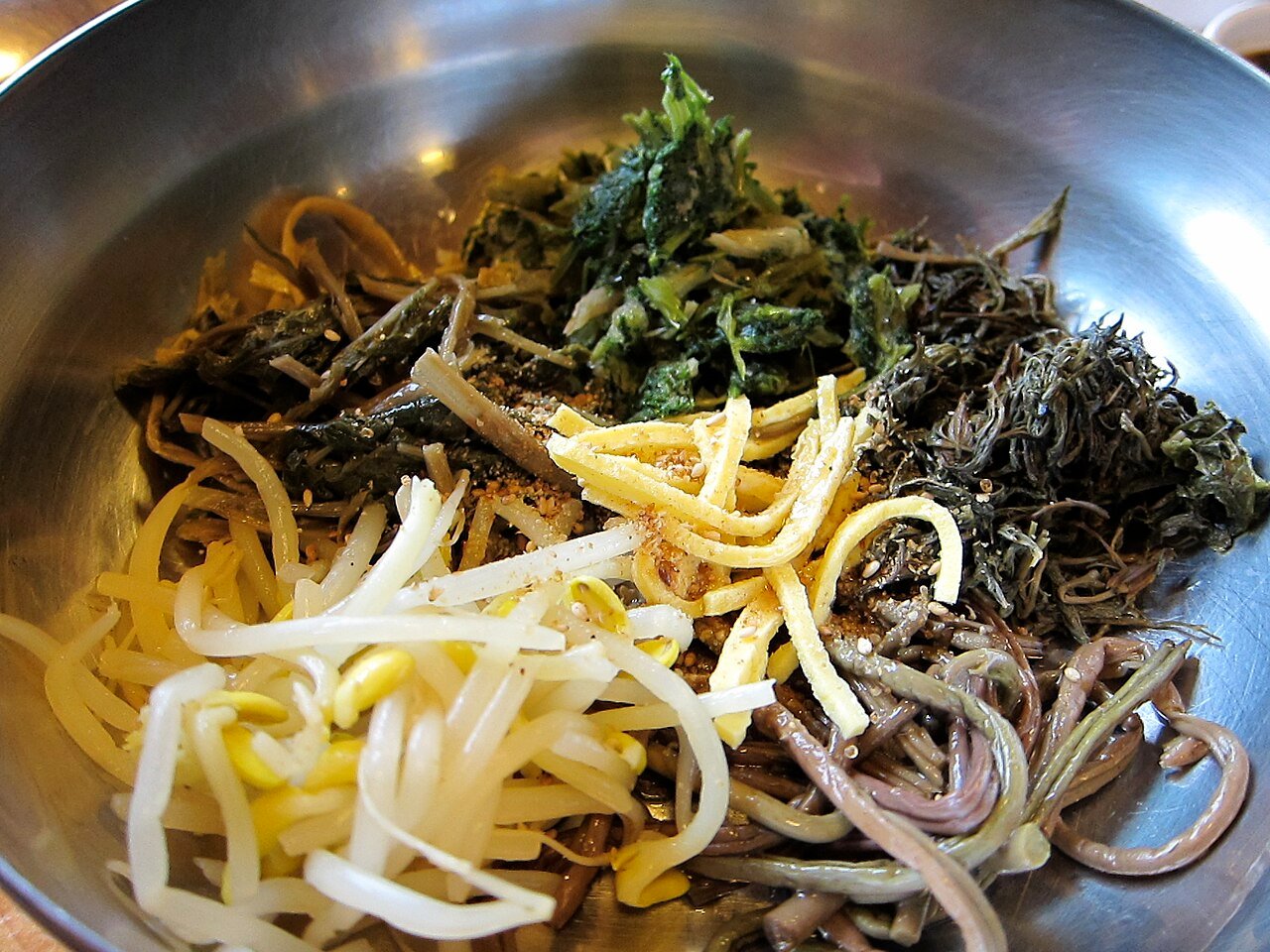
7. Mountain-greens set meals and stone-pot bibimbap at the park entrance (eat)
The restaurant strip at the Naejangsan entrance is lined with sanchae (wild mountain greens) restaurants that have held the same spot for 20 to 30 years or more. The signatures are sanchae jeongsik, a set meal where side dishes of chwinamul, chamnamul and deodeok root cover the whole table; dolsot sanchae bibimbap, mountain-greens rice in a sizzling stone pot; and deodeok-gui, grilled deodeok root brushed with spicy sauce (Naver blog, 2026).
- Where: Jeongwon Hanjeongsik (925 Naejangsan-ro), Samil Hoegwan (inside the restaurant complex) and Gugilgwan (mushroom hot pot and sanchae bibimbap), among others.
- Tip: In foliage season, restaurants have lines at lunch too. Go a little early, around 11 a.m., to wait less.
- Sources: Yongsan Station to Naejangsan, with meals nearby, a day of eating in Jeongeup, Naejangsan restaurant roundup
8. Herbal ssanghwacha on Jeongeup’s Ssanghwacha Street (eat)
In the Jangmyeong-dong area of downtown Jeongeup, more than ten traditional teahouses line a street of about 450 m. Ssanghwacha is a thick tea of rehmannia root, angelica and peony root simmered for hours, heaped with jujubes, pine nuts and chestnuts so you practically eat it with a spoon, and most places serve snacks like grilled rice cake or nurungji (toasted rice crisps) alongside (Naver blog, 2026). It’s the right afternoon stop to warm up after the mountain.
- Prices: At Dungji Ssanghwatang’s Jeongeup branch, ssanghwacha and jujube ssanghwacha are about $6 (8,000 won) each; red ginseng ssanghwacha is about $6.40 (8,500 won). Open every day, 10 a.m.–9 p.m. (Naver blog, October 2026).
- Tip: The herbal aroma is strong, so kids either love it or hate it. Many places serve it in a heavy stone cup that keeps it hot to the last sip.
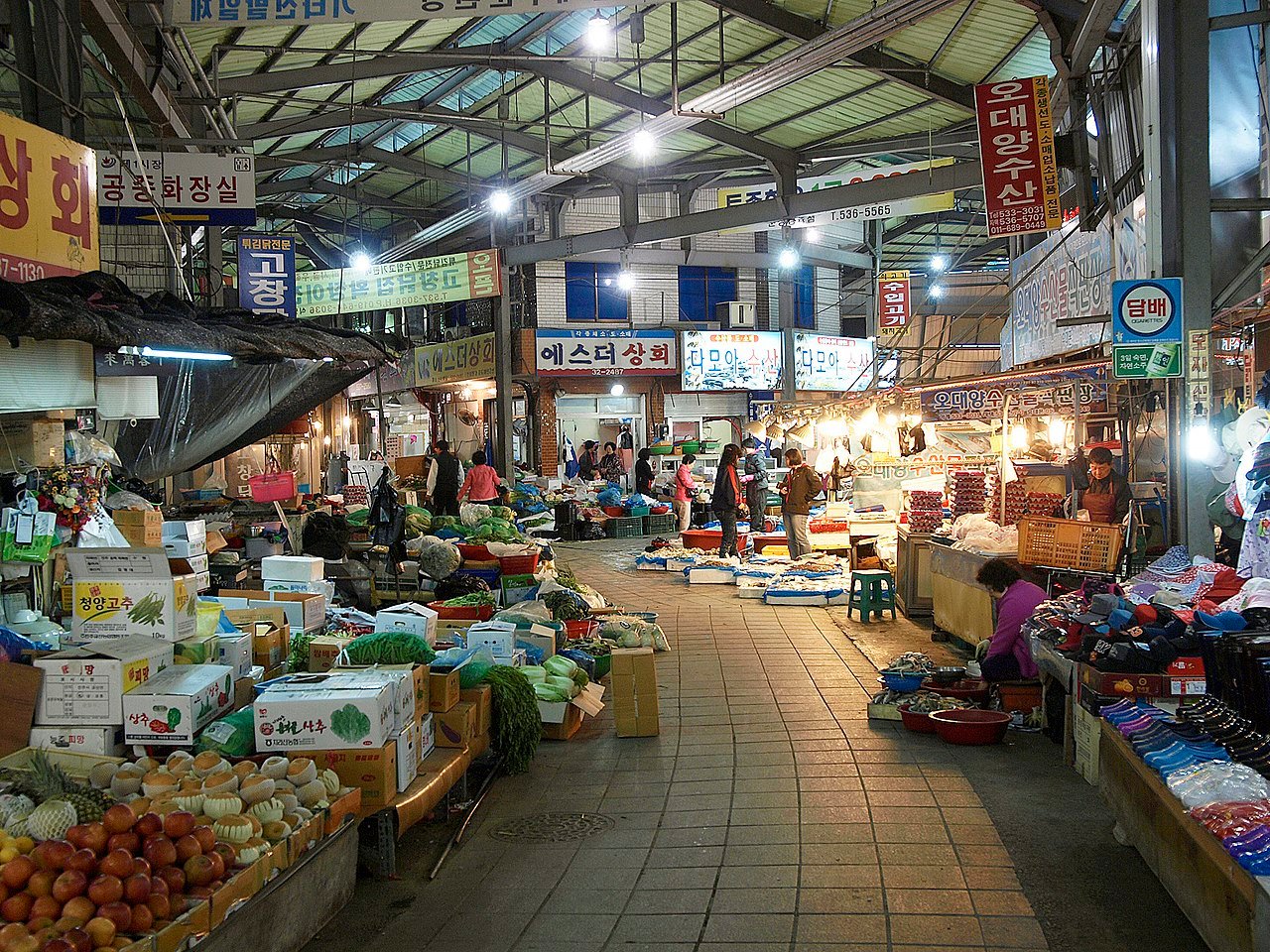
9. A morning at Saemgoeul Market (eat)
Opened in 1914, this is Jeongeup’s century-old traditional market. With around 300 shops and an old lane of sesame-oil mills still running, many people leave with bottles of freshly pressed sesame and perilla oil, and rice-cake shops, snack stalls and gukbap (rice soup) joints make for a quick breakfast (Naver blog, 2026).
- Tip: On foliage-season weekends, traffic is lighter if you do Naejangsan first and the market in the afternoon. Check Jeongeup City’s listings for market days.
- Source: a day of eating in Jeongeup
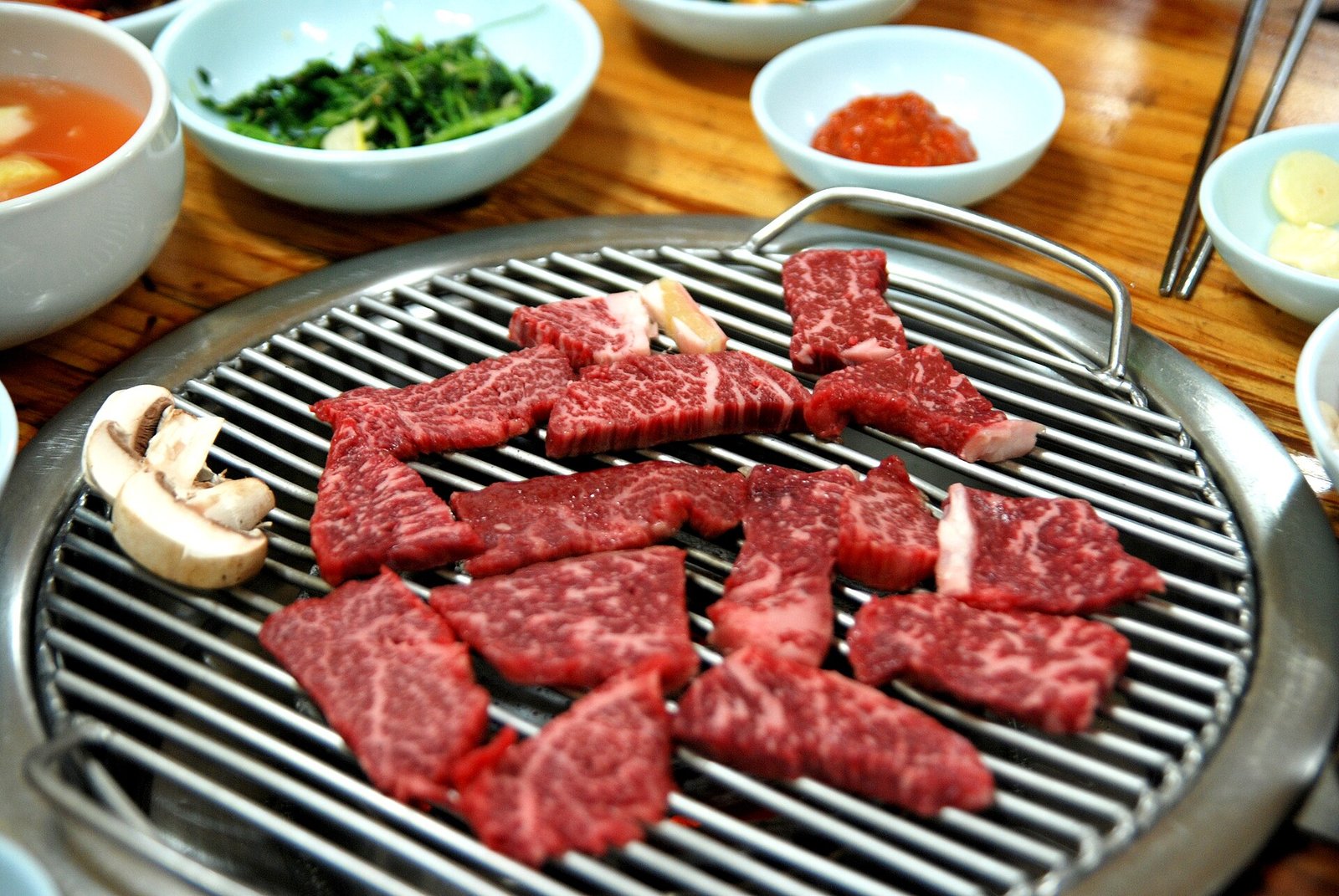
10. Pick your cut and grill it at Sanoe Hanwoo Village (eat)
Sanoe-myeon in Jeongeup has a hanwoo (Korean beef) village of butcher shops and barbecue restaurants. You choose and buy your cut at the butcher, then grill it right away at the restaurant next door; Jeongeup’s beef is sold under the name “Danpung Miin Hanwoo,” literally “maple beauty” beef (Naver blog, 2026).
- Tip: Restaurants charge a separate table-setting fee, so ask first. Shops take turns closing on Tuesdays, and some don’t accept cards, so bring a little cash.
- Source: a day of eating in Jeongeup
Nearby
- Ssanggyeru pavilion at Baekyangsa, Jangseong: This temple sits on Baegamsan, in the southern half of the same Naejangsan National Park. It’s famous for a single reflection: the Ssanggyeru pavilion, the white rock face of Baekhakbong and the tiny-leaved “baby maples” all mirrored at once in a pond formed by damming the stream. Admission is free, the reflection is sharpest in the calm early morning, and a temple stay lets you see the grounds at dawn before the crowds (1239 Baegyang-ro, Bukha-myeon, Jangseong-gun, South Jeolla) (Naver blog, 2026).

- Yellow suspension bridge on the Jangseongho lakeside trail: a lakeside boardwalk that pairs well with Baekyangsa on the way back down. The suspension-bridge trail is 8.4 km and the forest trail 4 km; free on weekdays, about $2.30 (3,000 won, cash) on weekends; 9 a.m.–5 p.m. in winter (Naver blog, 2026).
- Chungnyeongsan cypress forest (National Jangseong Healing Forest): 10 km of trails through hinoki cypress and Japanese cedar planted over 34 years starting in 1956; free entry. Good for a green forest walk the day after red Naejangsan.
-
Museong Seowon: a Confucian academy in Chilbo-myeon, Jeongeup, inscribed as a UNESCO World Heritage Site in 2019 as part of “Seowon, Korean Neo-Confucian Academies.”
-
Source: Baekyangsa foliage 2026, Jangseongho and Chungnyeongsan
Hotels nearby
Jeongeup has few big chain hotels, so you’ll choose between pensions (guesthouses) right at Naejangsan, city hotels around Jeongeup Station, or Jeonju, about 40 minutes away by car. Prices are booking-site rates posted on Naver blogs and HotelsCombined, and they vary a lot by date.
| Stay | Location | Per night (approx.) | Why |
|---|---|---|---|
| Naejangsan Dalbit Pension | 4-minute walk to Naejangsan National Park | about $112 for two (148,795 won, checked in October) | Walk to Uhwajeong at dawn |
| Elistay Pool Villa | about 22 minutes’ drive from Naejangsan | about $285 for two (378,000 won) | A private villa with its own pool |
| Hotel Royal Jeongeup | downtown Jeongeup, about 7 minutes’ drive from Jeongeup Station | from about $84 (110,955 won, July rate) | 300+ reviews, close to Ssanghwacha Street |
| Budget stays in downtown Jeongeup | Jeongeup Station and downtown | $25–60 (five cheapest averaged 67,757 won on a Wednesday and 79,707 won on a Saturday, checked August–September) | Easy access to bus 171 |
| Lahan Hotel Jeonju | downtown Jeonju | about $98 (130,000 won) | Direct KTX to Jeongeup Station, 1,090 reviews |
| Best Western Plus Jeonju | downtown Jeonju | about $74 (98,000 won) | Value pick on the Jeonju side |
- Sources: Naejangsan pension price comparison, October 2026, Jeongeup hotel lowest-price calendar, two-day route and Jeonju hotels, HotelsCombined: Hotel Royal Jeongeup
A sample day
- Dawn to morning: leave your hotel in downtown Jeongeup → reach Iljumun around 6:30 a.m. → reflection shot at Uhwajeong (No. 2) → maple tunnel (No. 1) → Naejangsa (No. 3)
- Late morning: cable car and Yeonjabong observatory (No. 4), or the Wonjeokgol nature trail (No. 5)
- Lunch: sanchae set meal or stone-pot bibimbap at the park entrance (No. 7), around 11 a.m.
- Afternoon: bus 171 back downtown → Ssanghwacha Street (No. 8) → Saemgoeul Market (No. 9)
- Evening: Sanoe Hanwoo Village (No. 10), or the KTX home from Jeongeup Station
The foliage front that starts at Seoraksan spends nearly a month moving south and only reaches Naejangsan in the second week of November, and after that there’s only Hallasan on Jeju. The last great blaze of fall on the Korean mainland happens on the surface of Uhwajeong’s pond.
Read next
 The Seoul Fortress Wall Rumi and Jinu Walked Only Looks Right After Dark: A KPop Demon Hunters Night Walk on Naksan
 The Cheapest Bed in Seoul Is a $12 Jjimjilbang Floor: A Night of Saunas, Sheep-Towel Hats and Sikhye
 Seoul's Freshest Sashimi Is the Fish You Point At: Picking Your Own at Noryangjin Fish Market
Trending on Seol Notes
- Kim You-jung Cracked Japan Despite the 'Anti-Japan Drama' Label
- The Emperor of K-pop Came Back, and Korea Flipped
- Ae-sun Left the Baeksang Empty-Handed. Then She Spoke: IU
- K-pop News Today (Oct 27, 2026): IVE's EP Drop, ILLIT 'You're Under Arrest', LISA's 59M
- K-pop News Today (Oct 31, 2026): BTS's 'Arirang' Night in Brazil, JISOO's 'ADDICTED' Tops iTunes, NMIXX Win Music Bank
Sources
- Finance Today: “Naejangsan foliage peak approaches… Uhwajeong and the maple tunnel draw attention”, Pressian: Jeongeup launches foliage-season crowd measures (350,000 visitors expected), Jeonmin Ilbo: Naejangsan free shuttle and AI visitor service, Insight, October 23, 2026: the early-bird route, YTN, October 26, 2026: foliage status, bnt News, October 24, 2026: nationwide foliage forecast
- KTX fare: Yongsan–Jeongeup timetable and fares for October 30, 2026
- Naver blog visit reports and roundups (prices, hours): linked under each item, mostly 2026 posts
- Photos: Korea Tourism Organization PhotoKorea, KOGL Type 1 (photographer credited on each photo); Wikimedia Commons, CC BY 2.0 / CC BY-SA 3.0 (food and market photos, photographer credited)
- Videos: Jeongeup City’s official YouTube channel, Jeongeup See
- Currency conversion: 1,324.6 won per dollar (Seoul FX base rate, October 23, 2026). Won prices come from visitor reports and articles and may change.
Discover more from Seol Notes
Subscribe to get the latest posts sent to your email.