
Part 1 of 12 in Homo Contractus
Homo Contractus · Stage 0, “Envy” → the adults who got no shares
The first mass contract humanity signs with an AI company will start with a single share of stock given to a child. The people who sign it will not be the children who got the shares. They will be the adults who didn’t. What moves them will not be persuasion or advertising. It will be envy.
On October 19, 2026, Elon Musk posted on X that next year he would give SpaceX shares to “every kid in America.” It had never been done before, he wrote, but it would be “the first of many.”[1] The United States has about 73 million people under 18. Germany’s dpa news agency calculated that at the current share price, even one share each would cost more than $10 billion.[1] Since absorbing xAI in February 2026, SpaceX is both a rocket company and an AI company. Overnight, 73 million children become shareholders in an AI company.
Six weeks before that post, Donald Trump promised every American adult $5,000 if Republicans held Congress in the November midterms. He called it the “Trump Dividend.” The AP put the cost at more than $1 trillion, and Democrats called it an empty promise.[2] In the same autumn, the government put up a campaign pledge and a billionaire put up stock. The two headlines landed side by side on adults’ phones. One was a promise with conditions attached. The other was real stock headed for their child’s account.
In this story
The kids’ accounts were already open
The place for Musk’s shares is already built. A law signed on July 4, 2025, created an investment account for every American child born from 2025 through 2028, with $1,000 deposited by the government. It is called a “Trump Account.”[3] That December, Michael and Susan Dell pledged $6.25 billion to put $250 into the accounts of 25 million children aged 10 and under.[4]
The state opens the account, a billionaire adds cash, and the world’s richest man adds shares of his own company. How that one share turns into a lifelong contract for the child is the story of Musk’s One AI-Company Share for Every Kid Will Become a Lifelong Contract. For everyone without an account, the story is different. The 260 million American adults over 18 get nothing.
Also read: Children Raised in AI Abundance Will Evolve Bodies That Never Knew Hunger: The Thrifty Gene
People move because of the neighbors, not because they are poor
Envy is a stronger engine than arithmetic. In 1949 a team led by the American sociologist Samuel Stouffer published The American Soldier, built on surveys of hundreds of thousands of U.S. troops in World War II. Airmen in the Army Air Forces, who were promoted fastest, were more unhappy with the promotion system than military police, who were promoted slowest.[5] Where everyone around you gets promoted, being passed over hurts more. The researchers called it relative deprivation. The same mechanism drives the status game that AI abundance makes even fiercer.
Envy moves wallets too. In 2018, economists at the Federal Reserve Bank of Philadelphia tracked the neighbors of Canadian lottery winners. For every C$1,000 increase in the prize, bankruptcy filings among the winner’s closest neighbors rose 2.4 percent. The neighbors bought new cars and remodeled their homes like the winner did, then went under. The effect appeared only next door. One block away, it vanished.[6]
In 2027, America will see 73 million small lottery wins at once. The winners are children, and the neighbors are their parents, uncles, aunts and childless coworkers. Musk’s companies know where that envy will flow. The parent of a child with shares becomes someone who checks the company’s news every day. The adult without shares becomes someone who searches “how do I get one.”

The adult contract starts with one question
An envious person needs only a door. In 2028, the door opens. Musk’s ecosystem of SpaceX, xAI, Tesla and X offers households whose children got shares a “Family Membership.” When a parent joins, each adult receives one share of the same kind the child got. The conditions: pay inside the ecosystem, share the home’s rooftop power and the car’s driving data with the ecosystem, and use Grok as the default AI.
At first glance the conditions look like nothing. Many Americans already hand similar data from their phones, cars and homes to companies. The difference is that this time the payment comes in stock. People who handed over data for nothing become owners for the first time. Envy gains legitimacy. Joining stops looking like greed and starts looking like “our family getting its fair share.”
Whether or not the Trump Dividend clears Congress, the result is the same. The government’s $5,000 arrives once and is gone. The ecosystem’s stock rises, pays dividends and leads to the next product. People learn to set the two promises side by side and compare them. That comparison is the first page of the evolution contract.

March 2028, a Family Membership in Ohio
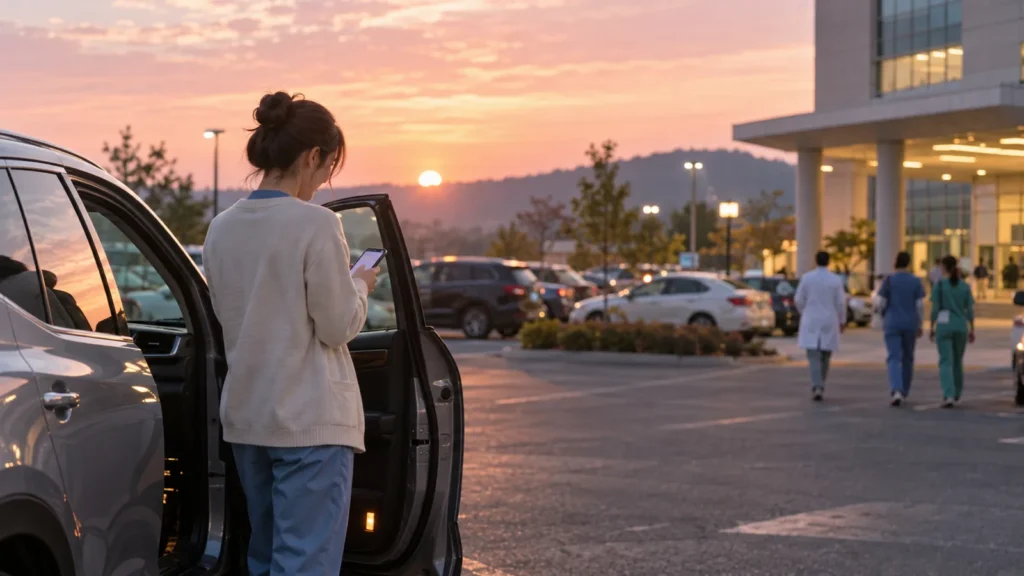
March 2028, Columbus, Ohio. Dana, a 41-year-old nurse, finishes a night shift and opens her phone in the hospital parking lot. The SpaceX share in her eight-year-old son’s account is up 60 percent since the day he got it. Three coworkers on her ward joined the Family Membership last week. One of them paid for her kid’s braces with the share she received the moment she signed up.
Dana doesn’t scroll to the end of the terms. She taps the sign-up link her coworker sent and checks “I agree to share my data.” Thirty seconds later a notification arrives: one adult share has been issued. For the first time, Dana owns a piece of the same company as her son. Starting the car, she texts her husband: “Sign up today too.”
73 million kids in 2027, 100 million adults by 2030
This is the order in which envy turns into signatures.
- 2027: SpaceX shares land in the accounts of about 73 million American children. Overnight, SpaceX becomes the company with the most individual shareholders in the United States.
- 2028: The ecosystem launches the adult Family Membership. It signs up 15 million people in its first 90 days, most of them parents of children who got shares.
- 2029: Two other Big Tech companies launch rival products that bundle kids’ shares with adult memberships. Stock stops being a gift and becomes a sign-up prize.
- 2030: 100 million American adults are “shareholder members” of at least one corporate ecosystem. That is four in ten American adults.
- 2032: Adults who aren’t members become the minority. Non-members are called “not yet.”
The children got the shares, and the adults envied them. The people who go looking for a contract are always the ones who didn’t get anything, not the ones who did. The text Dana sent her husband was sent hundreds of thousands of times across America that day, word for word.
Next in the series · Marx’s Ration Coupons Will Be Printed by Musk’s AI as Membership Cards: The Evolution Contract
In 1875 Karl Marx imagined a society where people receive “labor certificates” for the work they put in. A century and a half later, those certificates arrive not through revolution but through a sign-up button.
Read next
Trending on Seol Notes
- Yim Si-wan's Strange Voice in Love in Disguise Was Armor All Along
- Seol In-ah Won Boxing Gold in Four Months, Then Became the Cross-Dressing Cop of Love in Disguise
- BTS and ENHYPEN Just Took the First Two Grand Prizes of MAMA 2026, and Sunghoon Couldn't Stop Crying
- The First Korean Actress Ever Nominated for an International Emmy Failed 100 Auditions First
- CORTIS Won Song of the Year at MAMA 2026 Barely a Year After Debut, and BTS Left Osaka With Five Trophies
Sources
- CNN Newsource via WAFB, “Elon Musk to give SpaceX shares to ‘every kid in America’,” October 19, 2026. https://www.wafb.com/2026/10/19/elon-musk-give-spacex-shares-every-kid-america/ ; AFP via Citizen Digital, “Musk says will give SpaceX share to ‘every kid in America’,” October 20, 2026 (73 million children per 2024 Census figures; dpa cost estimate over $10 billion). https://citizen.digital/article/musk-says-will-give-spacex-share-to-every-kid-in-america-n392321
- AP via WTTW, “Trump, hoping to salvage midterms, makes dubious pledge to give every US adult $5,000 if GOP wins,” September 10, 2026. https://news.wttw.com/2026/09/10/trump-hoping-salvage-midterms-makes-dubious-pledge-give-every-us-adult-5000-if-gop-wins
- One Big Beautiful Bill Act (Public Law 119-21), July 4, 2025, “Trump Accounts” ($1,000 for children born 2025–2028). https://trumpaccounts.gov/ ; WTOC, “Trump Accounts offer $1,000 seed investment for children born in 2025,” July 6, 2026. https://www.wtoc.com/2026/07/06/trump-accounts-offer-1000-seed-investment-children-born-2025/
- KNKX (NPR), “Michael and Susan Dell pledge $6.25 billion to fund Trump Accounts,” December 3, 2025. https://www.knkx.org/2025-12-03/michael-and-susan-dell-pledge-6-25-billion-to-fund-trump-accounts
- Samuel A. Stouffer et al., The American Soldier: Adjustment During Army Life, Princeton University Press, 1949.
- Sumit Agarwal, Vyacheslav Mikhed & Barry Scholnick, “Peers’ Income and Financial Distress: Evidence from Lottery Winners and Neighboring Bankruptcies,” Federal Reserve Bank of Philadelphia Working Paper 18-22, 2018; Review of Financial Studies 33(1), 2020. https://www.philadelphiafed.org/consumer-finance/consumer-credit/peers-income-and-financial-distress-evidence-from-lottery-winners-and-neighboring-bankruptcies
Discover more from Seol Notes
Subscribe to get the latest posts sent to your email.